
Substrates

Search Within Results
1
–
15
of
79
results
1

Invitrogen™ DQ™ Red BSA - Special Packaging

Hydrolysis of substrate yields brightly fluorescent product
2
Invitrogen™ DQ™ Gelatin From Pig Skin, Fluorescein Conjugate - Special Packaging
Analog of natural substrate
3

Promotions Available
Thermo Scientific Chemicals TMB EASY, Liquid Substrate
Thermo Scientific Chemicals TMB EASY, Liquid Substrate
4

Promotions Available
Thermo Scientific Chemicals TMB QUICK, for ELISA, Liquid Substrate
Thermo Scientific Chemicals TMB QUICK, for ELISA, Liquid Substrate
5

Invitrogen™ NBT/BCIP Reagent Kit
For chromogenic detection of phosphatase.
6

Invitrogen™ DiFMUP (6,8-Difluoro-4-Methylumbelliferyl Phosphate)
Continuously assay acid phosphatases at low pH
7
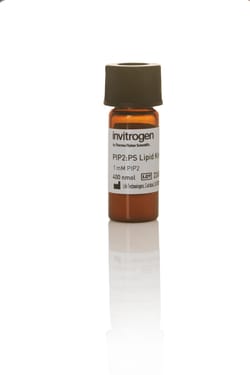
Thermo Scientific™ PIP2:PS Lipid Kinase Substrate
Specifically optimized for use with the Class I PI3 kinases (PIK3CA, PIK3CB, PIK3CD, and PIK3CG), this substrate consists of lipid vesicles of a 1:19 molar ratio of phosphoinositol-4,5-bisphosphate (PIP2) with phosphotidylserine (PS).
8
ERM (LRRKtide) Substrate
ERM (LRRKtide) Substrate
9

GFP-STAT1
GFP-STAT1
10
Thermo Scientific™ GFP-STAT3
STAT3 expressed as a fusion with GFP (Green Fluorescent Protein) to act as a physiological substrate for the Janus family of tyrosine kinases.
11
Fluorescein-Poly GT
Fluorescein-Poly GT
12
GFP-ATF2 (19-96)
GFP-ATF2 (19-96)
13
GFP-EIF2A
GFP-EIF2A
14
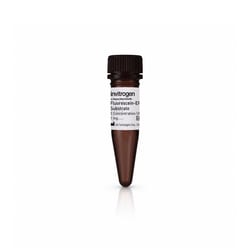
Fluorescein-ERM (LRRKtide)
Fluorescein-ERM (LRRKtide)
15
Fluorescein-P53 (Ser15) Peptide Substrate
Fluorescein-p53 (Ser15) Peptide Substrate