
Competent Cells


Invitrogen™ MAX Efficiency™ DH5α Competent Cells

MAX Efficiency™ DH5α Competent Cells are a well-known, versatile strain that is used in many everyday cloning applications. Prepared by a proprietary modification of the Hanahan method, these cells are suitable for high efficiency transformations in applications where low amount of DNA is used or to construct libraries using plasmid-derived vectors.

Thermo Scientific™ DH5α Competent Cells
Chemically competent E. coli cells recommended for routine subcloning into plasmid vectors. Subcloning efficiency cells are not suitable for the generation of cDNA libraries.

Invitrogen™ MultiShot™ FlexPlate DH5α T1R Competent Cells
MultiShot FlexPlate DH5α T1R Chemically Competent E. coli cells are cloning competent cells derived from a well-known, versatile DH5α strain that can be used in many everyday cloning applications.
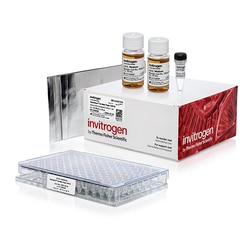
Invitrogen™ MultiShot™ TOP10 Chemically Competent E. coli Cells, 96-well plate
MultiShot TOP10 Chemically Competent E. coli Cells provide high-efficiency transformation for routine cloning in an automation-ready 96-well format. Ideal for stable propagation of high-copy plasmids and blue/white screening in high-throughput workflows.

Invitrogen™ ElectroMAX™ DH5α-E Competent Cells
ElectroMAX DH5α-E Competent Cells are derived from the DH5α strain and are suitable for transformation by electroporation.

MilliporeSigma™ Novagen™ Rosetta™ (DE3) pLysS Competent Cells
Rosetta host strains are BL21 derivatives designed to enhance the expression of eukaryotic proteins that contain codons rarely used in E. coli. T7 lysozyme expression suppresses basal T7 expression.
MilliporeSigma™ Novagen™ Rosetta™ (DE3) Competent Cells
Rosetta host strains are BL21 derivatives designed to enhance the expression of eukaryotic proteins that contain codons rarely used in E. coli.
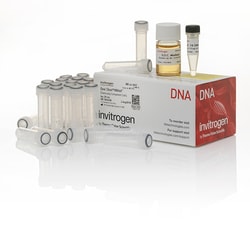
Invitrogen™ One Shot™ INVαF' Chemically Competent E. coli
One Shot INVαF' Chemically Competent E. coli are designed to stably replicate high-copy number plasmids.

Invitrogen™ One Shot™ INV110 Chemically Competent E. coli
One Shot INV110 Chemically Competent E. coli cells are derived from the JM110 strain and are specifically designed for the growth and purification of plasmid DNA that will be digested with dam or dcm methylation-sensitive restriction enzymes.
MilliporeSigma™ Novagen™ BL21 (DE3) pLysS Singles™ Competent Cells
BL21 strains are the most widely used hosts for protein expression from pET recombinants and have the advantage of being deficient in both lon and ompT proteases.

Invitrogen™ MultiShot™ FlexPlate OmniMAX™ 2 T1R Competent Cells
MultiShot FlexPlate OmniMAX 2 T1R chemically competent E. coli cells are a superior strain of cloning competent cells that are pre-aliquoted in a 96-well PCR plate to increase transformation productivity.

Invitrogen™ MultiShot™ StripWell Stbl3™ Competent Cells
MultiShot StripWell Stbl3 Chemically Competent E. coli cells are cloning competent cells designed for cloning direct repeats found in lentiviral expression vectors.
MilliporeSigma™ Novagen™ Origami™ B (DE3) Competent Cells
Origami B host strains carry the same mutations as the original Origami strain, except that they are derived from a lacZY mutant of BL21 to enable precise control of expression levels using IPTG.
MilliporeSigma™ Novagen™ Tuner™ DE3 Competent Cells
Tuner host strains are lacZY deletion mutants of BL21, which enable adjustable levels of protein expression throughout all cells in a culture.

Invitrogen™ TOP10F' Electrocomp™ Kit
TOP10F' Electrocomp Kit E. coli cells are identical to TOP10 cells, with the addition of an F' episome.