
Protein Modification Reagents

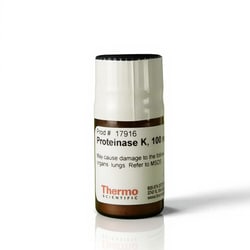
Thermo Scientific™ Proteinase K Powder (≥30 U/mg)
Cleave at the carboxyl-side of aliphatic, aromatic or hydrophobic residues and digest-inactivate DNase and RNase in nucleic acid purification using this protease.
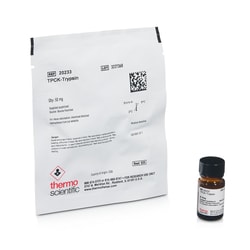
Thermo Scientific™ Trypsin, TPCK Treated
Thermo Scientific Pierce TPCK Trypsin is a serine endoprotease that is applicable to amino acid analysis and protein sequencing, mapping and structural studies; the immobilized form allows sample separation after treatment.
Invitrogen™ DTT, 1M

DTT, 1M

Thermo Scientific™ Urea
Pure, crystalline urea (CH4N2O), CAS 57-13-6; denaturant with low UV-absorptivity for protein biology methods (elution, solubilization, refolding, storage).

MilliporeSigma™ Calbiochem™ SPUTOLYSIN™ Reagent
Intended for isolation of epithelial cells, pathogenic or saprophytic bacteria, fungi, and yeasts from sputum

Thermo Scientific™ Pierce™ Alkylating Reagents
Alkylating reagents provided in single-use, pre-weighed formats to streamline protein preparation workflows.

Invitrogen™ Tris-(2-Carboxyethyl)phosphine, Hydrochloride (TCEP)
Tris-(2-Carboxyethyl)phosphine, Hydrochloride (TCEP)

Thermo Scientific™ Pierce™ DTT (Dithiothreitol)
Reduce disulfides in biological buffers and sample loading buffers with pure, crystalline dithiothreitol (DTT), the most popular protein disulfide reducing agent.

Thermo Scientific™ Pierce™ Sulfo-NHS-Acetate
Amine-reactive (NHS ester) compound to permanently block primary amines (e.g., protein lysine side chains) to prevent interactions or later conjugation.

Thermo Scientific™ Bond-Breaker™ TCEP Solution, Neutral pH
Efficiently reduce protein disulfide bonds with this stable, odorless, 0.5M solution of TCEP reducing agent that is ideal for making reducing SDS-PAGE sample buffers.
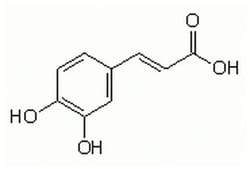
MilliporeSigma™ Calbiochem™ Caffeic Acid
Reported to have anti-carcinogenic anti-inflammatory properties.

MilliporeSigma™ Endoproteinase Asp-N, Excision Grade, Pseudomonas fragi
Designed for protein sequencing or sequence verification, analysis of protein structural domains, and cleavage of fusion proteins
MilliporeSigma™ Endopeptidase Lys-C, Achromobacter lyticus
Specifically hydrolyzes amide and peptide ester bonds at carboxylic side of lysine and S-aminoethylcysteine residues
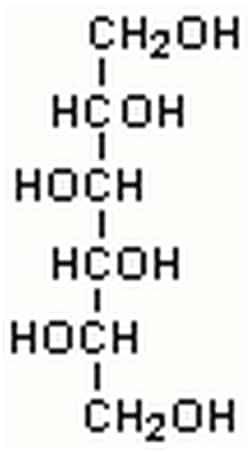
MilliporeSigma™ Calbiochem™ Sorbitol
Produced by reduction of glucose

MilliporeSigma™ Calbiochem TCEP, Neutral
Ready-to-use stable, neutral form of popular disulfide-reducing agent TCEP, Hydrochloride