
Réactifs de modification des protéines

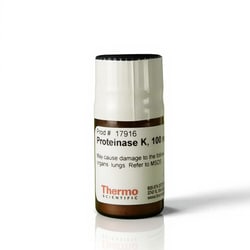
Thermo Scientific™ Poudre de Protéinase K (≥30 U/mg)
Cliquez du côté carboxyle des résidus aliphatiques, aromatiques ou hydrophobes et inactivent la DNase et la RNase lors de la purification des acides nucléiques à l’aide de cette protéase.
Invitrogen™ DTT, 1M

DTT, 1M

Thermo Scientific™ Bond-Breaker™ Solution TCEP, à pH neutre
Réduisez efficacement les liaisons disulfures des protéines grâce à cette solution stable et inodore de 0,5 M d’agent réducteur TCEP, idéale pour la préparation de tampons réducteurs pour échantillons SDS-PAGE.
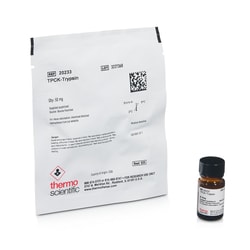
Thermo Scientific™ Trypsine, TPCK traitée
Thermo Scientific Pierce La trypsine TPCK est une endoprotéase à la sérine applicable à l’analyse des acides aminés ainsi qu’au séquençage, à la cartographie et aux études structurales des protéines; La forme immobilisée permet de séparer l’échantillon après traitement.

MilliporeSigma™ Calbiochem™ SPUTOLYSIN™ Réactif
Destiné à l’isolement de cellules épithéliales, de bactéries pathogènes ou saprophytes, de champignons et de levures à partir des crachats

Thermo Scientific™ Pierce™ Réactifs alkylants
Réactifs alkylants fournis en formats à usage unique et pré-pesés pour rationaliser les processus de préparation des protéines.

Gibco™ Trousse de clivage PNGase F Glycane
Le kit de clivage PNGase F Glycane comprend tous les composants nécessaires pour effectuer l’élimination enzymatique de presque tous les oligosaccharides liés à l’azote des glycoprotéines.

Thermo Scientific™ Pierce™ DTT (Dithiothréitol)
Réduire les disulfures dans les tampons biologiques et échantillonner les tampons de charge avec du dithiothréitol cristallin pur (DTT), l’agent réducteur de disulfure protéique le plus populaire.
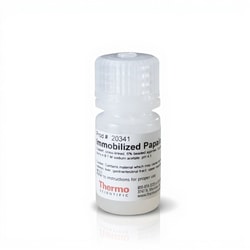
Thermo Scientific™ Papaïne immobilisée (résine d’agarose)
Générer et purifier des fragments Fab à partir d’anticorps avec la papaïne cysteine-endopeptidase immobilisée sur une résine d’agarose perlée.

Thermo Scientific™ Pierce™ SATA (N-succinimidyl S-acétylthioacétate)
Réactif d’addition de sulfhydryl court (2,8A), réactif à l’amine (ester NHS); crée un groupe SH stable (protégé mais exposé) pour les stratégies de réticulation des protéines.

Thermo Scientific™ Solution Guanidine-HCl 8M
Solution prête à l’emploi, 8M, de chlorhydrate de guanidinium (GdnCl, GuHCl), CAS 50-01-1; diluer et ajuster le pH à n’importe quelle concentration pour les méthodes de biologie des protéines.

Thermo Scientific™ DTNB (réactif d'Ellman) (5,5-dithio-bis-(2-acide nitrobenzoïque)
Mesurez les cystéines peptidiques ou d’autres sulfhydryles libres et réduits (groupes -SH) en solution à l’aide de ce composé coloré réactif au thiol (Amax 412nm).

MilliporeSigma™ Calbiochem™ Coenzyme A, sel de trilithium
Agit comme cofacteur dans les réactions de transfert d’acétyle enzymatique

MilliporeSigma™ Calbiochem™ PIH
Chélateur de fer tridendate (Fe3+) perméable aux cellules et non toxique de la classe de l’hydrazone aroyl

MilliporeSigma™ Calbiochem™ TCEP de qualité réactive, agent réducteur de chlorhydrate
Agent réducteur de disulfure soluble dans l’eau et inodore, plus stable et efficace que la DTT