
All Primary Antibodies
Primary antibodies, immunoglobulins that bind to specific proteins or other biomolecules, are used in many research applications and protocols to detect targets of interest. They are developed using different animal hosts, including mouse, rat, rabbit, goat, sheep, and many others.
Monoclonal and Polyclonal Antibodies
One type of primary antibodies, monoclonal antibodies, provides high reproducibility and low cross-reactivity and background noise. Another type, polyclonal antibodies, often costs less and provides greater affinity and quicker binding. Both are produced using plasma B cells, but the former uses the same clone and the latter uses different clones. Monoclonal antibodies require hybridoma cell lines, and polyclonal antibodies do not.
There are also recombinant monoclonal antibodies with similar benefits, like high affinity, scalability, and specificity. They are produced using in vitro cloning of plasma B cells and expression hosts.
Conjugated Primary Antibodies
Antibodies can be labeled with various fluorophores or detection agents or used without labels. Labeled primary antibodies, also known as conjugated primary antibodies, help researchers simplify and streamline their applications. They are coupled with common enzymes and dyes such as Alexa Fluor and often used in protein and cell analysis.
Applications
Antibodies for life sciences applications are used in flow cytometry, western blotting, ELISA, immunohistochemistry, and immunocytochemistry. Secondary antibodies can be added to support the detection and purification of certain antigens. They bind to the primary antibody, which binds to the antigen of interest. Finding the right combination of antibodies can result in greater antigen specificity and a strong, detectable signal.
- (5)
- (1)
- (7)
- (71)
- (898)
- (1,132)
- (1)
- (2)
- (680)
- (1,039)
- (180,070)
- (10,829)
- (45)
- (10)
- (2)
- (1)
- (2,069)
- (862)
- (600)
- (24)
- (8,781)
- (362)
- (717)
- (4)
- (1)
- (56)
- (23)
- (7,594)
- (6,461)
- (1)
- (5)
- (1,024)
- (47)
- (1)
- (384)
- (1)
- (5)
- (67)
- (1)
- (99,616)
- (100,504)
- (36)
- (7,433)
- (1)
- (6)
- (2)
- (7)
- (3)
- (8)
- (26)
- (1)
- (3)
- (1)
- (1)
- (132)
- (22)
- (2)
- (1)
- (1)
- (7)
- (2)
- (123)
- (186)
- (5)
- (7,326)
- (302)
- (2,246)
- (28)
- (6)
- (3,399)
- (2,245)
- (10)
- (6)
- (2)
- (212)
- (3,281)
- (1)
- (1)
- (2,956)
- (26)
- (1)
- (1)
- (79)
- (355)
- (1)
- (2)
- (3)
- (2)
- (1)
- (29)
- (1)
- (1)
- (3,090)
- (3)
- (5)
- (5)
- (1)
- (18)
- (4)
- (11)
- (2)
- (2,385)
- (4)
- (2)
- (1)
- (1)
- (8)
- (87)
- (4,818)
- (6,462)
- (1)
- (218)
- (17)
- (1)
- (1,608)
- (1)
- (1,760)
- (19)
- (2)
- (26)
- (1)
- (161)
- (1)
- (1)
- (2)
- (18)
- (6)
- (3)
- (1)
- (1)
- (7,617)
- (9)
- (10)
- (303)
- (259)
- (16)
- (3,561)
- (3,755)
- (5)
- (4,897)
- (15)
- (1,948)
- (186)
- (48)
- (15)
- (3,719)
- (4,552)
- (1)
- (2)
- (73)
- (3)
- (4,004)
- (3,572)
- (3)
- (21,637)
- (22,231)
- (22,182)
- (22,119)
- (22,235)
- (22,049)
- (22)
- (11)
- (1)
- (5)
- (1)
- (1)
- (1)
- (5)
- (5,951)
- (11)
- (158)
- (84)
- (108)
- (129)
- (140)
- (150)
- (117)
- (192)
- (144)
- (107)
- (136)
- (144)
- (141)
- (2,039)
- (1)
- (18)
- (15)
- (2)
- (2)
- (2,146)
- (2,173)
- (2,168)
- (2,235)
- (2,918)
- (2,256)
- (2,164)
- (2,157)
- (7)
- (8)
- (5)
- (5,519)
- (28)
- (208)
- (560)
- (3,032)
- (1,877)
- (2,556)
- (2,553)
- (1,882)
- (2)
- (1)
- (4)
- (7)
- (10)
- (1)
- (103)
- (11)
- (20)
- (58)
- (28)
- (130)
- (171)
- (25)
- (88)
- (61)
- (9)
- (46)
- (81)
- (10)
- (75)
- (81)
- (97)
- (86)
- (86)
- (16)
- (67)
- (67)
- (43)
- (57)
- (51)
- (51)
- (107)
- (130)
- (41)
- (64)
- (65)
- (84)
- (80)
- (8,050)
- (7)
- (4)
- (1)
- (248)
- (296)
- (972)
- (24)
- (20)
- (200)
- (194)
- (93)
- (40)
- (3,697)
- (258)
- (515)
- (12)
- (13)
- (5)
- (6)
- (603)
- (2)
- (7)
- (5)
- (1)
- (188)
- (157)
- (50)
- (76)
- (65)
- (14)
- (1)
- (5)
- (8)
- (3)
- (10)
- (2)
- (60)
- (1)
- (219,794)
- (97)
- (2)
- (376)
- (68)
- (46)
- (22)
- (276)
- (1)
- (6,374)
- (6,389)
- (6,377)
- (56)
- (1,315)
- (1)
- (8)
- (639)
- (719)
- (1)
- (2)
- (3)
- (4)
- (14,808)
- (53)
- (68)
- (389)
- (16,891)
- (140)
- (8)
- (158,823)
- (11)
- (251,704)
- (23,759)
- (3)
- (5,572)
- (128)
- (828)
- (2)
- (20)
- (23)
- (33)
- (353)
- (166)
- (26)
- (257)
- (2)
- (4)
- (4)
- (4)
- (24)
- (51)
- (33)
- (2)
- (1,014)
- (1,049)
- (10)
- (1)
- (17)
- (8)
- (4)
- (59)
- (13)
- (2)
- (1)
- (4,800)
- (28)
- (2)
- (1,047)
- (176)
- (2)
- (8)
- (6)
- (27)
- (23)
- (1)
- (1)
- (168)
- (25)
- (21)
- (23,770)
- (2)
- (1)
- (34)
- (42)
- (68)
- (356)
- (2,336)
- (2)
- (3)
- (3)
- (811)
- (45)
- (105,846)
- (5)
- (3,231)
- (361)
- (46)
- (17)
- (272)
- (16)
- (17)
- (21)
- (676)
- (14)
- (2)
- (2)
- (38)
- (5)
- (2)
- (122,007)
- (1,741)
- (17,679)
- (61)
- (6)
- (11)
- (1)
- (1)
- (3)
- (33)
- (17,457)
- (30)
- (2)
- (1)
- (2)
- (113)
- (610)
- (4,166)
- (47)
- (28)
- (2)
- (7)
- (770)
- (3)
- (2)
- (2)
- (2)
- (10)
- (45)
- (35)
- (2)
- (383)
- (2,030)
- (96,663)
- (39,402)
- (25)
- (24)
- (47,748)
- (104,735)
- (2)
- (669)
- (19,781)
- (2)
- (232)
- (1,025)
- (187,231)
- (101)
- (418)
- (228)
- (3)
- (64,658)
- (778)
- (26)
- (2)
- (51)
- (238)
- (102)
- (792)
- (564)
- (680)
- (1)
- (2)
- (45)
- (3,558)
- (1)
- (294)
- (30)
- (2)
- (75)
- (1)
- (6)
- (5)
- (232)
- (6)
- (938)
- (2)
- (62)
- (71)
- (681)
- (7)
- (6)
- (7,325)
- (779)
- (37)
- (314)
- (106)
- (2)
- (5,287)
- (4)
- (2)
- (1)
- (854)
- (1)
- (3)
- (73)
- (2)
- (1)
- (961)
- (71)
- (9)
- (15)
- (870)
- (1)
- (2,895)
- (542)
- (321)
- (41)
- (1)
- (1,647)
- (198)
- (23)
- (14)
- (22)
- (6)
- (1,994)
- (91)
- (2)
- (17)
- (3)
- (29)
- (37)
- (2)
- (1)
- (1)
- (313,056)
- (3)
- (3,111)
- (19)
- (10)
- (60)
- (240,368)
- (2)
- (207,493)
- (26,714)
- (21)
- (288)
- (3)
Filtered Search Results

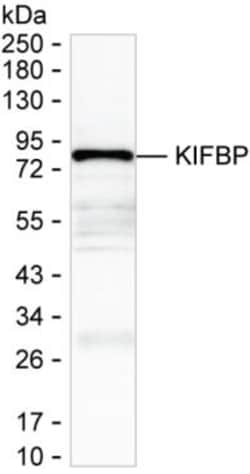
| Content And Storage | Store at 4°C short term. For long term storage, store at -20°C, avoiding freeze/thaw cycles. |
|---|---|
| Target Species | Human,Mouse |
| Host Species | Mouse |
| Conjugate | Unconjugated |
| Applications | Western Blot |
| Form | Liquid |
| Isotype | IgG2b |
| Gene Accession No. | Q6ZPU9, Q96EK5 |
| Concentration | 1 mg/mL |
| Antigen | KBP |
| Regulatory Status | RUO |
| Purification Method | Protein A |
| Gene Alias | 0710007C18Rik; 2510003E04Rik; hypothetical protein LOC527433; hypothetical protein LOC606294; Kbp; Kiaa1279; KIF1 binding protein; KIF1-binding protein; KIF1-binding protein-like protein; Kif1bp; KIF-binding protein; KIFBP; kinesin binding protein; kinesin family binding protein; LOC606294; mKIAA1279; TTC20 |
| Gene | KIFBP |
| Product Type | Antibody |
| Gene ID (Entrez) | 26128, 72320 |
| Formulation | PBS with 50% glycerol, 0.5% BSA and 0.09% sodium azide |
| Immunogen | Recombinant human KIFBP (immunogen range is 291-420). |
| Classification | Monoclonal |
| Primary or Secondary | Primary |
| Clone | K06355_16B10 |
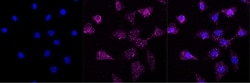
Invitrogen™ FOXO4 Recombinant Rabbit Monoclonal Antibody (23GB1470)
 Greener Choice
Offers one or more environmental benefits itemized in the U.S. FTC “Green Guides.”
Learn More
Offers one or more environmental benefits itemized in the U.S. FTC “Green Guides.”
Learn More
Rabbit Recombinant Monoclonal Antibody
| Content And Storage | -20°C |
|---|---|
| Target Species | Human,Mouse,Rat |
| Host Species | Rabbit |
| Conjugate | Unconjugated |
| Applications | Flow Cytometry,Western Blot,Immunocytochemistry |
| Form | Liquid |
| Gene Accession No. | P98177, Q9WVH3 |
| Isotype | IgG |
| Antigen | FOXO4 |
| Gene Symbols | FOXO4 |
| Regulatory Status | RUO |
| Purification Method | Affinity Chromatography |
| Gene Alias | AFX; Afx1; Afxh; AFXzeta; Fkhr3; Fork head domain transcription factor AFX1; forkhead box O4; forkhead box protein O4; forkhead protein; FOXO4; FOXO4b; MGC120490; MLLT7; myeloid/lymphoid or mixed lineage-leukemia translocation to 7 homolog; myeloid/lymphoid or mixed-lineage leukemia (trithorax homolog, Drosophila); translocated to, 7; OTTHUMP00000023497; RGD1561201 |
| Gene | FOXO4 |
| Product Type | Antibody |
| Gene ID (Entrez) | 302415, 4303, 54601 |
| Formulation | PBS with 50% glycerol and 0.02% sodium azide; pH 7.4 |
| Immunogen | A synthesized peptide derived from human FoxO4 (450-505AA). |
| Classification | Recombinant Monoclonal |
| Primary or Secondary | Primary |
| Clone | 23GB1470 |
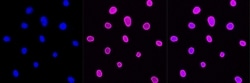
Invitrogen™ E2F1 Recombinant Rabbit Monoclonal Antibody (23GB1505)
Greener Choice
Offers one or more environmental benefits itemized in the U.S. FTC “Green Guides.”
Learn More
Offers one or more environmental benefits itemized in the U.S. FTC “Green Guides.”
Learn More
E2F1 Recombinant Rabbit Monoclonal Antibody (23GB1505)

Invitrogen™ LIX1L Polyclonal Antibody
Greener Choice
Offers one or more environmental benefits itemized in the U.S. FTC “Green Guides.”
Learn More
Offers one or more environmental benefits itemized in the U.S. FTC “Green Guides.”
Learn More
Rabbit Polyclonal Antibody
| Content And Storage | Store at 4°C short term. For long term storage, store at -20°C, avoiding freeze/thaw cycles. |
|---|---|
| Target Species | Human |
| Host Species | Rabbit |
| Conjugate | Unconjugated |
| Applications | Western Blot |
| Form | Liquid |
| Gene Accession No. | Q8IVB5 |
| Isotype | IgG |
| Concentration | 0.5 mg/mL |
| Antigen | LIX1L |
| Gene Symbols | LIX1L |
| Regulatory Status | RUO |
| Purification Method | Affinity chromatography |
| Gene Alias | D130027M04Rik; limb and CNS expressed 1 like; Lix1 homolog (chicken) like; Lix1 homolog-like; LIX1L; Lix1-like; LIX1-like protein |
| Gene | LIX1L |
| Product Type | Antibody |
| Gene ID (Entrez) | 128077 |
| Formulation | PBS with 2% sucrose and 0.09% sodium azide; pH 7.4 |
| Immunogen | Synthetic peptide directed towards the N terminal region of human LIX1L (aa 1-51). |
| Classification | Polyclonal |
| Primary or Secondary | Primary |
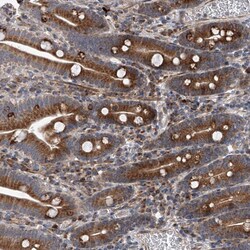
Invitrogen™ SAPAP2 Polyclonal Antibody
Greener Choice
Offers one or more environmental benefits itemized in the U.S. FTC “Green Guides.”
Learn More
Offers one or more environmental benefits itemized in the U.S. FTC “Green Guides.”
Learn More
Rabbit Polyclonal Antibody
| Content And Storage | Store at 4°C short term. For long term storage, store at -20°C, avoiding freeze/thaw cycles. |
|---|---|
| Target Species | Human |
| Host Species | Rabbit |
| Conjugate | Unconjugated |
| Applications | Immunohistochemistry (Paraffin) |
| Form | Liquid |
| Gene Accession No. | Q9P1A6 |
| Isotype | IgG |
| Concentration | 0.05 mg/mL |
| Antigen | SAPAP2 |
| Gene Symbols | DLGAP2 |
| Regulatory Status | RUO |
| Purification Method | Antigen affinity chromatography |
| Gene Alias | 6430596N04Rik; Dap2; DAP-2; discs large homolog associated protein 2; discs large homolog-associated protein 2; discs large-associated protein 2; discs, large (Drosophila) homolog-associated protein 2; disks large-associated protein 2; DLG associated protein 2; Dlgap2; postsynaptic density 95; PSD-95/SAP90-associated protein-2; PSD-95/SAP90-binding protein 2; SAP90/PSD-95 associated protein 2; SAP90/PSD-95-associated protein 2; SAPAP2 |
| Gene | DLGAP2 |
| Product Type | Antibody |
| Gene ID (Entrez) | 9228 |
| Formulation | PBS with 40% glycerol and 0.02% sodium azide; pH 7.2 |
| Immunogen | Recombinant protein corresponding to Human SAPAP2. Recombinant protein control fragment (Product #RP-93954). |
| Classification | Polyclonal |
| Primary or Secondary | Primary |
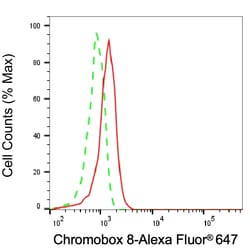
Invitrogen™ CBX8 Monoclonal Antibody (24GB7980)
Greener Choice
Offers one or more environmental benefits itemized in the U.S. FTC “Green Guides.”
Learn More
Offers one or more environmental benefits itemized in the U.S. FTC “Green Guides.”
Learn More
Mouse Monoclonal Antibody
| Content And Storage | -20°C |
|---|---|
| Target Species | Human |
| Host Species | Mouse |
| Conjugate | Unconjugated |
| Applications | Flow Cytometry,Western Blot |
| Form | Liquid |
| Gene Accession No. | Q9HC52 |
| Isotype | IgG2b |
| Antigen | CBX8 |
| Gene Symbols | CBX8 |
| Regulatory Status | RUO |
| Purification Method | Antigen affinity chromatography |
| Gene Alias | CBX8, chromobox 8, chromobox homolog 8, chromobox homolog 8 (Pc class homolog, Drosophila), chromobox protein homolog 8, HPC3, mPc3, Pc class 3 homolog, Pc3, polycomb 3, polycomb 3 homolog, RC1, rectachrome 1 |
| Gene | CBX8 |
| Product Type | Antibody |
| Gene ID (Entrez) | 57332 |
| Formulation | PBS with 50% glycerol and 0.02% sodium azide, pH 7.4 |
| Immunogen | Recombinant protein of human (1-260) CBX8. |
| Classification | Monoclonal |
| Primary or Secondary | Primary |
| Clone | 24GB7980 |
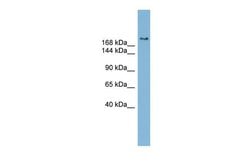
| Content And Storage | -20°C, Avoid Freeze/Thaw Cycles |
|---|---|
| Target Species | Human |
| Host Species | Rabbit |
| Conjugate | Unconjugated |
| Applications | Western Blot |
| Form | Liquid |
| Gene Accession No. | Q9Y6X0 |
| Isotype | IgG |
| Concentration | 0.5 mg/mL |
| Antigen | SETBP1 |
| Gene Symbols | SETBP1 |
| Regulatory Status | RUO |
| Purification Method | Affinity Chromatography |
| Gene Alias | C130092E12; Kiaa0437; mKIAA0437; MRD29; Seb; SET binding protein 1; SET-binding protein; SET-binding protein-like; SETBP1 |
| Gene | SETBP1 |
| Product Type | Antibody |
| Gene ID (Entrez) | 26040 |
| Formulation | PBS with 2% sucrose and 0.09% sodium azide |
| Immunogen | Synthetic peptide directed towards the middle region of human SETBP1. |
| Classification | Polyclonal |
| Primary or Secondary | Primary |
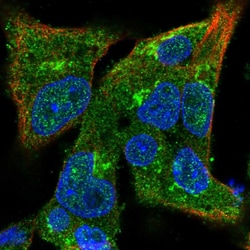
Invitrogen™ COG3 Polyclonal Antibody
Greener Choice
Offers one or more environmental benefits itemized in the U.S. FTC “Green Guides.”
Learn More
Offers one or more environmental benefits itemized in the U.S. FTC “Green Guides.”
Learn More
Rabbit Polyclonal Antibody
| Content And Storage | Store at 4°C short term. For long term storage, store at -20°C, avoiding freeze/thaw cycles. |
|---|---|
| Target Species | Human |
| Host Species | Rabbit |
| Conjugate | Unconjugated |
| Applications | Immunocytochemistry |
| Form | Liquid |
| Gene Accession No. | Q96JB2 |
| Isotype | IgG |
| Concentration | 0.05 mg/mL |
| Antigen | COG3 |
| Gene Symbols | COG3 |
| Regulatory Status | RUO |
| Purification Method | Antigen affinity chromatography |
| Gene Alias | COG complex subunit 3; COG3; component of oligomeric golgi complex 2; component of oligomeric golgi complex 3; Conserved oligomeric Golgi complex subunit 3; E430004N23; p94; SEC34; tethering factor SEC34; vesicle-docking protein SEC34 homolog |
| Gene | COG3 |
| Product Type | Antibody |
| Gene ID (Entrez) | 83548 |
| Formulation | PBS with 40% glycerol and 0.02% sodium azide; pH 7.2 |
| Immunogen | Recombinant protein corresponding to Human COG3. Recombinant protein control fragment (Product #RP-108403). |
| Classification | Polyclonal |
| Primary or Secondary | Primary |
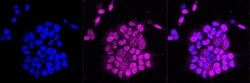
Invitrogen™ HEAB Recombinant Rabbit Monoclonal Antibody (23GB3085)
Greener Choice
Offers one or more environmental benefits itemized in the U.S. FTC “Green Guides.”
Learn More
Offers one or more environmental benefits itemized in the U.S. FTC “Green Guides.”
Learn More
HEAB Recombinant Rabbit Monoclonal Antibody (23GB3085)
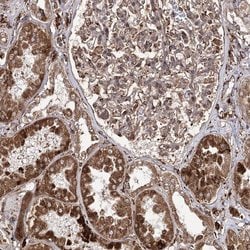
Invitrogen™ FANCL Polyclonal Antibody
Greener Choice
Offers one or more environmental benefits itemized in the U.S. FTC “Green Guides.”
Learn More
Offers one or more environmental benefits itemized in the U.S. FTC “Green Guides.”
Learn More
Rabbit Polyclonal Antibody
| Content And Storage | Store at 4°C short term. For long term storage, store at -20°C, avoiding freeze/thaw cycles. |
|---|---|
| Target Species | Human |
| Host Species | Rabbit |
| Conjugate | Unconjugated |
| Applications | Immunohistochemistry (Paraffin) |
| Form | Liquid |
| Gene Accession No. | Q9NW38 |
| Isotype | IgG |
| Concentration | 0.05 mg/mL |
| Antigen | FANCL |
| Gene Symbols | FANCL |
| Regulatory Status | RUO |
| Purification Method | Antigen affinity chromatography |
| Gene Alias | 2010322C19Rik; AW554273; B230118H11Rik; E3 ubiquitin-protein ligase FANCL; FA complementation group L; FAAP43; FANCL; Fanconi anemia complementation group L; fanconi anemia group L protein; Fanconi anemia group L protein homolog; Fanconi anemia, complementation group L; fanconi anemia-associated polypeptide of 43 kDa; FLJ10335; gcd; germ cell deficient; PHD finger protein 9; Phf9; Pog; proliferation of germ cells protein; RING-type E3 ubiquitin transferase FANCL |
| Gene | FANCL |
| Product Type | Antibody |
| Gene ID (Entrez) | 55120 |
| Formulation | PBS with 40% glycerol and 0.02% sodium azide; pH 7.2 |
| Immunogen | Recombinant protein corresponding to Human FANCL. Recombinant protein control fragment (Product #RP-96016). |
| Classification | Polyclonal |
| Primary or Secondary | Primary |

Invitrogen™ MARCO Recombinant Mouse Monoclonal Antibody (PLK1)
Greener Choice
Offers one or more environmental benefits itemized in the U.S. FTC “Green Guides.”
Learn More
Offers one or more environmental benefits itemized in the U.S. FTC “Green Guides.”
Learn More
MARCO Recombinant Mouse Monoclonal Antibody (PLK1)
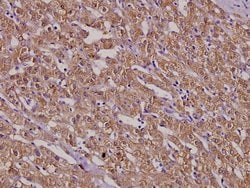
Invitrogen™ MSH3 Polyclonal Antibody
Greener Choice
Offers one or more environmental benefits itemized in the U.S. FTC “Green Guides.”
Learn More
Offers one or more environmental benefits itemized in the U.S. FTC “Green Guides.”
Learn More
Rabbit Polyclonal Antibody
| Content And Storage | Store at 4°C short term. For long term storage, store at -20°C, avoiding freeze/thaw cycles. |
|---|---|
| Target Species | Human,Mouse,Rat |
| Host Species | Rabbit |
| Conjugate | Unconjugated |
| Applications | Immunohistochemistry (Paraffin),Western Blot |
| Form | Liquid |
| Gene Accession No. | P13705, P20585 |
| Isotype | IgG |
| Concentration | 1 mg/mL |
| Antigen | MSH3 |
| Gene Symbols | MSH3 |
| Regulatory Status | RUO |
| Purification Method | Antigen affinity chromatography |
| Gene Alias | D13Em1; Divergent upstream protein; DNA mismatch repair protein Msh3; DUC1; DUG; DUP; hMSH3; Mismatch repair protein 1; MRP1; MSH3; mutS homolog 3; mutS homolog 3 (E. coli); protein repair-1; Protein repair-3; REP-1; Rep3; Rep-3 |
| Gene | MSH3 |
| Product Type | Antibody |
| Gene ID (Entrez) | 17686, 4437, 499505 |
| Formulation | PBS with 50% glycerol and 0.02% sodium azide; pH 7.2 |
| Immunogen | Synthetic peptide corresponding to amino acids 50-100 of Human MSH3. |
| Classification | Polyclonal |
| Primary or Secondary | Primary |
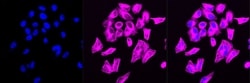
Invitrogen™ LOXL2 Recombinant Rabbit Monoclonal Antibody (23GB2610)
Greener Choice
Offers one or more environmental benefits itemized in the U.S. FTC “Green Guides.”
Learn More
Offers one or more environmental benefits itemized in the U.S. FTC “Green Guides.”
Learn More
LOXL2 Recombinant Rabbit Monoclonal Antibody (23GB2610)
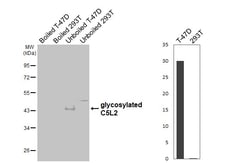
Invitrogen™ GPR77 Recombinant Rabbit Monoclonal Antibody (HL4182)
Greener Choice
Offers one or more environmental benefits itemized in the U.S. FTC “Green Guides.”
Learn More
Offers one or more environmental benefits itemized in the U.S. FTC “Green Guides.”
Learn More
Rabbit Recombinant Monoclonal Antibody
| Content And Storage | Store at 4°C short term. For long term storage, store at -20°C, avoiding freeze/thaw cycles. |
|---|---|
| Target Species | Human |
| Host Species | Rabbit |
| Conjugate | Unconjugated |
| Applications | Western Blot |
| Form | Liquid |
| Gene Accession No. | Q9P296 |
| Isotype | IgG |
| Concentration | 1 mg/mL |
| Antigen | GPR77 |
| Gene Symbols | C5AR2 |
| Regulatory Status | RUO |
| Purification Method | Protein A |
| Gene Alias | C5a anaphylatoxin chemotactic receptor 2, C5a anaphylatoxin chemotactic receptor C5L2, C5AR2, C5L2, Complement component 5a receptor 2, G protein-coupled receptor 77, G protein-coupled receptor C5L2, GPF77, GPR77, G-protein coupled receptor 77 |
| Gene | C5AR2 |
| Product Type | Antibody |
| Gene ID (Entrez) | 27202 |
| Formulation | PBS with no preservative |
| Immunogen | Synthetic peptide encompassing a sequence within the Intracellular domain of human C5L2. The exact sequence is proprietary. |
| Classification | Recombinant Monoclonal |
| Primary or Secondary | Primary |
| Clone | HL4182 |
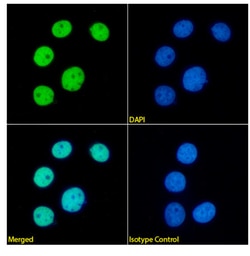
Invitrogen™ HDGF Recombinant Mouse Monoclonal Antibody (H3)
Greener Choice
Offers one or more environmental benefits itemized in the U.S. FTC “Green Guides.”
Learn More
Offers one or more environmental benefits itemized in the U.S. FTC “Green Guides.”
Learn More
HDGF Recombinant Mouse Monoclonal Antibody (H3)