
Anticorps primaires
Les anticorps primaires, des immunoglobulines qui se lient à des protéines spécifiques ou à d’autres biomolécules, sont utilisés dans de nombreuses applications et protocoles de recherche pour détecter des cibles d’intérêt. Ils sont développés à l’aide de différents animaux hôtes, notamment la souris, le rat, le lapin, la chèvre, le mouton et de nombreux autres.
Anticorps monoclonaux et polyclonaux
Un type d’anticorps primaires, les anticorps monoclonaux, offre une reproductibilité élevée ainsi qu’une réactivité croisée et un bruit de fond faibles. Un autre type, les anticorps polyclonaux, coûtent souvent moins cher, offrent une plus grande affinité et une liaison plus rapide. Les deux sont produits à l’aide de lymphocytes B plasmatiques, mais le premier utilise le même clone et le deuxième utilise des clones différents. Les anticorps monoclonaux nécessitent des lignées cellulaires d’hybridome, ce qui n’est pas le cas des anticorps polyclonaux.
Il existe également des anticorps monoclonaux recombinants offrant des avantages similaires, notamment une affinité, une capacité de mise à l’échelle et une sensibilité élevées. Ils sont produits par clonage in vitro des lymphocytes B plasmatiques et à l’aide d’hôtes d’expression.
Anticorps primaires conjugués
Les anticorps peuvent être marqués avec divers fluorophores ou agents de détection, ou utilisés sans marqueurs. Les anticorps primaires marqués, également appelés anticorps primaires conjugués, aident les chercheurs à simplifier et à rationaliser leurs applications. Ils sont couplés à des enzymes et à des colorants courants, tels que l’Alexa Fluor, et sont souvent utilisés pour l’analyse des protéines et des cellules.
Applications
Les anticorps destinés aux applications en sciences de la vie sont utilisés pour la cytométrie en flux, le transfert Western, l’ELISA, l’immunohistochimie et l’immunocytochimie. Des anticorps secondaires peuvent être ajoutés pour favoriser la détection et la purification de certains antigènes. Ils se lient à l’anticorps primaire, qui lui-même se lie à l’antigène d’intérêt. Trouver la bonne combinaison d’anticorps peut offrir une plus grande spécificité pour l’antigène et un signal fort et détectable.
- (5)
- (1)
- (7)
- (71)
- (898)
- (1,132)
- (1)
- (2)
- (680)
- (1,039)
- (180,070)
- (10,829)
- (45)
- (10)
- (2)
- (1)
- (2,069)
- (862)
- (600)
- (24)
- (8,781)
- (362)
- (717)
- (4)
- (1)
- (56)
- (23)
- (7,594)
- (6,461)
- (1)
- (5)
- (1,024)
- (47)
- (1)
- (384)
- (1)
- (5)
- (67)
- (1)
- (99,616)
- (100,504)
- (36)
- (7,434)
- (1)
- (6)
- (2)
- (7)
- (3)
- (8)
- (26)
- (1)
- (3)
- (1)
- (1)
- (132)
- (22)
- (2)
- (1)
- (1)
- (7)
- (2)
- (123)
- (185)
- (5)
- (7,326)
- (302)
- (2,246)
- (28)
- (6)
- (3,399)
- (2,245)
- (10)
- (6)
- (2)
- (212)
- (3,280)
- (1)
- (1)
- (2,954)
- (26)
- (1)
- (1)
- (79)
- (355)
- (1)
- (2)
- (3)
- (2)
- (1)
- (29)
- (1)
- (1)
- (3,090)
- (3)
- (5)
- (5)
- (1)
- (18)
- (4)
- (11)
- (2)
- (2,385)
- (4)
- (2)
- (1)
- (1)
- (8)
- (87)
- (4,818)
- (6,462)
- (1)
- (218)
- (17)
- (1)
- (1,608)
- (1)
- (1,760)
- (19)
- (2)
- (26)
- (1)
- (161)
- (1)
- (1)
- (2)
- (18)
- (6)
- (3)
- (1)
- (1)
- (7,617)
- (9)
- (10)
- (303)
- (259)
- (16)
- (3,561)
- (3,755)
- (5)
- (4,897)
- (15)
- (1,948)
- (186)
- (48)
- (15)
- (3,719)
- (4,552)
- (1)
- (2)
- (73)
- (3)
- (4,004)
- (3,572)
- (3)
- (21,637)
- (22,231)
- (22,182)
- (22,119)
- (22,235)
- (22,049)
- (22)
- (11)
- (1)
- (5)
- (1)
- (1)
- (1)
- (5)
- (5,950)
- (11)
- (158)
- (84)
- (108)
- (129)
- (140)
- (150)
- (117)
- (192)
- (144)
- (107)
- (136)
- (144)
- (141)
- (2,039)
- (1)
- (18)
- (15)
- (2)
- (2)
- (2,146)
- (2,173)
- (2,168)
- (2,235)
- (2,918)
- (2,256)
- (2,164)
- (2,157)
- (7)
- (8)
- (5)
- (5,519)
- (28)
- (208)
- (560)
- (3,032)
- (1,877)
- (2,556)
- (2,553)
- (1,882)
- (2)
- (1)
- (4)
- (7)
- (10)
- (1)
- (103)
- (11)
- (20)
- (58)
- (28)
- (130)
- (171)
- (25)
- (88)
- (61)
- (9)
- (46)
- (81)
- (10)
- (75)
- (81)
- (97)
- (86)
- (86)
- (16)
- (67)
- (67)
- (43)
- (57)
- (51)
- (51)
- (107)
- (130)
- (41)
- (64)
- (65)
- (84)
- (80)
- (8,050)
- (7)
- (4)
- (1)
- (248)
- (296)
- (971)
- (24)
- (20)
- (200)
- (194)
- (93)
- (40)
- (3,697)
- (258)
- (515)
- (12)
- (13)
- (5)
- (6)
- (603)
- (2)
- (7)
- (5)
- (1)
- (188)
- (157)
- (50)
- (76)
- (65)
- (14)
- (1)
- (5)
- (8)
- (3)
- (10)
- (2)
- (60)
- (1)
- (219,793)
- (97)
- (2)
- (376)
- (68)
- (46)
- (22)
- (276)
- (1)
- (6,374)
- (6,389)
- (6,377)
- (56)
- (1,315)
- (1)
- (8)
- (639)
- (719)
- (1)
- (2)
- (3)
- (4)
- (14,808)
- (53)
- (68)
- (389)
- (16,891)
- (140)
- (8)
- (158,821)
- (11)
- (251,703)
- (23,759)
- (3)
- (5,572)
- (128)
- (828)
- (2)
- (20)
- (23)
- (33)
- (353)
- (166)
- (26)
- (257)
- (2)
- (4)
- (4)
- (4)
- (24)
- (51)
- (33)
- (2)
- (1,014)
- (1,049)
- (10)
- (1)
- (17)
- (8)
- (4)
- (59)
- (13)
- (2)
- (1)
- (4,800)
- (28)
- (2)
- (1,047)
- (176)
- (2)
- (8)
- (6)
- (27)
- (23)
- (1)
- (1)
- (168)
- (25)
- (21)
- (23,770)
- (2)
- (1)
- (34)
- (42)
- (68)
- (356)
- (2,336)
- (2)
- (3)
- (3)
- (811)
- (45)
- (105,845)
- (5)
- (3,231)
- (361)
- (46)
- (17)
- (272)
- (16)
- (17)
- (21)
- (676)
- (14)
- (2)
- (2)
- (38)
- (5)
- (2)
- (122,005)
- (1,741)
- (17,679)
- (61)
- (6)
- (11)
- (1)
- (1)
- (3)
- (33)
- (17,457)
- (30)
- (2)
- (1)
- (2)
- (113)
- (610)
- (4,166)
- (47)
- (28)
- (2)
- (7)
- (770)
- (3)
- (2)
- (2)
- (2)
- (10)
- (45)
- (35)
- (2)
- (383)
- (2,030)
- (96,663)
- (39,402)
- (25)
- (24)
- (47,748)
- (104,735)
- (2)
- (669)
- (19,781)
- (2)
- (232)
- (1,025)
- (187,231)
- (101)
- (418)
- (228)
- (3)
- (64,657)
- (778)
- (26)
- (2)
- (51)
- (238)
- (102)
- (792)
- (564)
- (680)
- (1)
- (2)
- (45)
- (3,558)
- (1)
- (294)
- (30)
- (2)
- (75)
- (1)
- (6)
- (5)
- (232)
- (6)
- (938)
- (2)
- (62)
- (71)
- (681)
- (7)
- (6)
- (7,325)
- (779)
- (37)
- (314)
- (106)
- (2)
- (5,287)
- (4)
- (2)
- (1)
- (854)
- (1)
- (3)
- (73)
- (2)
- (1)
- (961)
- (71)
- (9)
- (15)
- (870)
- (1)
- (2,895)
- (542)
- (321)
- (41)
- (1)
- (1,647)
- (198)
- (23)
- (14)
- (22)
- (6)
- (1,994)
- (91)
- (2)
- (17)
- (3)
- (29)
- (37)
- (2)
- (1)
- (1)
- (313,055)
- (3)
- (3,111)
- (19)
- (10)
- (60)
- (240,366)
- (2)
- (207,492)
- (26,714)
- (21)
- (288)
- (3)
Résultats de la recherche filtrée

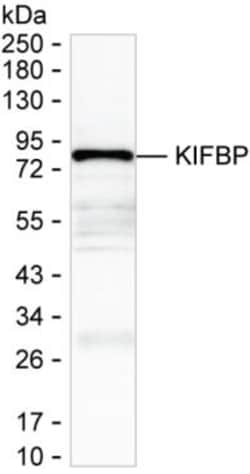
| Applications | Western Blot |
|---|---|
| Type de produit | Antibody |
| Numéro d’acquisition du gène | Q6ZPU9, Q96EK5 |
| Isotype | IgG2b |
| Conjugué | Unconjugated |
| Espèces cibles | Human,Mouse |
| Statut réglementaire | RUO |
| Concentration | 1 mg/mL |
| Primaire ou secondaire | Primary |
| Contenu et stockage | Store at 4°C short term. For long term storage, store at -20°C, avoiding freeze/thaw cycles. |
| Forme | Liquid |
| Alias du gène | 0710007C18Rik; 2510003E04Rik; hypothetical protein LOC527433; hypothetical protein LOC606294; Kbp; Kiaa1279; KIF1 binding protein; KIF1-binding protein; KIF1-binding protein-like protein; Kif1bp; KIF-binding protein; KIFBP; kinesin binding protein; kinesin family binding protein; LOC606294; mKIAA1279; TTC20 |
| Immunogène | Recombinant human KIFBP (immunogen range is 291-420). |
| Classification | Monoclonal |
| Gène | KIFBP |
| Méthode de purification | Protein A |
| ID du gène (Entrez) | 26128, 72320 |
| Espèces hôtes | Mouse |
| Formule | PBS with 50% glycerol, 0.5% BSA and 0.09% sodium azide |
| Clone | K06355_16B10 |
| Antigène | KBP |
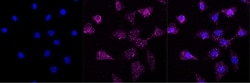
Invitrogen™ FOXO4 Recombinant Rabbit Monoclonal Antibody (23GB1470)
 Greener Choice
Offers one or more environmental benefits itemized in the U.S. FTC “Green Guides.”
Learn More
Offers one or more environmental benefits itemized in the U.S. FTC “Green Guides.”
Learn More
Rabbit Recombinant Monoclonal Antibody
| Applications | Flow Cytometry,Western Blot,Immunocytochemistry |
|---|---|
| Type de produit | Antibody |
| Numéro d’acquisition du gène | P98177, Q9WVH3 |
| Symboles de gène | FOXO4 |
| Isotype | IgG |
| Conjugué | Unconjugated |
| Espèces cibles | Human,Mouse,Rat |
| Statut réglementaire | RUO |
| Primaire ou secondaire | Primary |
| Forme | Liquid |
| Contenu et stockage | -20°C |
| Alias du gène | AFX; Afx1; Afxh; AFXzeta; Fkhr3; Fork head domain transcription factor AFX1; forkhead box O4; forkhead box protein O4; forkhead protein; FOXO4; FOXO4b; MGC120490; MLLT7; myeloid/lymphoid or mixed lineage-leukemia translocation to 7 homolog; myeloid/lymphoid or mixed-lineage leukemia (trithorax homolog, Drosophila); translocated to, 7; OTTHUMP00000023497; RGD1561201 |
| Immunogène | A synthesized peptide derived from human FoxO4 (450-505AA). |
| Classification | Recombinant Monoclonal |
| Méthode de purification | Affinity Chromatography |
| ID du gène (Entrez) | 302415, 4303, 54601 |
| Gène | FOXO4 |
| Espèces hôtes | Rabbit |
| Formule | PBS with 50% glycerol and 0.02% sodium azide; pH 7.4 |
| Clone | 23GB1470 |
| Antigène | FOXO4 |
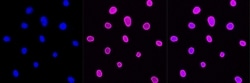
Invitrogen™ E2F1 Recombinant Rabbit Monoclonal Antibody (23GB1505)
Greener Choice
Offers one or more environmental benefits itemized in the U.S. FTC “Green Guides.”
Learn More
Offers one or more environmental benefits itemized in the U.S. FTC “Green Guides.”
Learn More
E2F1 Recombinant Rabbit Monoclonal Antibody (23GB1505)

Invitrogen™ LIX1L Polyclonal Antibody
Greener Choice
Offers one or more environmental benefits itemized in the U.S. FTC “Green Guides.”
Learn More
Offers one or more environmental benefits itemized in the U.S. FTC “Green Guides.”
Learn More
Rabbit Polyclonal Antibody
| Applications | Western Blot |
|---|---|
| Type de produit | Antibody |
| Numéro d’acquisition du gène | Q8IVB5 |
| Symboles de gène | LIX1L |
| Isotype | IgG |
| Conjugué | Unconjugated |
| Espèces cibles | Human |
| Statut réglementaire | RUO |
| Concentration | 0.5 mg/mL |
| Primaire ou secondaire | Primary |
| Forme | Liquid |
| Contenu et stockage | Store at 4°C short term. For long term storage, store at -20°C, avoiding freeze/thaw cycles. |
| Alias du gène | D130027M04Rik; limb and CNS expressed 1 like; Lix1 homolog (chicken) like; Lix1 homolog-like; LIX1L; Lix1-like; LIX1-like protein |
| Immunogène | Synthetic peptide directed towards the N terminal region of human LIX1L (aa 1-51). |
| Classification | Polyclonal |
| Méthode de purification | Affinity chromatography |
| ID du gène (Entrez) | 128077 |
| Gène | LIX1L |
| Espèces hôtes | Rabbit |
| Formule | PBS with 2% sucrose and 0.09% sodium azide; pH 7.4 |
| Antigène | LIX1L |
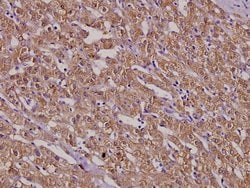
Invitrogen™ MSH3 Polyclonal Antibody
Greener Choice
Offers one or more environmental benefits itemized in the U.S. FTC “Green Guides.”
Learn More
Offers one or more environmental benefits itemized in the U.S. FTC “Green Guides.”
Learn More
Rabbit Polyclonal Antibody
| Applications | Immunohistochemistry (Paraffin),Western Blot |
|---|---|
| Type de produit | Antibody |
| Numéro d’acquisition du gène | P13705, P20585 |
| Symboles de gène | MSH3 |
| Isotype | IgG |
| Conjugué | Unconjugated |
| Espèces cibles | Human,Mouse,Rat |
| Statut réglementaire | RUO |
| Concentration | 1 mg/mL |
| Primaire ou secondaire | Primary |
| Forme | Liquid |
| Contenu et stockage | Store at 4°C short term. For long term storage, store at -20°C, avoiding freeze/thaw cycles. |
| Alias du gène | D13Em1; Divergent upstream protein; DNA mismatch repair protein Msh3; DUC1; DUG; DUP; hMSH3; Mismatch repair protein 1; MRP1; MSH3; mutS homolog 3; mutS homolog 3 (E. coli); protein repair-1; Protein repair-3; REP-1; Rep3; Rep-3 |
| Immunogène | Synthetic peptide corresponding to amino acids 50-100 of Human MSH3. |
| Classification | Polyclonal |
| Méthode de purification | Antigen affinity chromatography |
| ID du gène (Entrez) | 17686, 4437, 499505 |
| Gène | MSH3 |
| Espèces hôtes | Rabbit |
| Formule | PBS with 50% glycerol and 0.02% sodium azide; pH 7.2 |
| Antigène | MSH3 |
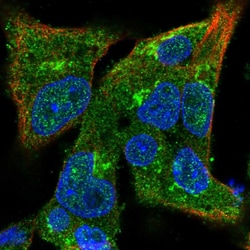
Invitrogen™ COG3 Polyclonal Antibody
Greener Choice
Offers one or more environmental benefits itemized in the U.S. FTC “Green Guides.”
Learn More
Offers one or more environmental benefits itemized in the U.S. FTC “Green Guides.”
Learn More
Rabbit Polyclonal Antibody
| Applications | Immunocytochemistry |
|---|---|
| Type de produit | Antibody |
| Numéro d’acquisition du gène | Q96JB2 |
| Symboles de gène | COG3 |
| Isotype | IgG |
| Conjugué | Unconjugated |
| Espèces cibles | Human |
| Statut réglementaire | RUO |
| Concentration | 0.05 mg/mL |
| Primaire ou secondaire | Primary |
| Forme | Liquid |
| Contenu et stockage | Store at 4°C short term. For long term storage, store at -20°C, avoiding freeze/thaw cycles. |
| Alias du gène | COG complex subunit 3; COG3; component of oligomeric golgi complex 2; component of oligomeric golgi complex 3; Conserved oligomeric Golgi complex subunit 3; E430004N23; p94; SEC34; tethering factor SEC34; vesicle-docking protein SEC34 homolog |
| Immunogène | Recombinant protein corresponding to Human COG3. Recombinant protein control fragment (Product #RP-108403). |
| Classification | Polyclonal |
| Méthode de purification | Antigen affinity chromatography |
| ID du gène (Entrez) | 83548 |
| Gène | COG3 |
| Espèces hôtes | Rabbit |
| Formule | PBS with 40% glycerol and 0.02% sodium azide; pH 7.2 |
| Antigène | COG3 |
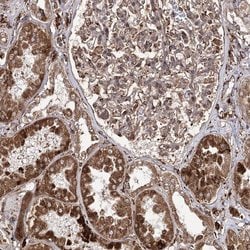
Invitrogen™ FANCL Polyclonal Antibody
Greener Choice
Offers one or more environmental benefits itemized in the U.S. FTC “Green Guides.”
Learn More
Offers one or more environmental benefits itemized in the U.S. FTC “Green Guides.”
Learn More
Rabbit Polyclonal Antibody
| Applications | Immunohistochemistry (Paraffin) |
|---|---|
| Type de produit | Antibody |
| Numéro d’acquisition du gène | Q9NW38 |
| Symboles de gène | FANCL |
| Isotype | IgG |
| Conjugué | Unconjugated |
| Espèces cibles | Human |
| Statut réglementaire | RUO |
| Concentration | 0.05 mg/mL |
| Primaire ou secondaire | Primary |
| Forme | Liquid |
| Contenu et stockage | Store at 4°C short term. For long term storage, store at -20°C, avoiding freeze/thaw cycles. |
| Alias du gène | 2010322C19Rik; AW554273; B230118H11Rik; E3 ubiquitin-protein ligase FANCL; FA complementation group L; FAAP43; FANCL; Fanconi anemia complementation group L; fanconi anemia group L protein; Fanconi anemia group L protein homolog; Fanconi anemia, complementation group L; fanconi anemia-associated polypeptide of 43 kDa; FLJ10335; gcd; germ cell deficient; PHD finger protein 9; Phf9; Pog; proliferation of germ cells protein; RING-type E3 ubiquitin transferase FANCL |
| Immunogène | Recombinant protein corresponding to Human FANCL. Recombinant protein control fragment (Product #RP-96016). |
| Classification | Polyclonal |
| Méthode de purification | Antigen affinity chromatography |
| ID du gène (Entrez) | 55120 |
| Gène | FANCL |
| Espèces hôtes | Rabbit |
| Formule | PBS with 40% glycerol and 0.02% sodium azide; pH 7.2 |
| Antigène | FANCL |
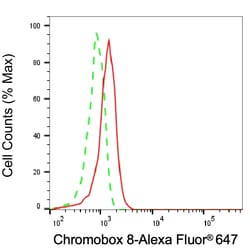
Invitrogen™ CBX8 Monoclonal Antibody (24GB7980)
Greener Choice
Offers one or more environmental benefits itemized in the U.S. FTC “Green Guides.”
Learn More
Offers one or more environmental benefits itemized in the U.S. FTC “Green Guides.”
Learn More
Mouse Monoclonal Antibody
| Applications | Flow Cytometry,Western Blot |
|---|---|
| Type de produit | Antibody |
| Numéro d’acquisition du gène | Q9HC52 |
| Symboles de gène | CBX8 |
| Isotype | IgG2b |
| Conjugué | Unconjugated |
| Espèces cibles | Human |
| Statut réglementaire | RUO |
| Primaire ou secondaire | Primary |
| Forme | Liquid |
| Contenu et stockage | -20°C |
| Alias du gène | CBX8, chromobox 8, chromobox homolog 8, chromobox homolog 8 (Pc class homolog, Drosophila), chromobox protein homolog 8, HPC3, mPc3, Pc class 3 homolog, Pc3, polycomb 3, polycomb 3 homolog, RC1, rectachrome 1 |
| Immunogène | Recombinant protein of human (1-260) CBX8. |
| Classification | Monoclonal |
| Méthode de purification | Antigen affinity chromatography |
| ID du gène (Entrez) | 57332 |
| Gène | CBX8 |
| Espèces hôtes | Mouse |
| Formule | PBS with 50% glycerol and 0.02% sodium azide, pH 7.4 |
| Clone | 24GB7980 |
| Antigène | CBX8 |
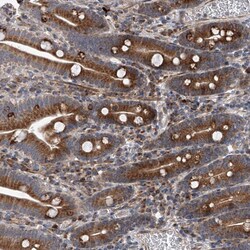
Invitrogen™ SAPAP2 Polyclonal Antibody
Greener Choice
Offers one or more environmental benefits itemized in the U.S. FTC “Green Guides.”
Learn More
Offers one or more environmental benefits itemized in the U.S. FTC “Green Guides.”
Learn More
Rabbit Polyclonal Antibody
| Applications | Immunohistochemistry (Paraffin) |
|---|---|
| Type de produit | Antibody |
| Numéro d’acquisition du gène | Q9P1A6 |
| Symboles de gène | DLGAP2 |
| Isotype | IgG |
| Conjugué | Unconjugated |
| Espèces cibles | Human |
| Statut réglementaire | RUO |
| Concentration | 0.05 mg/mL |
| Primaire ou secondaire | Primary |
| Forme | Liquid |
| Contenu et stockage | Store at 4°C short term. For long term storage, store at -20°C, avoiding freeze/thaw cycles. |
| Alias du gène | 6430596N04Rik; Dap2; DAP-2; discs large homolog associated protein 2; discs large homolog-associated protein 2; discs large-associated protein 2; discs, large (Drosophila) homolog-associated protein 2; disks large-associated protein 2; DLG associated protein 2; Dlgap2; postsynaptic density 95; PSD-95/SAP90-associated protein-2; PSD-95/SAP90-binding protein 2; SAP90/PSD-95 associated protein 2; SAP90/PSD-95-associated protein 2; SAPAP2 |
| Immunogène | Recombinant protein corresponding to Human SAPAP2. Recombinant protein control fragment (Product #RP-93954). |
| Classification | Polyclonal |
| Méthode de purification | Antigen affinity chromatography |
| ID du gène (Entrez) | 9228 |
| Gène | DLGAP2 |
| Espèces hôtes | Rabbit |
| Formule | PBS with 40% glycerol and 0.02% sodium azide; pH 7.2 |
| Antigène | SAPAP2 |
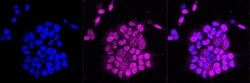
Invitrogen™ HEAB Recombinant Rabbit Monoclonal Antibody (23GB3085)
Greener Choice
Offers one or more environmental benefits itemized in the U.S. FTC “Green Guides.”
Learn More
Offers one or more environmental benefits itemized in the U.S. FTC “Green Guides.”
Learn More
HEAB Recombinant Rabbit Monoclonal Antibody (23GB3085)
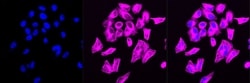
Invitrogen™ LOXL2 Recombinant Rabbit Monoclonal Antibody (23GB2610)
Greener Choice
Offers one or more environmental benefits itemized in the U.S. FTC “Green Guides.”
Learn More
Offers one or more environmental benefits itemized in the U.S. FTC “Green Guides.”
Learn More
LOXL2 Recombinant Rabbit Monoclonal Antibody (23GB2610)
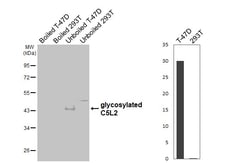
Invitrogen™ GPR77 Recombinant Rabbit Monoclonal Antibody (HL4182)
Greener Choice
Offers one or more environmental benefits itemized in the U.S. FTC “Green Guides.”
Learn More
Offers one or more environmental benefits itemized in the U.S. FTC “Green Guides.”
Learn More
Rabbit Recombinant Monoclonal Antibody
| Applications | Western Blot |
|---|---|
| Type de produit | Antibody |
| Numéro d’acquisition du gène | Q9P296 |
| Symboles de gène | C5AR2 |
| Isotype | IgG |
| Conjugué | Unconjugated |
| Espèces cibles | Human |
| Statut réglementaire | RUO |
| Concentration | 1 mg/mL |
| Primaire ou secondaire | Primary |
| Forme | Liquid |
| Contenu et stockage | Store at 4°C short term. For long term storage, store at -20°C, avoiding freeze/thaw cycles. |
| Alias du gène | C5a anaphylatoxin chemotactic receptor 2, C5a anaphylatoxin chemotactic receptor C5L2, C5AR2, C5L2, Complement component 5a receptor 2, G protein-coupled receptor 77, G protein-coupled receptor C5L2, GPF77, GPR77, G-protein coupled receptor 77 |
| Immunogène | Synthetic peptide encompassing a sequence within the Intracellular domain of human C5L2. The exact sequence is proprietary. |
| Classification | Recombinant Monoclonal |
| Méthode de purification | Protein A |
| ID du gène (Entrez) | 27202 |
| Gène | C5AR2 |
| Espèces hôtes | Rabbit |
| Formule | PBS with no preservative |
| Clone | HL4182 |
| Antigène | GPR77 |
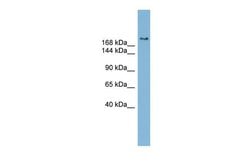
| Applications | Western Blot |
|---|---|
| Type de produit | Antibody |
| Numéro d’acquisition du gène | Q9Y6X0 |
| Symboles de gène | SETBP1 |
| Isotype | IgG |
| Conjugué | Unconjugated |
| Espèces cibles | Human |
| Statut réglementaire | RUO |
| Concentration | 0.5 mg/mL |
| Primaire ou secondaire | Primary |
| Forme | Liquid |
| Contenu et stockage | -20°C, Avoid Freeze/Thaw Cycles |
| Alias du gène | C130092E12; Kiaa0437; mKIAA0437; MRD29; Seb; SET binding protein 1; SET-binding protein; SET-binding protein-like; SETBP1 |
| Immunogène | Synthetic peptide directed towards the middle region of human SETBP1. |
| Classification | Polyclonal |
| Méthode de purification | Affinity Chromatography |
| ID du gène (Entrez) | 26040 |
| Gène | SETBP1 |
| Espèces hôtes | Rabbit |
| Formule | PBS with 2% sucrose and 0.09% sodium azide |
| Antigène | SETBP1 |

Invitrogen™ MARCO Recombinant Mouse Monoclonal Antibody (PLK1)
Greener Choice
Offers one or more environmental benefits itemized in the U.S. FTC “Green Guides.”
Learn More
Offers one or more environmental benefits itemized in the U.S. FTC “Green Guides.”
Learn More
MARCO Recombinant Mouse Monoclonal Antibody (PLK1)
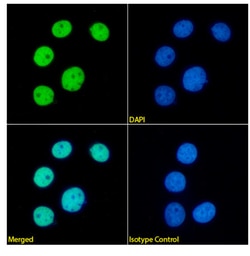
Invitrogen™ HDGF Recombinant Mouse Monoclonal Antibody (H3)
Greener Choice
Offers one or more environmental benefits itemized in the U.S. FTC “Green Guides.”
Learn More
Offers one or more environmental benefits itemized in the U.S. FTC “Green Guides.”
Learn More
HDGF Recombinant Mouse Monoclonal Antibody (H3)