
Protein Method Blocking Buffers


Thermo Scientific™ Blocker™ Casein
Blocker Casein is a ready-to-use solution of purified casein for blocking steps in western blot, ELISA, IHC, and nucleic acid detection methods.

Thermo Scientific™ Pierce™ Protein-Free Blocking Buffer
Pierce Protein-Free Blocking Buffer is a non-protein compound that provides effective blocking for membrane-based and plate-based protein detection methods, resulting in extremely low background.

Thermo Scientific™ Pierce™ Fast Blocking Buffer
Optimize Western blotting systems by decreasing both background signal and incubation time compared to traditional blocking agents with Thermo Scientific™ Pierce Fast Blocking Buffer, a ready-to-use blocker solution.

Thermo Scientific™ SuperBlock™ Blocking Buffer
SuperBlock Blocking Buffer is an optimized solution containing a single purified glycoprotein that provides incredibly fast and effective blocking for ELISA, IHC, and western blot analysis.

MilliporeSigma™ Calbiochem™ BLOT-QuickBlocker™ Reagent
Prevents nonspecific proteins from binding to blots.
MilliporeSigma™ HAT Assay Buffer, 5X
For use in the HAT Assay.


Thermo Scientific™ Fish Serum Blocking Buffer
Thermo Scientific Fish Serum Blocking Buffer is steelhead salmon serum in PBS that is especially useful as a blocking agent in immunohistochemistry (IHC) and other detection methods involving mammalian samples.

Thermo Scientific™ SuperBlock™ Blocking Buffer, blotting
Thermo Scientific SuperBlock Blocking Buffer, blotting is an optimized PBS solution containing a protein that provides incredibly fast and effective blocking for western blot analysis.
Invitrogen™ eBioscience™ IHC/ICC Blocking Buffer - High Protein
Designed for use in immunohistochemistry and immunocytochemistry protocols which require blocking of non-specific binding sites. IHC/ICC Blocking Buffer, High Protein is recommended for tissues and antibodies with high background staining, nuclear antigens, and FFPE tissue.
TBS with Tween™ (TBST), 20X Solution, Molecular Biology Grade, Ultrapure
Used in Western blotting protocols

Thermo Scientific™ Blocker™ FL Fluorescent Blocking Buffer (10X)
Blocker FL Fluorescent Blocking Buffer is designed to block excess nonspecific binding sites to help reduce background fluorescence in western blotting applications.
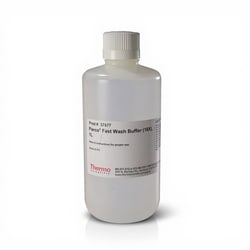
Thermo Scientific™ Pierce™ Fast Wash Buffer, 10X
Optimize Western blotting systems by decreasing both background signal and incubation time compared to traditional blocking agents with this ready-to-use blocker solution.
- 1
- 2