
Cellules compétentes


Invitrogen™ MAX Efficiency™ DH5α Cellules compétentes

Les cellules compétentes MAX Efficiency™ DH5α sont une souche polyvalente utilisée pour de nombreuses applications de clonage. Préparées par une modification de la méthode de Hanahan, elles permettent des transformations à haute efficacité, notamment avec de faibles quantités d’ADN ou pour la construction de bibliothèques à partir de vecteurs plasmidiques.

MilliporeSigma™ Novagen™ Tuner™ Cellules compétentes DE3
Les souches hôtes tuner sont des mutants de délétion lacZY de BL21, qui permettent des niveaux ajustables d’expression protéique dans toutes les cellules d’une culture.

Thermo Scientific™ DH5α Cellules compétentes
Des cellules d’E. coli chimiquement compétentes recommandées pour un sous-clonage régulier en vecteurs plasmidiques. Les cellules d’efficacité de sous-clonage ne conviennent pas à la génération de bibliothèques d’ADNc.

Invitrogen™ MultiShot™ Cellules compétentes FlexPlate DH5α T1R
MultiShot Les cellules E. coli FlexPlate DH5α T1 R Chimiquement compétentes clonent des cellules compétentes dérivées d’une souche bien connue et polyvalente DH5α qui peut être utilisée dans de nombreuses applications de clonage au quotidien.

Invitrogen™ ElectroMAX™ Cellules compétentes DH5-Eα
ElectroMAX Les cellules compétentes DH5-Eα sont dérivées de la DH5α souche et sont adaptées à la transformation par électroporation.
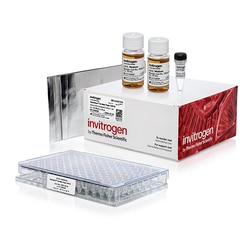
Invitrogen™ MultiShot™ TOP10 Cellules E. coli chimiquement compétentes, plaque à 96 puits
MultiShot TOP10 Les cellules E. coli chimiquement compétentes offrent une transformation à haute efficacité pour le clonage de routine dans un format de 96 puits prêt pour l’automatisation. Idéal pour la propagation stable de plasmides à haute copie et le criblage bleu/blanc dans des flux de travail à haut débit.
MilliporeSigma™ Novagen™ Rosetta™ (DE3) Cellules compétentes
Les souches hôtes de Rosetta sont des dérivés de BL21 conçus pour améliorer l’expression de protéines eucaryotes contenant des codons rarement utilisés chez E. coli.
MilliporeSigma™ Novagen™ Rosetta™ (DE3) Cellules compétentes pLysS
Les souches hôtes de Rosetta sont des dérivés de BL21 conçus pour améliorer l’expression de protéines eucaryotes contenant des codons rarement utilisés chez E. coli. L’expression du lysozyme T7 supprime l’expression basale de T7.
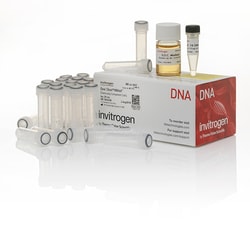
Invitrogen™ Un Shot™ INVαF' E. coli chimiquement compétent
One Shot INVαF' E . coli chimiquement compétent est conçu pour répliquer de façon stable les plasmides à haut nombre de copies.

Invitrogen™ Un Shot™ INV110 E. coli chimiquement compétent
Les cellules E. coli One Shot INV110 chimiquement compétentes sont dérivées de la souche JM110 et sont spécifiquement conçues pour la croissance et la purification de l’ADN plasmidique qui sera digéré avec des enzymes de restriction sensibles à la méthylation DAM ou DCM .
MilliporeSigma™ Novagen™ BL21 (DE3) cellules compétentes pLysS Singles™
Les souches BL21 sont les hôtes les plus utilisés pour l’expression protéique à partir de recombinants pET et ont l’avantage d’être carentes tant dans les protéases lon que ompT.

Invitrogen™ MultiShot™ Cellules compétentes StripWell Stbl3™
MultiShot Les cellules E. coli chimiquement compétentes de StripWell Stbl3 clonent des cellules compétentes conçues pour cloner des répétitions directes trouvées dans les vecteurs d’expression lentiviral.

Invitrogen™ MultiShot™ FlexPlate OmniMAX™ 2 T1 R Cellules compétentes
MultiShot Les cellules E. coli chimiquement compétentes FlexPlate OmniMAX 2 T1 R sont une souche supérieure de cellules capables à cloner, pré-alicotées dans une plaque PCR à 96 puits pour augmenter la productivité de transformation.

Invitrogen™ Équipement TOP10F' Electrocomp™
TOP10F' Electrocomp Les cellules Kit E. coli sont identiques aux TOP10 cellules, avec l'ajout d'un épisome F'.

Invitrogen™ Cellules MegaX DH10B T1R Electrocomp™
Les cellules MegaX DH10B T1R Electrocomp sont les cellules électrocompétentes les plus efficaces disponibles. Les procédés de production améliorés offrent une efficacité de transformation atteignant >3 x 10¹⁰ cfu/μg d’ADN pUC.