
Dosages à base cellulaire


Molecular Probes™ SYTOX™ Kit d’échantillonnage de taches de cellules mortes, pour la cytométrie en flux

SYTOX™ Le kit d’échantillonnage de teinture de cellules mortes contient cinq colorations d’acides nucléiques pouvant être utilisées pour déterminer la viabilité des cellules dans les tests de cytométrie en flux.

Molecular Probes™ CellROX™ Trousse d’analyse de cytométrie à flux vert
CellROX™ Trousse d’analyse de cytométrie à flux vert

Molecular Probes™ Iodure de propidium - solution de 1,0 mg/mL dans l’eau
Iodure de propidium - solution de 1,0 mg/mL dans l’eau
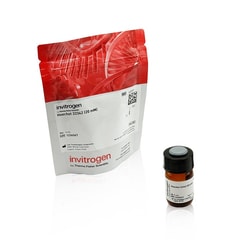
Thermo Scientific™ Hoechst Solution 33342 (20 mM), 5 mL
DAPI et Hoechst sont des contre-colorations nucléaires classiques populaires pour une utilisation dans toutes les techniques cellulaires et tissulaires fluorescents. La fluorescence bleue contraste vivement avec les sondes et labels fluorescents verts, jaunes, orange, rouges, rouge lointain et NIR.

Invitrogen™ Image-iT™ Réactif TMRM (indicateur du potentiel de la membrane mitochondriale)
Les membranes mitochondriales saines maintiennent une différence de potentiel électrique entre l’intérieur et l’extérieur de l’organite, appelée potentiel membranaire.
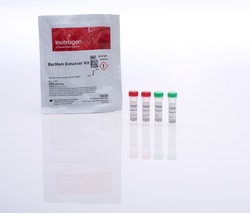
Invitrogen™ Trousse d’amélioration BacMam
Aide à augmenter l’expression des réactifs BacMam dans les cellules de mammifères

Invitrogen™ Amplex™ Réactifs rouges et Amplex™ ultrarouges
Les Amplex réactifs Red et UltraRed sont des substrats fluorogènes pour la peroxydase. Ces sondes hautement sensibles et stables réagissent avec H2O2 en présence de HRP pour les tests en solution et les ELISA. Amplex UltraRed est une version plus lumineuse de Amplex Rouge avec une plage de pH et une sensibilité améliorées.
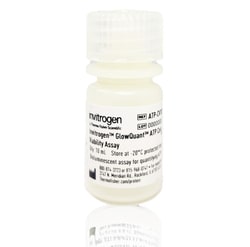
Invitrogen™ Trousse de test de viabilité des cellules GlowQuant™ ATP
Le kit de test de viabilité des cellules GlowQuant™ ATP est une solution prête à l’emploi, basée sur la bioluminescence, pour une mesure rapide et sensible des cellules viables par ATP détection et quantification.

Invitrogen™ CellROX™ Réactif vert, pour la détection du stress oxydatif
Sonde fluorogénique nouvelle pour mesurer le stress oxydatif dans les cellules vivantes

Thermo Scientific Chemicals Inhibiteur de l’acétyltransférase des histones IV, CPTH2
CAS: 357649-93-5 Formule moléculaire: C14H14ClN3S Synonyme: Inhibiteur du HAT IV; Inhibiteur de Gcn5p

Thermo Scientific Chemicals Calpeptin, ≥98%
CAS: 117591-20-5 Formule moléculaire: C20H 30N 2O4 Synonyme: N-benzyloxycarbonyl-L-leucyl-norleucinal; Z-Leu-norleucinal

Thermo Scientific Chemicals Inhibiteur de la cathepsine B III
CAS: 134448-10-5 Formule moléculaire: C18H29N 3O6 Synonyme: CA-074; [L-3-trans-(Propylcarbamoyl)oxirane-2-carbonyl]-L-isoleucyl-L-proline

Thermo Scientific Chemicals Sphingosine-1-phosphate
CAS: 26993-30-6 Formule moléculaire: C18H38NO5P Synonyme: D-érythro-Sphingosine 1-phosphate; S1P

Thermo Scientific Chemicals Bêta-Lapachone, 98%
CAS: 4707-32-8 Formule moléculaire: C15H14O3

Thermo Scientific Chemicals CP-31398, 98%
CAS: 259199-65-0 Formule moléculaire: C22H26N4O.2HCl Synonyme: N'-[2-(4-Méthoxyphényl)éthényle]-4-quinazolinyl]-N,N-diméthyl-1,3-propanediamine dihydrochlorure;