All Primary Antibodies
Primary antibodies, immunoglobulins that bind to specific proteins or other biomolecules, are used in many research applications and protocols to detect targets of interest. They are developed using different animal hosts, including mouse, rat, rabbit, goat, sheep, and many others.
Monoclonal and Polyclonal Antibodies
One type of primary antibodies, monoclonal antibodies, provides high reproducibility and low cross-reactivity and background noise. Another type, polyclonal antibodies, often costs less and provides greater affinity and quicker binding. Both are produced using plasma B cells, but the former uses the same clone and the latter uses different clones. Monoclonal antibodies require hybridoma cell lines, and polyclonal antibodies do not.
There are also recombinant monoclonal antibodies with similar benefits, like high affinity, scalability, and specificity. They are produced using in vitro cloning of plasma B cells and expression hosts.
Conjugated Primary Antibodies
Antibodies can be labeled with various fluorophores or detection agents or used without labels. Labeled primary antibodies, also known as conjugated primary antibodies, help researchers simplify and streamline their applications. They are coupled with common enzymes and dyes such as Alexa Fluor and often used in protein and cell analysis.
Applications
Antibodies for life sciences applications are used in flow cytometry, western blotting, ELISA, immunohistochemistry, and immunocytochemistry. Secondary antibodies can be added to support the detection and purification of certain antigens. They bind to the primary antibody, which binds to the antigen of interest. Finding the right combination of antibodies can result in greater antigen specificity and a strong, detectable signal.
- (15)
- (9)
- (49)
- (1)
- (5)
- (3)
- (1)
- (68)
- (8)
- (124)
- (19)
- (151)
- (1)
- (4)
- (9)
- (137)
- (2)
- (112)
- (16)
- (6)
- (1)
- (4)
- (6)
- (4)
Résultats de la recherche filtrée
Thiazide-Sensitive NaCl Cotransporter Rabbit anti-Human, Mouse, Rat, Rabbit, Polyclonal, MilliporeSigma™
Rabbit Polyclonal Antibody
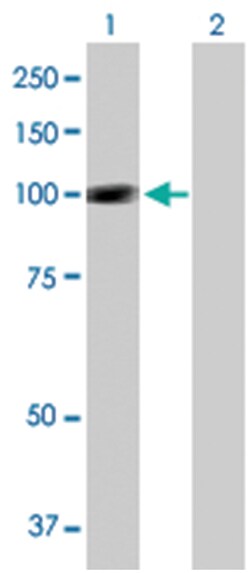
salt-inducible kinase 1, Mouse, Purified MaxPab™ Polyclonal Antibody, Abnova™
Mouse polyclonal antibody raised against a full-length human SNF1LK protein.
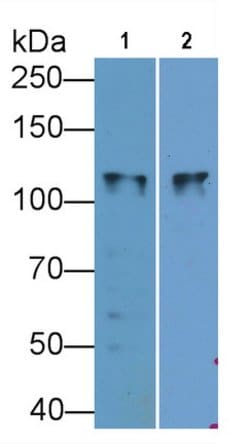
Invitrogen™ SLC12A3 Monoclonal Antibody (C2)
Greener Choice
Offers one or more environmental benefits itemized in the U.S. FTC Green Guides.
Learn More
Offers one or more environmental benefits itemized in the U.S. FTC Green Guides.
Learn More
Mouse Monoclonal Antibody
| Applications | Western Blot |
|---|---|
| Type de produit | Antibody |
| Isotype | IgG2b κ |
| Conjugué | Unconjugated |
| Espèces cibles | Human,Pig |
| Concentration | 1 mg/mL |
| Primaire ou secondaire | Primary |
| Forme | Liquid |
| Contenu et stockage | Store at 4°C short term. For long term storage, store at -20°C, avoiding freeze/thaw cycles. |
| État réglementaire | RUO |
| Numéro d’ordre du gène | P55017 |
| Immunogène | Recombinant protein Na-Cl Cotransporter. The antigen corresponds to amino acid range 3-146 of the target protein. |
| Expression | Slc12a3 |
| Classification | Monoclonal |
| Identification génétique (Entrez) | 110260927, 6559 |
| Méthode de purification | Protein A/G |
| Espèces hôtes | Mouse |
| Symboles de gène(s) | Slc12a3 |
| Formule | PBS with 50% glycerol and 0.05% ProClin 300; pH 7.4 |
| Alias de gène | AI035291; chemokine (C-C); CKb10; CK-beta-10; MCP-4; MGC17134; Na-Cl cotransporter; NaCl electroneutral thiazide-sensitive cotransporter; Na-Cl symporter; Ncc; NCC1; NCC-1; NCCT; SCYA13; SCYL1; si:ch211-122c9.4; SLC12A3; sodium chloride cotransporter; solute carrier family 12 (sodium/chloride transporter), member 3; solute carrier family 12 (sodium/chloride transporters), member 3; solute carrier family 12 member 3; solute carrier family 12, member 3; thiazide-sensitive Na-Cl cotransporter; thiazide-sensitive sodium chloride cotransporter; thiazide-sensitive sodium-chloride cotransporter; TSC; wu:fj83c03 |
| Clone | C2 |
| Antigène | SLC12A3 |
Invitrogen™ SLC12A3 Polyclonal Antibody
Greener Choice
Offers one or more environmental benefits itemized in the U.S. FTC Green Guides.
Learn More
Offers one or more environmental benefits itemized in the U.S. FTC Green Guides.
Learn More
Rabbit Polyclonal Antibody
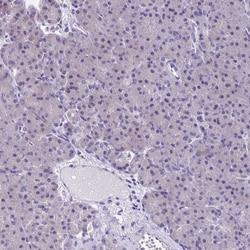
| Applications | Immunohistochemistry (Paraffin) |
|---|---|
| Type de produit | Antibody |
| Isotype | IgG |
| Conjugué | Unconjugated |
| Espèces cibles | Human |
| Concentration | 0.10 mg/mL |
| Primaire ou secondaire | Primary |
| Forme | Liquid |
| Contenu et stockage | Store at 4°C short term. For long term storage, store at -20°C, avoiding freeze/thaw cycles. |
| État réglementaire | RUO |
| Numéro d’ordre du gène | P55017 |
| Immunogène | Recombinant protein corresponding to Human SLC12A3. Recombinant protein control fragment (Product #RP-102376). |
| Expression | Slc12a3 |
| Classification | Polyclonal |
| Identification génétique (Entrez) | 6559 |
| Méthode de purification | Antigen affinity chromatography |
| Espèces hôtes | Rabbit |
| Symboles de gène(s) | Slc12a3 |
| Formule | PBS with 40% glycerol and 0.02% sodium azide; pH 7.2 |
| Alias de gène | AI035291; chemokine (C-C); CKb10; CK-beta-10; MCP-4; MGC17134; Na-Cl cotransporter; NaCl electroneutral thiazide-sensitive cotransporter; Na-Cl symporter; Ncc; NCC1; NCC-1; NCCT; SCYA13; SCYL1; si:ch211-122c9.4; SLC12A3; sodium chloride cotransporter; solute carrier family 12 (sodium/chloride transporter), member 3; solute carrier family 12 (sodium/chloride transporters), member 3; solute carrier family 12 member 3; solute carrier family 12, member 3; thiazide-sensitive Na-Cl cotransporter; thiazide-sensitive sodium chloride cotransporter; thiazide-sensitive sodium-chloride cotransporter; TSC; wu:fj83c03 |
| Antigène | SLC12A3 |
Invitrogen™ Phospho-SLC12A3 (Thr53) Polyclonal Antibody
Greener Choice
Offers one or more environmental benefits itemized in the U.S. FTC Green Guides.
Learn More
Offers one or more environmental benefits itemized in the U.S. FTC Green Guides.
Learn More
Rabbit Polyclonal Antibody
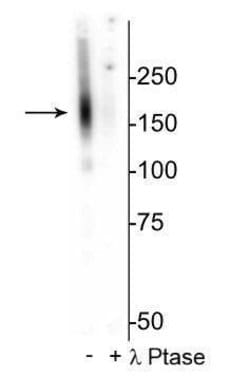
| Applications | Immunohistochemistry,Western Blot |
|---|---|
| Type de produit | Antibody |
| Isotype | IgG |
| Conjugué | Unconjugated |
| Espèces cibles | Human,Mouse,Rat |
| Concentration | 0.25 mg/mL |
| Primaire ou secondaire | Primary |
| Forme | Liquid |
| Contenu et stockage | -20°C, Avoid Freeze/Thaw Cycles |
| État réglementaire | RUO |
| Numéro d’ordre du gène | P55017, P55018, P59158 |
| Immunogène | Synthetic phospho-peptide corresponding to amino acid residues surrounding Thr53 of mouse NCC, conjugated to keyhole limpet hemocyanin (KLH). |
| Expression | Slc12a3 |
| Classification | Polyclonal |
| Identification génétique (Entrez) | 20497, 54300, 6559 |
| Méthode de purification | Antigen Affinity Chromatography |
| Espèces hôtes | Rabbit |
| Symboles de gène(s) | Slc12a3 |
| Formule | 10mM HEPES with 100μg/mL BSA, 50% glycerol, 0.15M NaCl and no preservative; pH 7.5 |
| Alias de gène | AI035291; chemokine (C-C); CKb10; CK-beta-10; MCP-4; MGC17134; Na-Cl cotransporter; NaCl electroneutral thiazide-sensitive cotransporter; Na-Cl symporter; Ncc; NCC1; NCC-1; NCCT; SCYA13; SCYL1; si:ch211-122c9.4; SLC12A3; sodium chloride cotransporter; solute carrier family 12 (sodium/chloride transporter), member 3; solute carrier family 12 (sodium/chloride transporters), member 3; solute carrier family 12 member 3; solute carrier family 12, member 3; thiazide-sensitive Na-Cl cotransporter; thiazide-sensitive sodium chloride cotransporter; thiazide-sensitive sodium-chloride cotransporter; TSC; wu:fj83c03 |
| Antigène | Phospho-SLC12A3 (Thr53) |
Invitrogen™ SIK2 Polyclonal Antibody
Greener Choice
Offers one or more environmental benefits itemized in the U.S. FTC Green Guides.
Learn More
Offers one or more environmental benefits itemized in the U.S. FTC Green Guides.
Learn More
Rabbit Polyclonal Antibody
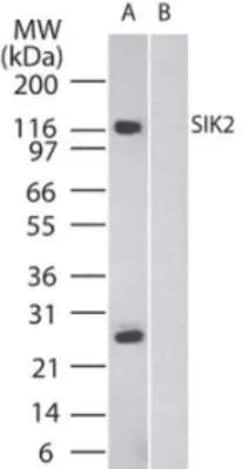
| Applications | Western Blot |
|---|---|
| Type de produit | Antibody |
| Isotype | IgG |
| Conjugué | Unconjugated |
| Espèces cibles | Human,Mouse,Rat,Canine,Monkey,Bovine |
| Concentration | 1 mg/mL |
| Primaire ou secondaire | Primary |
| Forme | Liquid |
| Contenu et stockage | Store at 4°C short term. For long term storage, store at -20°C, avoiding freeze/thaw cycles. |
| État réglementaire | RUO |
| Numéro d’ordre du gène | Q8CFH6, Q9H0K1 |
| Immunogène | A portion of amino acids 100-150 of human SIK2. |
| Expression | SIK2 |
| Classification | Polyclonal |
| Identification génétique (Entrez) | 23235, 235344, 315649, 489410, 539570 |
| Méthode de purification | Protein G |
| Espèces hôtes | Rabbit |
| Symboles de gène(s) | SIK2 |
| Formule | PBS with 0.05% sodium azide |
| Alias de gène | G630080D20Rik; KIAA0781; LOH11CR1I; QIK; Qin-induced kinase; RGD1559698; salt induceable kinase 2; salt inducible kinase 2; salt-inducible kinase 2; salt-inducible protein kinase 2; salt-inducible serine/threonine kinase 2; serine/threonine-protein kinase SIK2; Serine/threonine-protein kinase SNF1-like kinase 2; Sik2; SIK-2; SNF1-like kinase 2; SNF1LK2 |
| Antigène | SIK2 |
Invitrogen™ Norepinephrine Transporter Polyclonal Antibody
Greener Choice
Offers one or more environmental benefits itemized in the U.S. FTC Green Guides.
Learn More
Offers one or more environmental benefits itemized in the U.S. FTC Green Guides.
Learn More
Rabbit Polyclonal Antibody
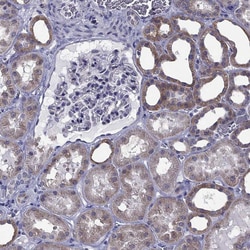
| Applications | Immunohistochemistry (Paraffin) |
|---|---|
| Type de produit | Antibody |
| Isotype | IgG |
| Conjugué | Unconjugated |
| Espèces cibles | Human |
| Concentration | 0.2 mg/mL |
| Primaire ou secondaire | Primary |
| Forme | Liquid |
| Contenu et stockage | Store at 4°C short term. For long term storage, store at -20°C, avoiding freeze/thaw cycles. |
| État réglementaire | RUO |
| Numéro d’ordre du gène | P23975 |
| Immunogène | Recombinant protein corresponding to Human SLC6A2. Recombinant protein control fragment (Product #RP-108281). |
| Expression | SLC6A2 |
| Classification | Polyclonal |
| Identification génétique (Entrez) | 6530 |
| Méthode de purification | Antigen affinity chromatography |
| Espèces hôtes | Rabbit |
| Symboles de gène(s) | SLC6A2 |
| Formule | PBS with 40% glycerol and 0.02% sodium azide; pH 7.2 |
| Alias de gène | NaCl-dependent norepinephrine transporter; NAT1; NE transporter; NET; NE-T; NET1; neurotransmitter transporter; neurotransmitter transporter, noradrenal; NORADR; noradrenaline; noradrenaline transporter; norepinephrine transporter; Slc6a2; SLC6A5; sodium-dependent noradrenaline transporter; solute carrier family 6 (neurotransmitter transporter), member 2; solute carrier family 6 (neurotransmitter transporter, noradrenalin), member 2; solute carrier family 6 member 2; solute carrier family 6 member 5; transmembrane region 4..26 transmembrane region 55..77 transmembrane region 105..123 transmembrane region 136..157 |
| Antigène | Norepinephrine Transporter |
Invitrogen™ Norepinephrine Transporter Monoclonal Antibody (CL3063)
Greener Choice
Offers one or more environmental benefits itemized in the U.S. FTC Green Guides.
Learn More
Offers one or more environmental benefits itemized in the U.S. FTC Green Guides.
Learn More
Mouse Monoclonal Antibody
| Applications | Immunohistochemistry (Paraffin) |
|---|---|
| Type de produit | Antibody |
| Isotype | IgG1 |
| Conjugué | Unconjugated |
| Espèces cibles | Human,Mouse,Rat |
| Concentration | 1.0 mg/mL |
| Primaire ou secondaire | Primary |
| Forme | Liquid |
| Contenu et stockage | Store at 4°C short term. For long term storage, store at -20°C, avoiding freeze/thaw cycles. |
| État réglementaire | RUO |
| Numéro d’ordre du gène | O55192, P23975 |
| Immunogène | Recombinant protein fragment of Human SLC6A2 (Product #RP-102393) |
| Expression | SLC6A2 |
| Classification | Monoclonal |
| Identification génétique (Entrez) | 20538, 6530, 83511 |
| Méthode de purification | Protein A |
| Espèces hôtes | Mouse |
| Symboles de gène(s) | SLC6A2 |
| Formule | PBS with 40% glycerol and 0.02% sodium azide; pH 7.2 |
| Alias de gène | NaCl-dependent norepinephrine transporter; NAT1; NE transporter; NET; NE-T; NET1; neurotransmitter transporter; neurotransmitter transporter, noradrenal; NORADR; noradrenaline; noradrenaline transporter; norepinephrine transporter; Slc6a2; SLC6A5; sodium-dependent noradrenaline transporter; solute carrier family 6 (neurotransmitter transporter), member 2; solute carrier family 6 (neurotransmitter transporter, noradrenalin), member 2; solute carrier family 6 member 2; solute carrier family 6 member 5; transmembrane region 4..26 transmembrane region 55..77 transmembrane region 105..123 transmembrane region 136..157 |
| Clone | CL3063 |
| Antigène | Norepinephrine Transporter |
Invitrogen™ Norepinephrine Transporter Polyclonal Antibody
Greener Choice
Offers one or more environmental benefits itemized in the U.S. FTC Green Guides.
Learn More
Offers one or more environmental benefits itemized in the U.S. FTC Green Guides.
Learn More
Rabbit Polyclonal Antibody
| Applications | Western Blot |
|---|---|
| Type de produit | Antibody |
| Isotype | IgG |
| Conjugué | Unconjugated |
| Espèces cibles | Human,Mouse |
| Concentration | 0.5 mg/mL |
| Primaire ou secondaire | Primary |
| Forme | Liquid |
| Contenu et stockage | -20°C, Avoid Freeze/Thaw Cycles |
| État réglementaire | RUO |
| Numéro d’ordre du gène | O55192, P23975 |
| Immunogène | synthetic peptide directed towards the middle region of human Norepinephrine Transporter. |
| Expression | SLC6A2 |
| Classification | Polyclonal |
| Identification génétique (Entrez) | 20538, 6530 |
| Méthode de purification | Affinity chromatography |
| Espèces hôtes | Rabbit |
| Symboles de gène(s) | SLC6A2 |
| Formule | PBS with 2% sucrose and 0.09% sodium azide |
| Alias de gène | NaCl-dependent norepinephrine transporter; NAT1; NE transporter; NET; NE-T; NET1; neurotransmitter transporter; neurotransmitter transporter, noradrenal; NORADR; noradrenaline; noradrenaline transporter; norepinephrine transporter; Slc6a2; SLC6A5; sodium-dependent noradrenaline transporter; solute carrier family 6 (neurotransmitter transporter), member 2; solute carrier family 6 (neurotransmitter transporter, noradrenalin), member 2; solute carrier family 6 member 2; solute carrier family 6 member 5; transmembrane region 4..26 transmembrane region 55..77 transmembrane region 105..123 transmembrane region 136..157 |
| Antigène | Norepinephrine Transporter |
Invitrogen™ TRIP10 Recombinant Rabbit Monoclonal Antibody (23GB4705)
Greener Choice
Offers one or more environmental benefits itemized in the U.S. FTC Green Guides.
Learn More
Offers one or more environmental benefits itemized in the U.S. FTC Green Guides.
Learn More
Rabbit Recombinant Monoclonal Antibody
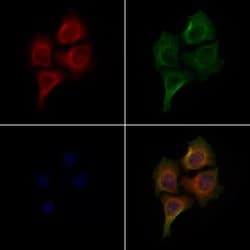
| Applications | Flow Cytometry,Western Blot,Immunocytochemistry |
|---|---|
| Type de produit | Antibody |
| Isotype | IgG |
| Conjugué | Unconjugated |
| Espèces cibles | Mouse |
| Primaire ou secondaire | Primary |
| Forme | Liquid |
| Contenu et stockage | -20°C |
| État réglementaire | RUO |
| Numéro d’ordre du gène | Q8CJ53 |
| Immunogène | A synthesized peptide derived from human Cip4 (1-34AA). |
| Expression | Trip10 |
| Classification | Recombinant Monoclonal |
| Identification génétique (Entrez) | 106628 |
| Méthode de purification | Affinity chromatography |
| Espèces hôtes | Rabbit |
| Symboles de gène(s) | Trip10 |
| Formule | PBS with 50% glycerol and 0.02% sodium azide; pH 7.4 |
| Alias de gène | AI646975; Cdc42 interacting protein-4; cdc42-interacting protein 4; Cip4; hSTP; protein Felic; Salt tolerant protein; salt tolerator; STOT; STP; thyroid hormone receptor interactor 10; thyroid receptor-interacting protein 10; TR-interacting protein 10; TRIP10; TRIP-10 |
| Clone | 23GB4705 |
| Antigène | TRIP10 |
Invitrogen™ SIK3 Polyclonal Antibody
Greener Choice
Offers one or more environmental benefits itemized in the U.S. FTC Green Guides.
Learn More
Offers one or more environmental benefits itemized in the U.S. FTC Green Guides.
Learn More
Rabbit Polyclonal Antibody
| Applications | Western Blot,Immunocytochemistry |
|---|---|
| Type de produit | Antibody |
| Isotype | IgG |
| Conjugué | Unconjugated |
| Espèces cibles | Human,Mouse,Rat |
| Concentration | 1 mg/mL |
| Primaire ou secondaire | Primary |
| Forme | Liquid |
| Contenu et stockage | -20°C |
| État réglementaire | RUO |
| Numéro d’ordre du gène | Q6P4S6, Q9Y2K2 |
| Immunogène | A synthesized peptide derived from human SIK3(Accession Q9Y2K2), corresponding to amino acid residues P586-K636. |
| Expression | SIK3 |
| Classification | Polyclonal |
| Identification génétique (Entrez) | 23387, 684112, 70661 |
| Méthode de purification | Affinity chromatography |
| Espèces hôtes | Rabbit |
| Symboles de gène(s) | SIK3 |
| Formule | PBS with 50% glycerol and 0.02% sodium azide |
| Alias de gène | 5730525O22Rik; 9030204A07Rik; AI447252; AI846254; AI849445; Kiaa0999; L19; mKIAA0999; QSK; Salt-inducible kinase 3; serine/threonine-protein kinase QSK; Serine/threonine-protein kinase SIK3; SIK family kinase 3; SIK3; SIK-3 |
| Antigène | SIK3 |
Invitrogen™ Phospho-SIK1 (Thr182) Polyclonal Antibody
Greener Choice
Offers one or more environmental benefits itemized in the U.S. FTC Green Guides.
Learn More
Offers one or more environmental benefits itemized in the U.S. FTC Green Guides.
Learn More
Rabbit Polyclonal Antibody
| Applications | Immunohistochemistry (Paraffin),Western Blot |
|---|---|
| Type de produit | Antibody |
| Isotype | IgG |
| Conjugué | Unconjugated |
| Espèces cibles | Human,Mouse,Rat |
| Concentration | 1 mg/mL |
| Primaire ou secondaire | Primary |
| Forme | Liquid |
| Contenu et stockage | -20°C |
| État réglementaire | RUO |
| Numéro d’ordre du gène | P57059, Q60670, Q9R1U5 |
| Immunogène | A synthesized peptide derived from human SIK1(Accession P57059), corresponding to amino acid residues around phosphorylated Thr182. |
| Expression | SIK1 |
| Classification | Polyclonal |
| Identification génétique (Entrez) | 150094, 17691, 59329 |
| Méthode de purification | Sequential chromatography |
| Espèces hôtes | Rabbit |
| Symboles de gène(s) | SIK1 |
| Formule | PBS with 50% glycerol and 0.02% sodium azide; pH 7.4 |
| Alias de gène | EIEE30; HRT-20; Kid2; MSK; Myocardial SNF1-like kinase; Probable serine/threonine protein kinase SNF1LK (HRT-20) (Myocardial SNF1-like kinase); protein kinase KID2; salt inducible kinase 1; salt-inducible kinase 1; salt-inducible protein kinase 1; serine/threonine protein kinase; serine/threonine-protein kinase SIK1; Serine/threonine-protein kinase SNF1-like kinase 1; serine/threonine-protein kinase SNF1LK; SIK; Sik1; SIK-1; SNF1-like kinase; SNF1LK |
| Antigène | Phospho-SIK1 (Thr182) |
Invitrogen™ SIK1 Polyclonal Antibody
Greener Choice
Offers one or more environmental benefits itemized in the U.S. FTC Green Guides.
Learn More
Offers one or more environmental benefits itemized in the U.S. FTC Green Guides.
Learn More
Rabbit Polyclonal Antibody
| Applications | Immunohistochemistry,Western Blot |
|---|---|
| Type de produit | Antibody |
| Isotype | IgG |
| Conjugué | Unconjugated |
| Espèces cibles | Human |
| Concentration | 1 mg/mL |
| Primaire ou secondaire | Primary |
| Forme | Liquid |
| Contenu et stockage | Maintain refrigerated at 2°C to 8°C for up to 3 months. For long term storage store at -20°C |
| État réglementaire | RUO |
| Numéro d’ordre du gène | P57059 |
| Immunogène | An 18 amino acid peptide near the center of human SIK1. |
| Expression | SIK1 |
| Classification | Polyclonal |
| Identification génétique (Entrez) | 150094 |
| Méthode de purification | Antigen Affinity Chromatography |
| Espèces hôtes | Rabbit |
| Symboles de gène(s) | SIK1 |
| Formule | PBS with 0.02% sodium azide |
| Alias de gène | EIEE30; HRT-20; Kid2; MSK; Myocardial SNF1-like kinase; Probable serine/threonine protein kinase SNF1LK (HRT-20) (Myocardial SNF1-like kinase); protein kinase KID2; salt inducible kinase 1; salt-inducible kinase 1; salt-inducible protein kinase 1; serine/threonine protein kinase; serine/threonine-protein kinase SIK1; Serine/threonine-protein kinase SNF1-like kinase 1; serine/threonine-protein kinase SNF1LK; SIK; Sik1; SIK-1; SNF1-like kinase; SNF1LK |
| Antigène | SIK1 |
Invitrogen™ SIK3 Polyclonal Antibody
Greener Choice
Offers one or more environmental benefits itemized in the U.S. FTC Green Guides.
Learn More
Offers one or more environmental benefits itemized in the U.S. FTC Green Guides.
Learn More
Rabbit Polyclonal Antibody
| Applications | Immunohistochemistry (Paraffin),Immunocytochemistry |
|---|---|
| Type de produit | Antibody |
| Isotype | IgG |
| Conjugué | Unconjugated |
| Espèces cibles | Human |
| Concentration | 0.4 mg/mL |
| Primaire ou secondaire | Primary |
| Forme | Liquid |
| Contenu et stockage | Store at 4°C short term. For long term storage, store at -20°C, avoiding freeze/thaw cycles. |
| État réglementaire | RUO |
| Numéro d’ordre du gène | Q9Y2K2 |
| Immunogène | Recombinant protein corresponding to Human SIK3. Recombinant protein control fragment (Product #RP-100419). |
| Expression | SIK3 |
| Classification | Polyclonal |
| Identification génétique (Entrez) | 23387 |
| Méthode de purification | Antigen Affinity Chromatography |
| Espèces hôtes | Rabbit |
| Symboles de gène(s) | SIK3 |
| Formule | PBS with 40% glycerol and 0.02% sodium azide; pH 7.2 |
| Alias de gène | 5730525O22Rik; 9030204A07Rik; AI447252; AI846254; AI849445; Kiaa0999; L19; mKIAA0999; QSK; Salt-inducible kinase 3; serine/threonine-protein kinase QSK; Serine/threonine-protein kinase SIK3; SIK family kinase 3; SIK3; SIK-3 |
| Antigène | SIK3 |
Invitrogen™ SIK3 Polyclonal Antibody
Greener Choice
Offers one or more environmental benefits itemized in the U.S. FTC Green Guides.
Learn More
Offers one or more environmental benefits itemized in the U.S. FTC Green Guides.
Learn More
Rabbit Polyclonal Antibody
| Applications | Immunohistochemistry (Paraffin),Immunocytochemistry |
|---|---|
| Type de produit | Antibody |
| Isotype | IgG |
| Conjugué | Unconjugated |
| Espèces cibles | Human |
| Concentration | 0.2 mg/mL |
| Primaire ou secondaire | Primary |
| Forme | Liquid |
| Contenu et stockage | Store at 4°C short term. For long term storage, store at -20°C, avoiding freeze/thaw cycles. |
| État réglementaire | RUO |
| Numéro d’ordre du gène | Q9Y2K2 |
| Immunogène | Recombinant protein corresponding to Human SIK3. Recombinant protein control fragment (Product #RP-100420). |
| Expression | SIK3 |
| Classification | Polyclonal |
| Identification génétique (Entrez) | 23387 |
| Méthode de purification | Antigen Affinity Chromatography |
| Espèces hôtes | Rabbit |
| Symboles de gène(s) | SIK3 |
| Formule | PBS with 40% glycerol and 0.02% sodium azide; pH 7.2 |
| Alias de gène | 5730525O22Rik; 9030204A07Rik; AI447252; AI846254; AI849445; Kiaa0999; L19; mKIAA0999; QSK; Salt-inducible kinase 3; serine/threonine-protein kinase QSK; Serine/threonine-protein kinase SIK3; SIK family kinase 3; SIK3; SIK-3 |
| Antigène | SIK3 |