
Dosages à base cellulaire


Molecular Probes™ Iodure de propidium - solution de 1,0 mg/mL dans l’eau
Iodure de propidium - solution de 1,0 mg/mL dans l’eau

Invitrogen™ Lucifer Yellow CH, sel de lithium, 25 mg

Le sel de lithium jaune de Lucifer est un colorant hydrosoluble avec des pics d’excitation/émission de 428/536 nm.

Molecular Probes™ Fluo-4, AM, cellule permanente
Fluo-4 est un analogue de fluo-3 avec les deux substituants chlorés remplacés par des fluors, ce qui entraîne une excitation de fluorescence accrue à 488 nm et donc des niveaux de signal de fluorescence plus élevés.

Invitrogen™ Colorations DAPI et Hoechst acides nucléiques
DAPI et Hoechst sont des contre-colorations nucléaires classiques populaires pour une utilisation dans toutes les techniques cellulaires et tissulaires fluorescents. La fluorescence bleue contraste vivement avec les sondes et labels fluorescents verts, jaunes, orange, rouges, rouge lointain et NIR.

Invitrogen™ Sondes de marquage des phaloïdines
Obtenir une coloration précise et fiable à la F-actine avec des phalloïdines fluorescentes et biotinylées. Les conjugués de phaloïdines sont largement utilisés dans les applications d’imagerie pour marquer sélectivement la F-actine dans divers types d’échantillons, y compris des cellules fixes et perméabilisées, des sections tissulaires et des expériences sans cellules.

Invitrogen™ eBioscience™ Colorant eFluor™ de viabilité réparable 506
Un colorant de viabilité qui peut être utilisé pour marquer de manière irréversible les cellules mortes avant les procédures de cryoconservation, de fixation et/ou de perméabilisation.

Invitrogen™ PrestoBlue™ et PrestoBlue™ les réactifs de viabilité des cellules HS
Surveillez la prolifération et la viabilité cellulaire avec les réactifs à base PrestoBlue de resazurine et PrestoBlue les cellules HS. Ces réactifs non toxiques et perméables aux cellules mesurent quantitativement la viabilité cellulaire en aussi peu que 10 minutes à l’aide de lecteurs de microplaques à base d’absorbance ou de fluorescence.

Invitrogen™ LIVE/DEAD™ Trousse de viabilité des spermatozoïdes
Analyse de la viabilité et du potentiel fécondant des spermatozoïdes
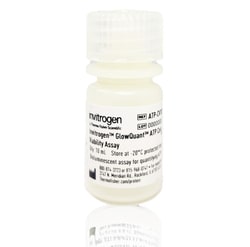
Invitrogen™ Trousse de test de viabilité des cellules GlowQuant™ ATP
Le kit de test de viabilité des cellules GlowQuant™ ATP est une solution prête à l’emploi, basée sur la bioluminescence, pour une mesure rapide et sensible des cellules viables par ATP détection et quantification.

Invitrogen™ CellEvent™ Trousse de détection des verts de sénescence
CellEvent™ Le kit de détection verte de sénescence comprend une sonde fluorescente et un tampon optimisé qui permettent la détection par image des cellules sénescentes

Invitrogen™ LIVE/DEAD™ Trousse de test de viabilité/cytotoxicité (vert/rouge foncé)
Un test de viabilité des cellules fluorescentes bicolores qui identifie simultanément les cellules vivantes et mortes. Les cellules vivantes sont marquées avec un colorant à la calcéine et émettent une fluorescence verte, tandis que les cellules mortes sont marquées avec SYTOX un colorant rouge profond et émettent une fluorescence rouge.

Invitrogen™ alamarBlue™ et alamarBlue™ les réactifs de viabilité des cellules HS
Les alamarBlue réactifs de viabilité cellulaire sont des solutions prêtes à l’emploi à base de résazurine qui agissent comme indicateurs de santé cellulaire en utilisant le pouvoir réducteur des cellules vivantes pour mesurer quantitativement la viabilité.

Molecular Probes™ SYTOX™ Kit d’échantillonnage de taches de cellules mortes, pour la cytométrie en flux
SYTOX™ Le kit d’échantillonnage de teinture de cellules mortes contient cinq colorations d’acides nucléiques pouvant être utilisées pour déterminer la viabilité des cellules dans les tests de cytométrie en flux.

Molecular Probes™ CellROX™ Trousse d’analyse de cytométrie à flux vert
CellROX™ Trousse d’analyse de cytométrie à flux vert
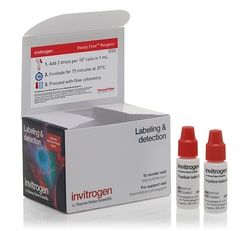
Invitrogen™ Réactif prêt Flow™ à l’iodure de propidium
Le réactif prêt Flow™ à l’iodure de propidium est une coloration d’acide nucléique brillante et facile à utiliser utilisée pour distinguer les cellules mortes des cellules vivantes dans les tests de cytométrie en flux.