
Cell Based Assays


Molecular Probes™ Propidium Iodide - 1.0 mg/mL Solution in Water
Propidium Iodide - 1.0 mg/mL Solution in Water

Invitrogen™ LIVE/DEAD™ Viability/Cytotoxicity Assay Kit (Green/Deep Red)
A two-color fluorescent cell viability assay that simultaneously identifies live and dead cells. Live cells are labeled with calcein dye and emit a green fluorescence, while dead cells are labeled with SYTOX Deep Red dye and emit a red fluorescence.

Invitrogen™ Griess Reagent Kit, for nitrite quantitation

For nitrite quantitation

Invitrogen™ alamarBlue™ and alamarBlue™ HS Cell Viability Reagents
The alamarBlue cell viability reagents are ready-to-use resazurin-based solutions that function as cell health indicators by using the reducing power of living cells to quantitatively measure viability.

Molecular Probes™ CellROX™ Green Flow Cytometry Assay Kit
CellROX™ Green Flow Cytometry Assay Kit

Molecular Probes™ SYTOX™ Dead Cell Stain Sampler Kit, for flow cytometry
SYTOX™ Dead Cell Stain Sampler Kit contains five nucleic acid stains that can be used to determine the viability of cells in flow cytometry assays.
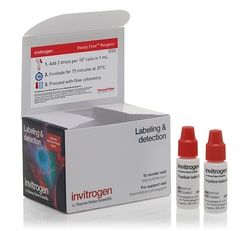
Invitrogen™ Propidium Iodide Ready Flow™ Reagent
Propidium Iodide Ready Flow™ Reagent is a bright, easy-to-use nucleic acid stain for distinguishing dead cells from live cells in flow cytometry assays.
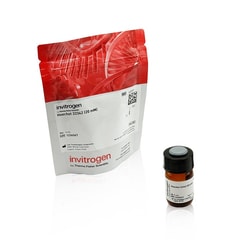
Thermo Scientific™ Hoechst 33342 solution (20 mM), 5 mL
DAPI and Hoechst are classic popular nuclear counterstains for use in all fluorescent cell and tissue techniques. The blue fluorescence is vivid contrast to green, yellow, orange, red, far red and NIR fluorescent probes and labels.
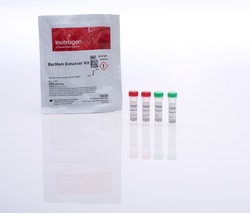
Invitrogen™ BacMam Enhancer Kit
Helps to increase expression of BacMam reagents in mammalian cells

Invitrogen™ Amplex™ Red and Amplex™ UltraRed Reagents
The Amplex Red and UltraRed reagents are fluorogenic substrates for peroxidase. These highly sensitive and stable probes react with H2O2 in the presence of HRP for solution-based assays and ELISAs. Amplex UltraRed is a brighter version of Amplex Red with an improved pH range and sensitivity.
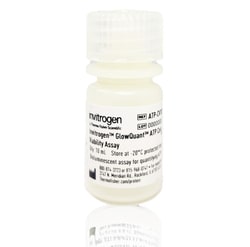
Invitrogen™ GlowQuant™ ATP Cell Viability Assay Kit
The GlowQuant™ ATP Cell Viability Assay Kit is a ready-to-use, bioluminescence-based solution for rapid and sensitive measurement of viable cells through ATP detection and quantification.

Invitrogen™ CellROX™ Green Reagent, for oxidative stress detection
Novel fluorogenic probe for measuring oxidative stress in live cells
Invitrogen™ Dextran, Tetramethylrhodamine, 10,000 MW, Neutral
Rigorous methods for removing as much unconjugated dye as practical, followed by an assay of dextran conjugates by thin-layer chromatography to help ensure the absence of low molecular weight contaminants
Invitrogen™ Dextran, Rhodamine B, 10,000 MW, Neutral
Rigorous methods for removing as much unconjugated dye as practical, followed by an assay of dextran conjugates by thin-layer chromatography to help ensure the absence of low molecular weight contaminants
Invitrogen™ Dextran, Rhodamine B, 70,000 MW, Neutral
Rigorous methods for removing as much unconjugated dye as practical, followed by an assay of dextran conjugates by thin-layer chromatography to help ensure the absence of low molecular weight contaminants