
Cell Function Reagents and Kits


Molecular Probes™ LIVE/DEAD™ Fixable Aqua Dead Cell Stain Kit, for 405 nm excitation

The LIVE/DEAD™ Fixable Aqua Dead Cell Stain Kit is used to determine the viability of cells prior to the fixation and permeabilization required for intracellular antibody staining, or prior to elimination of biohazardous materials using formaldehyde fixation.

Invitrogen™ Staphylococcus aureus (Wood strain without protein A) BioParticles™, fluorescein conjugate
Fluorescently labeled, heat- or chemically killed bacteria and yeast in a variety of sizes, shapes, and natural antigenicities

Molecular Probes™ Propidium Iodide - 1.0 mg/mL Solution in Water
Propidium Iodide - 1.0 mg/mL Solution in Water

Molecular Probes™ Fluo-4, AM, cell permeant
Fluo-4 is an analog of fluo-3 with the two chlorine substituents replaced by fluorines, which results in increased fluorescence excitation at 488 nm and consequently higher fluorescence signal levels.

Invitrogen™ eBioscience™ Fixable Viability Dye eFluor™ 506
A viability dye that can be used to irreversibly label dead cells prior to cryopreservation, fixation, and/or permeabilization procedures.

Invitrogen™ PrestoBlue™ and PrestoBlue™ HS Cell Viability Reagents
Monitor cell proliferation and viability with the resazurin-based PrestoBlue and PrestoBlue HS cell viability reagents. These nontoxic and cell permeable reagents quantitatively measure cell viability in as little as 10 minutes using absorbance- or fluorescence-based microplate readers.

Invitrogen™ LIVE/DEAD™ Sperm Viability Kit
Assay for viability and fertilizing potential of sperm
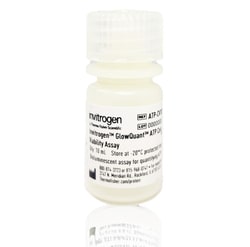
Invitrogen™ GlowQuant™ ATP Cell Viability Assay Kit
The GlowQuant™ ATP Cell Viability Assay Kit is a ready-to-use, bioluminescence-based solution for rapid and sensitive measurement of viable cells through ATP detection and quantification.

Invitrogen™ CellEvent™ Senescence Green Detection Kit
CellEvent™ Senescence Green Detection Kit consists of a fluorescent probe and optimized buffer that enable the image-based detection of senescent cells

Invitrogen™ alamarBlue™ and alamarBlue™ HS Cell Viability Reagents
The alamarBlue cell viability reagents are ready-to-use resazurin-based solutions that function as cell health indicators by using the reducing power of living cells to quantitatively measure viability.
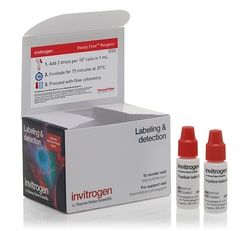
Invitrogen™ Propidium Iodide Ready Flow™ Reagent
Propidium Iodide Ready Flow™ Reagent is a bright, easy-to-use nucleic acid stain for distinguishing dead cells from live cells in flow cytometry assays.

Invitrogen™ Image-iT™ TMRM Reagent (mitochondrial membrane potential indicator)
Healthy mitochondrial membranes maintain a difference in electrical potential between the interior and exterior of the organelle, referred to as a membrane potential.
Invitrogen™ Amplex™ Red and Amplex™ UltraRed Reagents
The Amplex Red and UltraRed reagents are fluorogenic substrates for peroxidase. These highly sensitive and stable probes react with H2O2 in the presence of HRP for solution-based assays and ELISAs. Amplex UltraRed is a brighter version of Amplex Red with an improved pH range and sensitivity.

Invitrogen™ Transferrin From Human Serum, Alexa Fluor™ Conjugate
Transferrin is a monomeric serum glycoprotein that binds to a specific receptor on the surface of vertebrate cells and delivers up to two Fe3+ atoms via receptor-mediated endocytosis—our labeled LDL complexes are useful tools for studying this phenomenon.
Invitrogen™ Fc OxyBURST™ Green Assay Reagent
Fc OxyBURST™ Green Assay Reagent