
Cell Structure Reagents and Kits


CellMask™ Deep Red Actin Tracking Stain
Stain and track intracellular F-actin with CellMask Deep Red Actin Tracking Stain in live or fixed cells ICC, IHC, and 3D cell culture. The stain easily permeates live cell membranes, is retained within the cells after loading, and shows no detectable effects on viability after 24 hours of incubation.

Invitrogen™ CellMask™ Orange Actin Tracking Stain
Stain and track intracellular F-actin with CellMask Orange Actin Tracking Stain in live or fixed cells in ICC, IHC, and 3D cell culture. The stain easily permeates live-cell membranes, is retained within the cells after loading, and shows no detectable effects on viability after 24 hours of incubation.

Invitrogen™ Phalloidin Labeling Probes

Achieve precise and reliable F-actin staining with fluorescent and biotinylated phalloidins. Phalloidin conjugates are widely used in imaging applications to selectively label F-actin in a variety of sample types including fixed and permeabilized cells, tissue sections, and cell-free experiments.

Invitrogen™ SYTO™ 85 Orange Fluorescent Nucleic Acid Stain - 5 mM Solution in DMSO
For use with fluorescence microscopy and flow cytometry

Invitrogen™ HCS CellMask™ Stains
Easily visualize entire cells or individual cell structures during high-content screening (HCS) assays with HCS CellMask stains, which are available in a variety of colors for multiplexing flexibility and can be used immediately after fixation and permeabilization, or after antibody labeling.
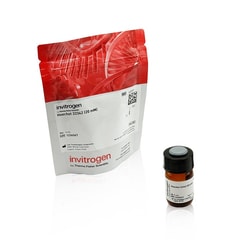
Thermo Scientific™ Hoechst 33342 solution (20 mM), 5 mL
DAPI and Hoechst are classic popular nuclear counterstains for use in all fluorescent cell and tissue techniques. The blue fluorescence is vivid contrast to green, yellow, orange, red, far red and NIR fluorescent probes and labels.
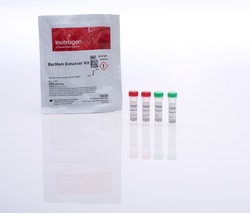
Invitrogen™ BacMam Enhancer Kit
Helps to increase expression of BacMam reagents in mammalian cells

Invitrogen™ Dil Stain (1,1'-Dioctadecyl-3,3,3',3'-Tetramethylindocarbocyanine Perchlorate ('DiI'; DiIC18(3)))
DiI is a lipophilic membrane stain that diffuses laterally to stain the entire cell. It is weakly fluorescent until incorporated into membranes.
Invitrogen™ FM™ 5-95 (N-(3-Trimethylammoniumpropyl)-4-(6-(4-(Diethylamino)phenyl)hexatrienyl)Pyridinium Dibromide)
For use with fluorescence microscopy

Invitrogen™ Vybrant™ Alexa Fluor™ 488 Lipid Raft Labeling Kit
Provides convenient, reliable and extremely bright fluorescent labeling of lipid rafts in live cells
Invitrogen™ SYTO™ 59 Red Fluorescent Nucleic Acid Stain - 5 mM Solution in DMSO
For use with fluorescence microscopy and flow cytometry
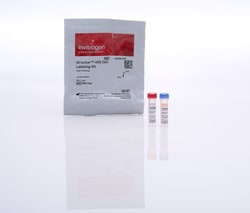
Invitrogen™ Qtracker™ 605 Cell Labeling Kit
Designed for loading cells grown in culture with highly fluorescent Qdot nanocrystals
Invitrogen™ ACMA (9-Amino-6-Chloro-2-Methoxyacridine)
DNA intercalator that selective binds to poly (d(A-T))

Invitrogen™ Dimeric Cyanine Nucleic Acid Stains
Dimeric Cyanine Nucleic Acid stains are eight spectrally distinct dyes for ultrasensitive fluorescence detection of nucleic acid in imaging and flow cytometry. They are cell-impermeant and have bright fluorescence signals, low background, and strong binding affinity with nucleic acid.
Invitrogen™ Monomeric Cyanine Nucleic Acid Stains
Monomeric Cyanine Nucleic Acid stains are five spectrally distinct dyes for ultrasensitive fluorescence detection of nucleic acid in imaging and flow cytometry. They have bright fluorescence signals, low background, and strong binding affinity with nucleic acid.