missing translation for 'onlineSavingsMsg'
Learn More
Learn More

Invitrogen™ HSTNF-R (60KDA) INST EIA128T
ELISA
Supplier: Invitrogen™ BMS203INST
Description
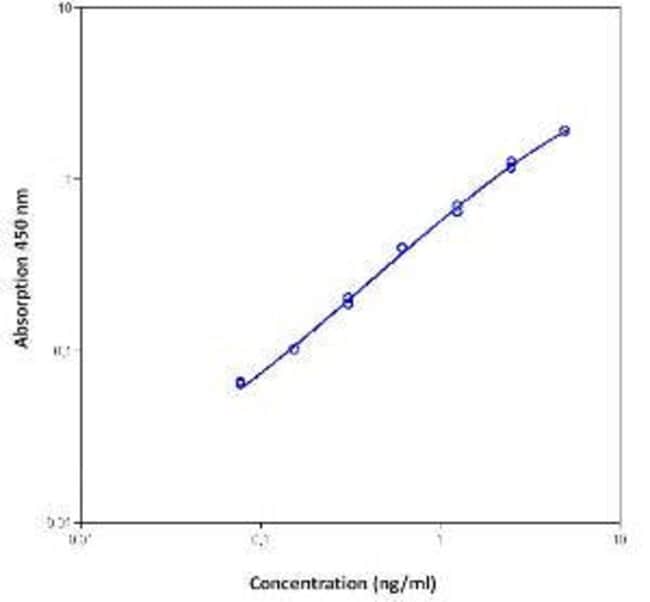
The Human Soluble Tumor Necrosis Factor Receptor 1(Hu sTNRF1) ELISA quantitates Hu sTNFR1 in human serum, plasma, cell culture supernatants, or other body fluids. The assay will exclusively recognize both natural and recombinant Hu sTNFR. Principle of the method The Human sTNFR1 solid-phase sandwich ELISA (enzyme-linked immunosorbent assay) is designed to measure the amount of the target bound between a matched antibody pair. A target-specific antibody has been pre-coated in the wells of the supplied microplate. Samples or controls are then added into these wells and bind to the immobilized (capture) antibody. The sandwich is formed by the binding of the second (detector) antibody to the target on a different epitope from the capture antibody. An antibody conjugated with enzyme binds the formed sandwich. After incubation and washing steps to rid the microplate of unbound substances, a substrate solution is added that reacts with the enzyme-antibody-target complex to produce measurable signal. The intensity of this signal is directly proportional to the concentration of target present in the original specimen. Rigorous validation Each manufactured lot of this ELISA kit is quality tested for criteria such as sensitivity, specificity, precision, and lot-to-lot consistency. See manual for more information on validation.
TNFR1 (Tumor necrosis factor receptor 1) belongs to the tumor necrosis factor superfamily, and is one of the major TNF-alpha receptors. TNFR1 plays an important role in mediating, in cytokine mediated signaling, positive regulation of the NF-Kb pathway, positive regulation of angiogenesis, and negative regulation of gene expression. The extracellular domain of TNFR1 is also released into the circulatory system as soluble TNFR1 (sTNFR1). In humans, the TNFR1 gene is located on chromosome 12. Anti-apoptotic protein BCL2-associated athanogene 4 (BAG4/SODD) and adaptor proteins TRADD and TRAF2 have been shown to interact with TNFR1, and thus play regulatory roles in the signal transduction mediated by the receptor. Germline mutations of the extracellular domains of TNFR1 were found to be associated with the autosomal dominant periodic fever syndrome, and the impaired receptor clearance is thought to be a mechanism of the disease.Spécifications
| P19438 | |
| 53 pg/mL | |
| ELISA | |
| Human | |
| Colorimetric Microplate Reader | |
| CD120a,FPF,TBP1,TNF-R,TNF-R-I,TNF-R55,TNFAR,TNFR1,TNFR55,TNFR60,p55,p55-R,p60 | |
| 4.1 | |
| HRP | |
| RUO | |
| -20°C | |
| TNFR1 | |
| 2 hrs 10 mins |
| 0.078 to 5.0 ng/mL | |
| HRP | |
| Plasma, Serum, Supernatant | |
| ELISA | |
| 7132 | |
| 8.2% | |
| Pre-coated 96 well Microplate, Detection Antibody, Anti-IgG-HRP, Sample Diluent, lyophilized, Standard (8-well strips x 4), Wash Buffer Concentrate, Substrate Solution, Sample Diluent, Stop Solution, Lysis Buffer 10x, Adhesive Plate Covers | |
| 128 Tests | |
| Plasma 10 μL, Serum 10 μL, Supernatant 10 μL | |
| Tumor necrosis factor receptor 1, TNF-R1, CD120a | |
| 15 mins |