missing translation for 'onlineSavingsMsg'
Learn More
Learn More


Invitrogen™ TNFRSF14 Polyclonal Antibody

Description
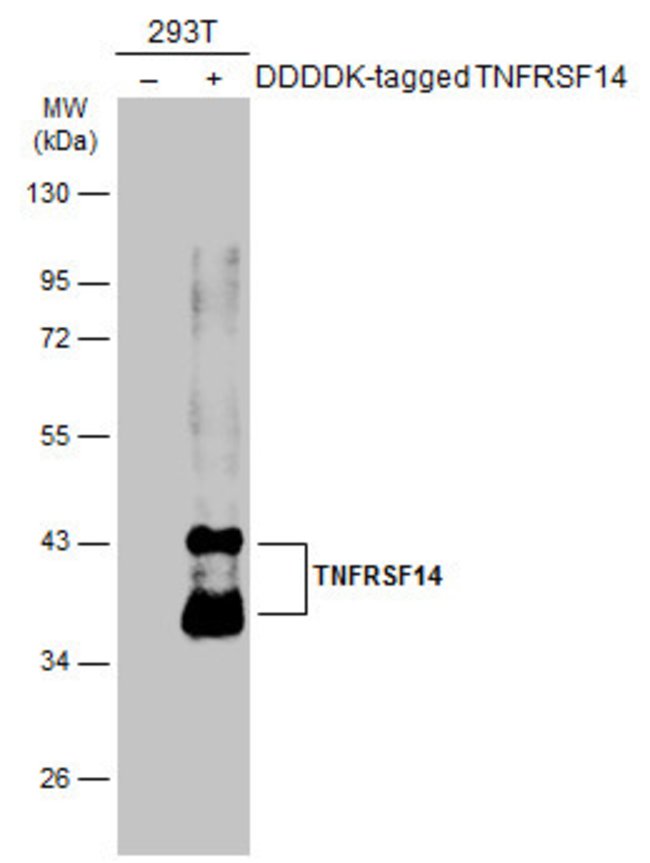
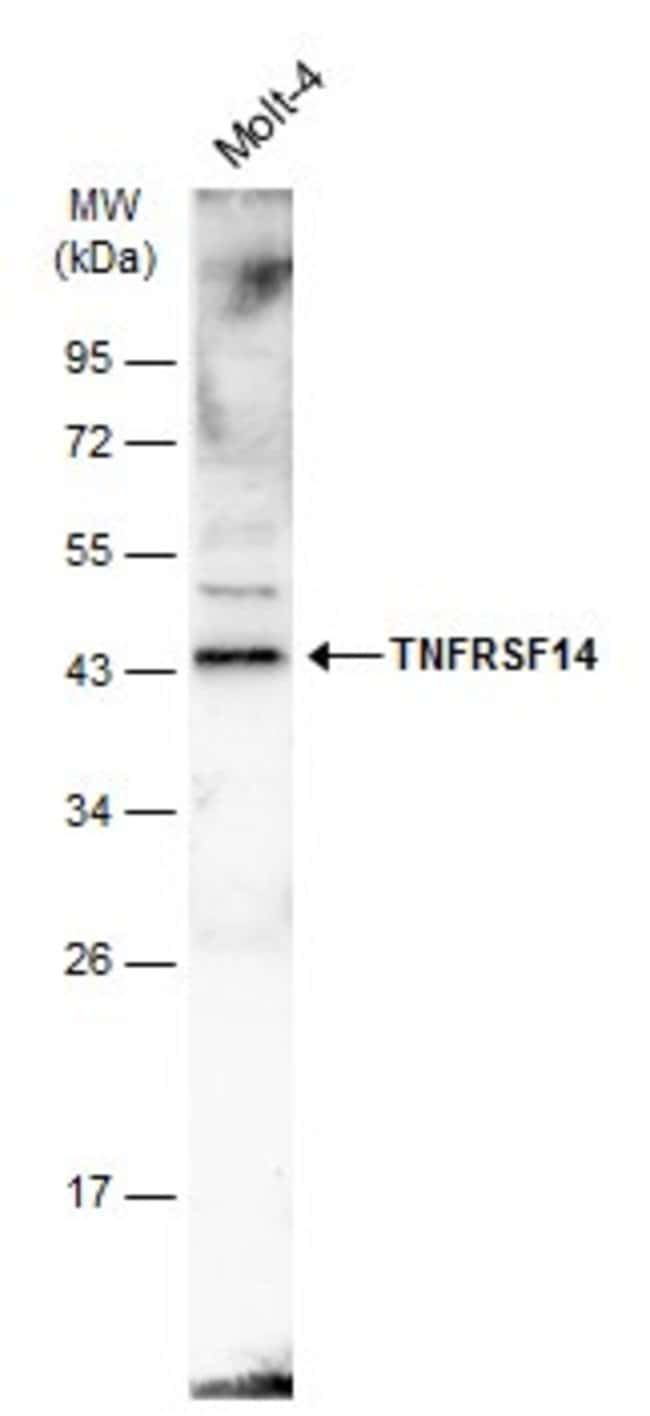
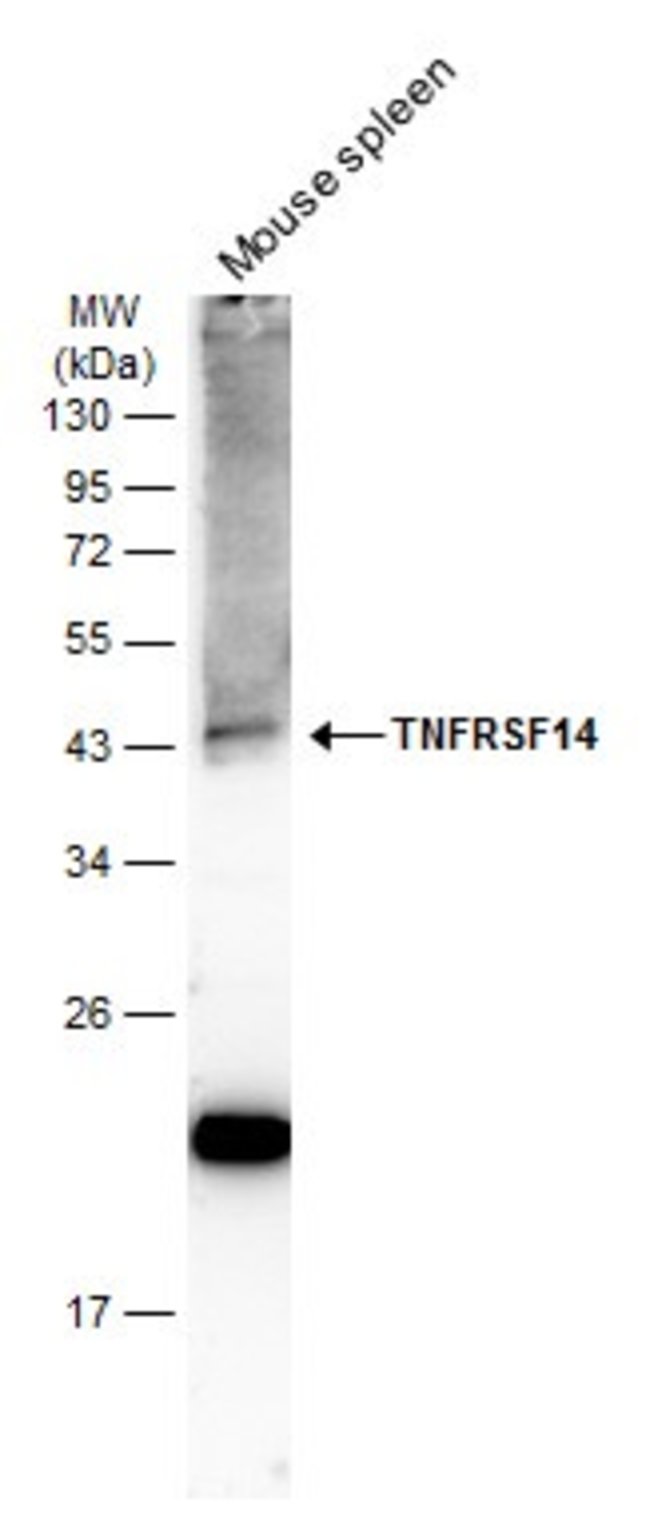
Recommended positive controls: A431, Molt-4, mouse spleen. Predicted reactivity: Rhesus Monkey (82%). Store product as a concentrated solution. Centrifuge briefly prior to opening the vial.
TNFRSF14 is a member of the TNF-receptor superfamily. TNFRSF14 was identified as a cellular mediator of herpes simplex virus (HSV) entry. Binding of HSV viral envelope glycoprotein D (gD) to TNFRSF14 has been shown to be part of the viral entry mechanism. The cytoplasmic region of TNFRSF14 was found to bind to several TRAF family members, which may mediate the signal transduction pathways that activate the immune response. Activation of the signal transduction pathway involving TNFRSF14 in T cells stimulates T cell proliferation and cytokine production, leading to inflammation and enhanced CTL-mediated tumor immunity, suggesting that these proteins may be useful as potential targets for controlling cellular immune responses. Multiple alternatively spliced transcript variants have been described, but the full-length nature of some of these TNFRSF14 variants have not been determined.
Spécifications
Spécifications
| Antigène | TNFRSF14 |
| Applications | Western Blot, Immunocytochemistry |
| Classification | Polyclonal |
| Concentration | 0.78 mg/mL |
| Conjugué | Unconjugated |
| Formule | PBS with 20% glycerol and 0.025% ProClin 300; pH 7 |
| Gène | TNFRSF14 |
| Numéro d’acquisition du gène | Q80WM9, Q92956 |
| Alias du gène | Atar; CD270; CD40-like protein; herpes virus entry mediator; herpes virus entry mediator A; Herpesvirus entry mediator A; HGNC:11912; HVEA; Hvem; LIGHTR; RP3-395M20.6; sCD2710; TNF receptor superfamily member 14; Tnfrs14; TNFRSF14; TR2; tumo; Tumor necrosis factor receptor superfamily member 14; tumor necrosis factor receptor superfamily, member 14; tumor necrosis factor receptor superfamily, member 14 (herpesvirus entry mediator); Tumor necrosis factor receptor-like 2; tumor necrosis factor receptor-like gene2; UNQ329/PRO509 |
| Symboles de gène | TNFRSF14 |
| Afficher plus de résultats |