missing translation for 'onlineSavingsMsg'
Learn More
Learn More
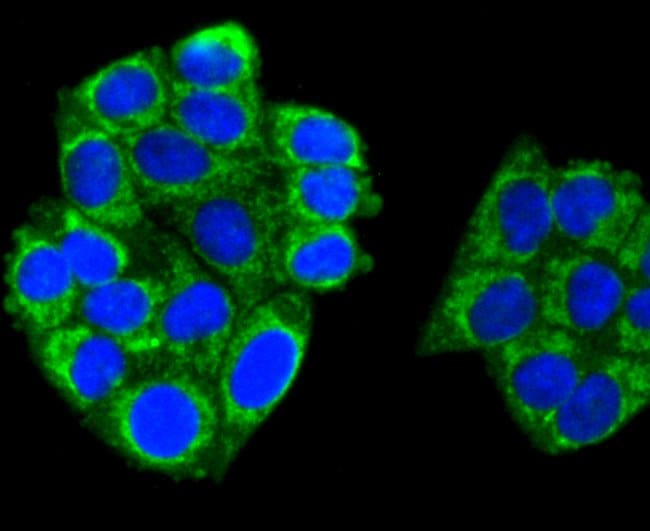
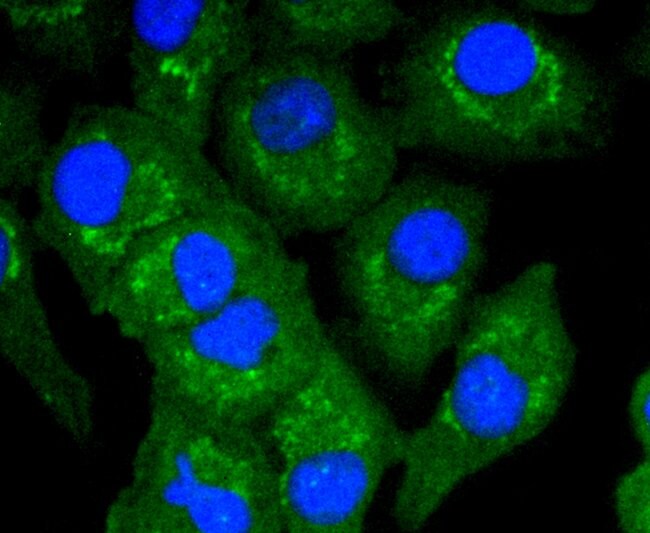
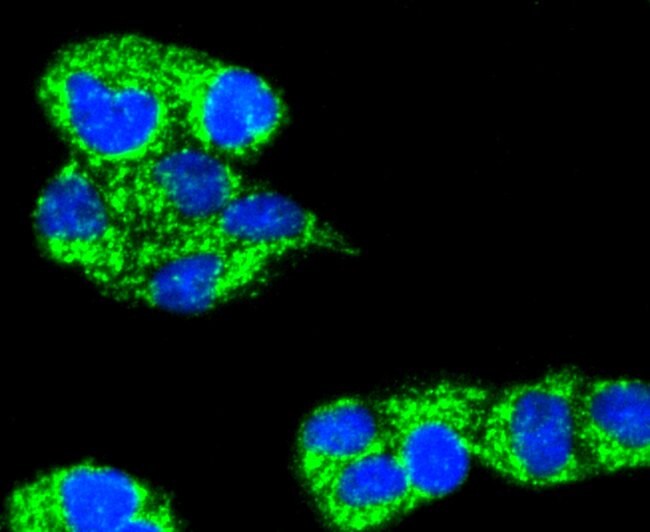
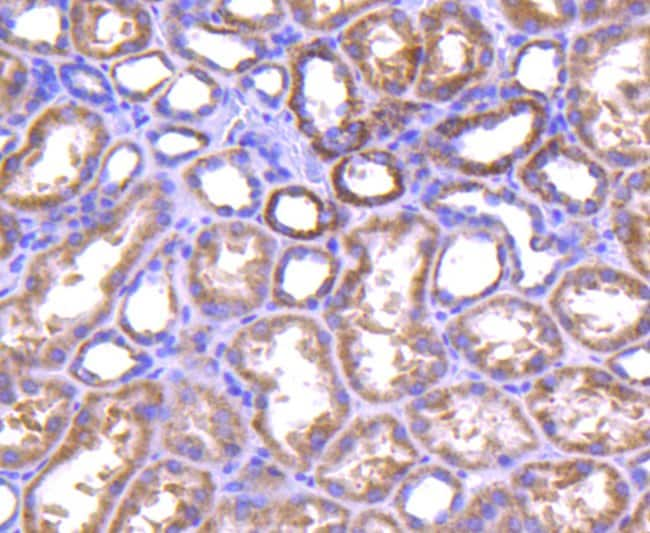
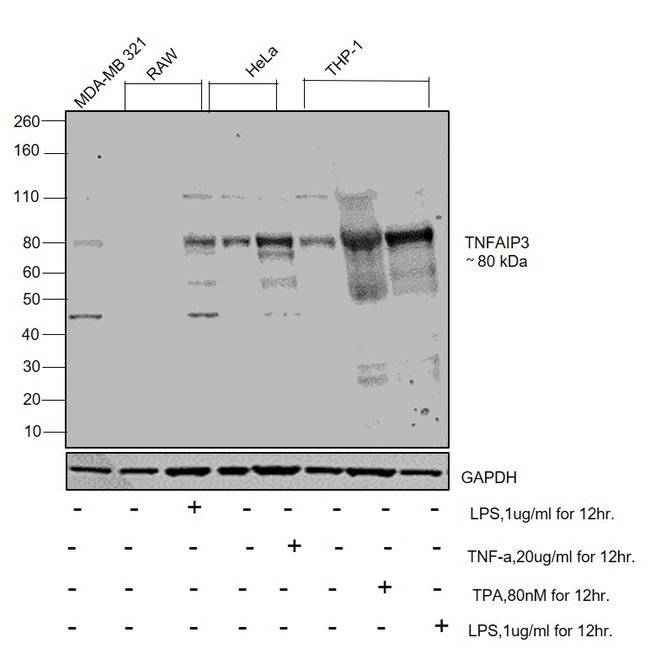
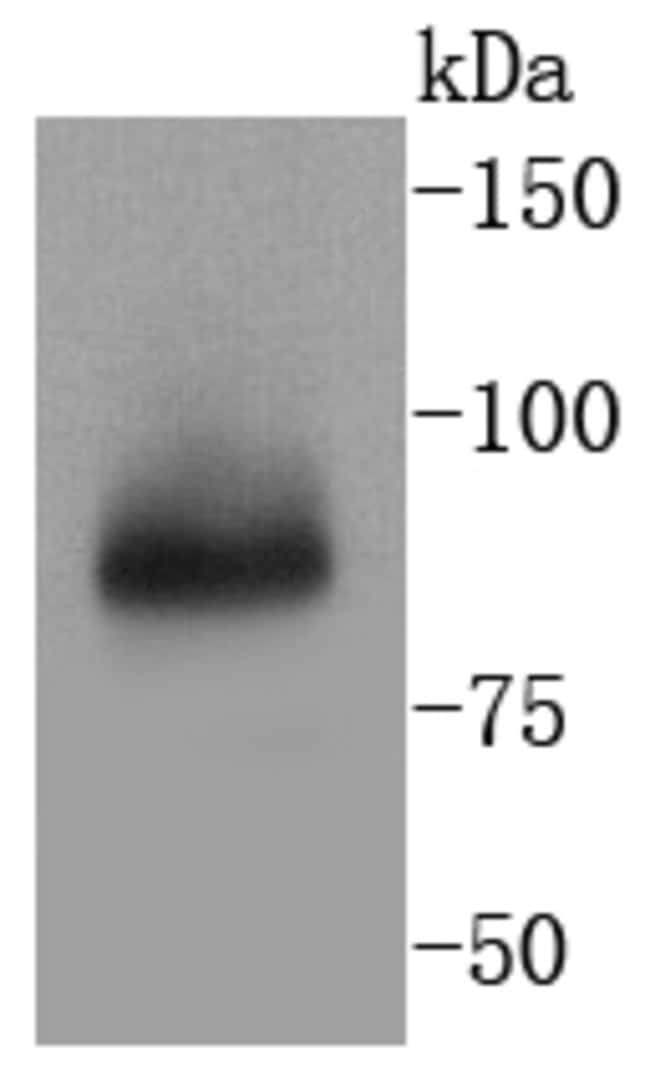
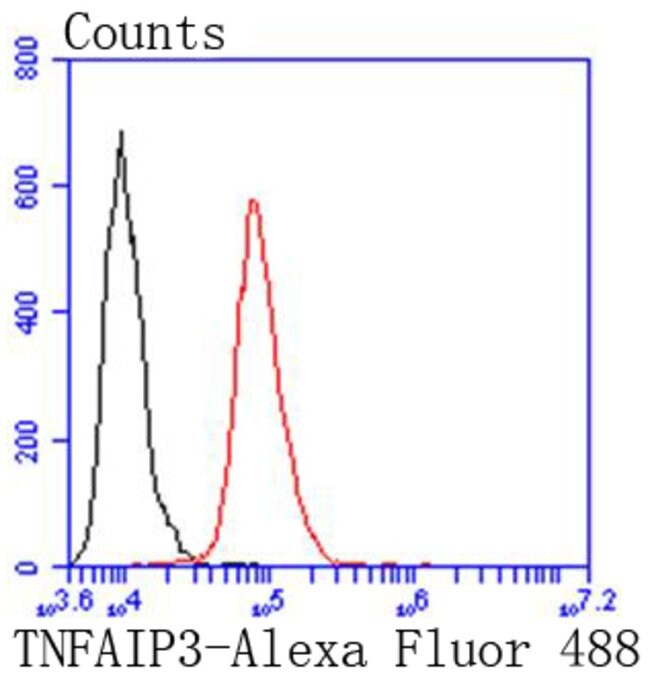
Invitrogen™ TNFAIP3 Recombinant Rabbit Monoclonal Antibody (SN07-31)

Description
Recombinant rabbit monoclonal antibodies are produced using in vitro expression systems. The expression systems are developed by cloning in the specific antibody DNA sequences from immunoreactive rabbits. Then, individual clones are screened to select the best candidates for production. The advantages of using recombinant rabbit monoclonal antibodies include: better specificity and sensitivity, lot-to-lot consistency, animal origin-free formulations, and broader immunoreactivity to diverse targets due to larger rabbit immune repertoire.
TNFAIP3, also known as A20, is located in chromosome band 6q23, a region that is often deleted in B cell lymphomas. Recently, it was identified as a tumor suppressor gene in Hodgkin lymphoma and several subtypes of non-Hodgkin lymphomas. TNFAIP3 was initially identified as a zinc-finger protein that is rapidly and transiently induced by TNF-a, inhibiting NF-kappa-B-dependent gene expression, and protecting cells from TNF-a-cytotoxicity. Overexpression of TNFAIP3 also inhibits the TLR2- and TLR4-mediated interleukin-8 synthesis in airway epithelial cells, suggesting that TNFAIP3 also acts as a negative regulator of TLR-mediated inflammatory responses, thereby protecting the host against harmful over-responses to pathogens. At least two isoforms of TNFAIP3 are known to exist.
Spécifications
Spécifications
| Antigène | TNFAIP3 |
| Applications | Flow Cytometry, Immunohistochemistry (Paraffin), Western Blot, Immunocytochemistry, Western Blot |
| Classification | Recombinant Monoclonal |
| Clone | SN07-31 |
| Concentration | 1 mg/mL |
| Conjugué | Unconjugated |
| Formule | TBS with 0.05% BSA, 40% Glycerol and 0.05% sodium azide; pH 7.4 |
| Gène | TNFAIP3 |
| Numéro d’acquisition du gène | P21580, Q60769 |
| Alias du gène | A20; A20p37; A20p50; AISBL; OTU domain-containing protein 7C; OTUD7C; Putative DNA-binding protein A20; RP11-356I2.3; TNF alpha induced protein 3; TNF alpha-induced protein 3; TNFA1P2; TNFAIP3; TNFAIP3 (A20); Tnfip3; Tumor necrosis factor alpha-induced protein 3; tumor necrosis factor induced protein 3; tumor necrosis factor inducible protein A20; tumor necrosis factor, alpha induced protein 3; tumor necrosis factor, alpha-induced protein 3; zinc finger protein A20 |
| Afficher plus de résultats |