missing translation for 'onlineSavingsMsg'
Learn More
Learn More
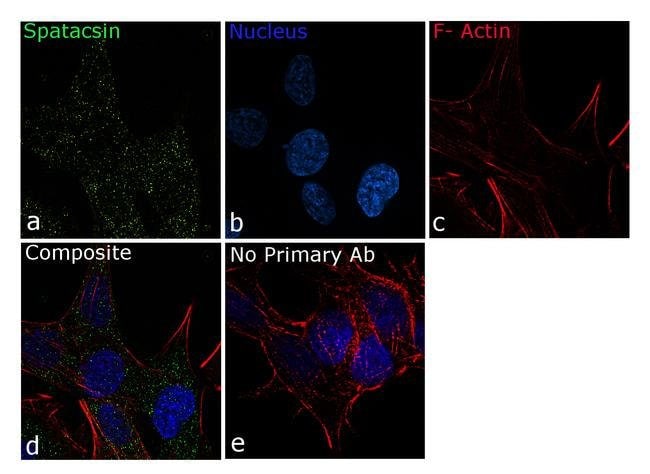
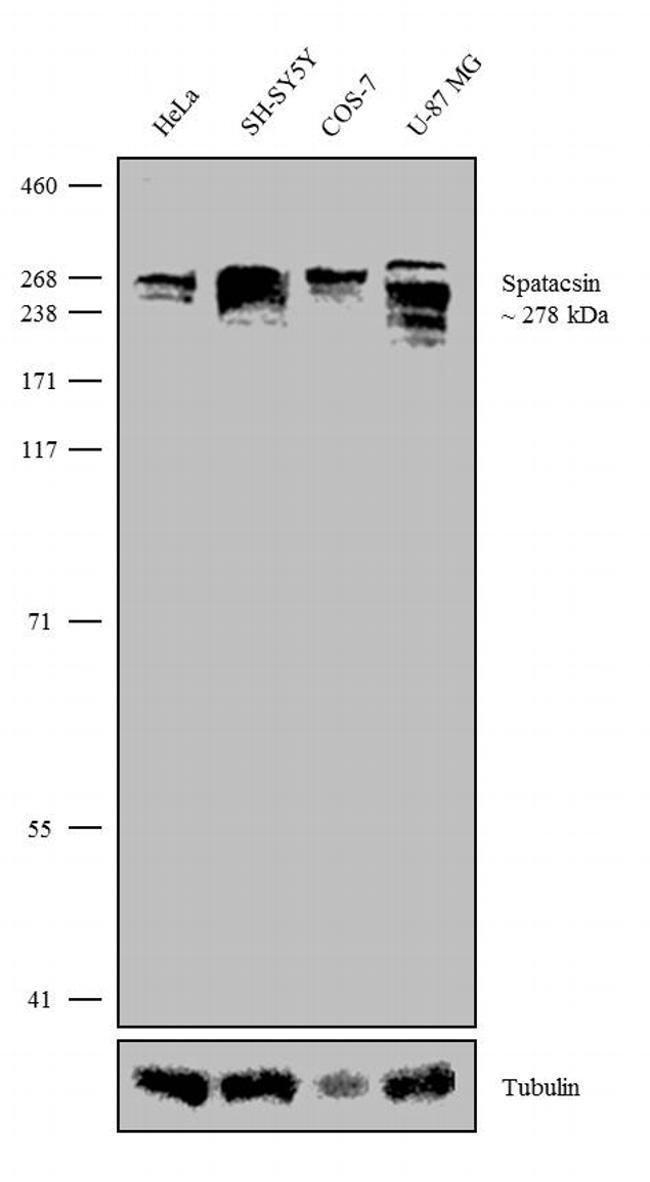
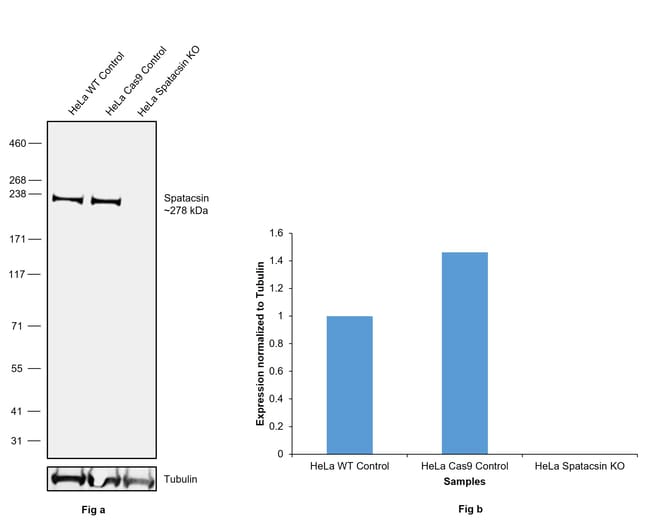
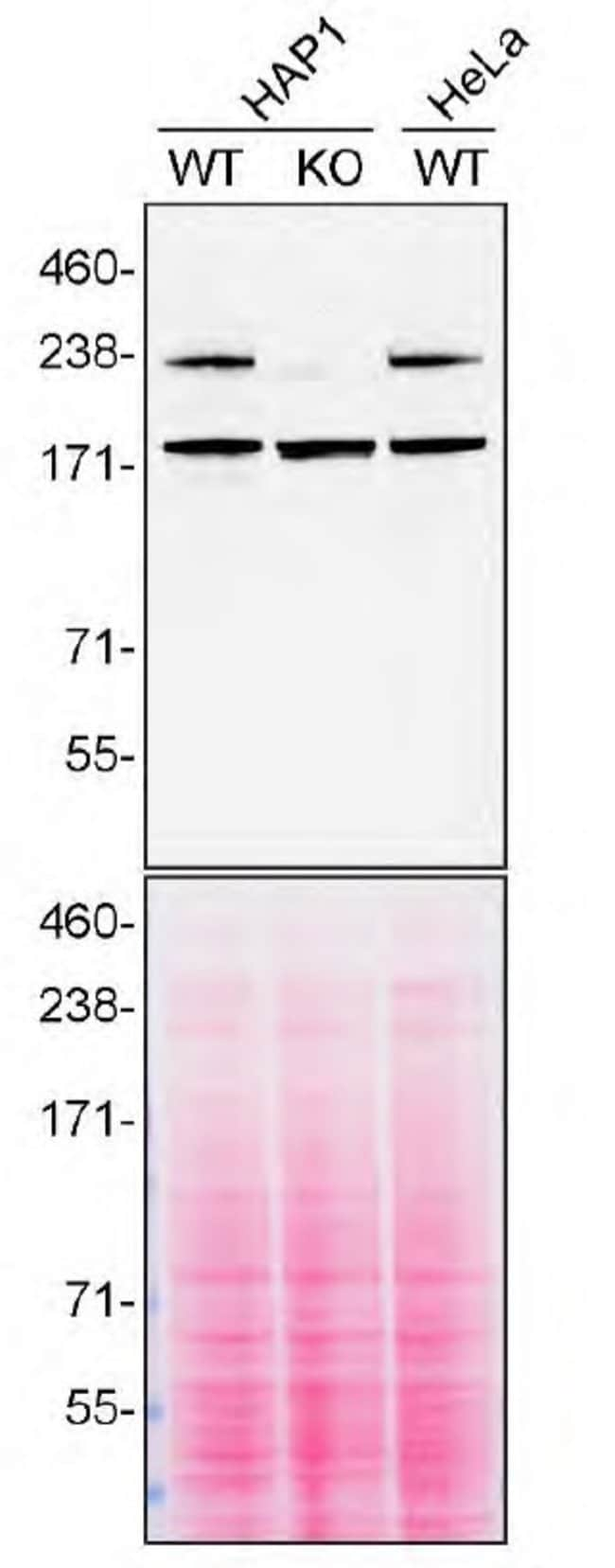
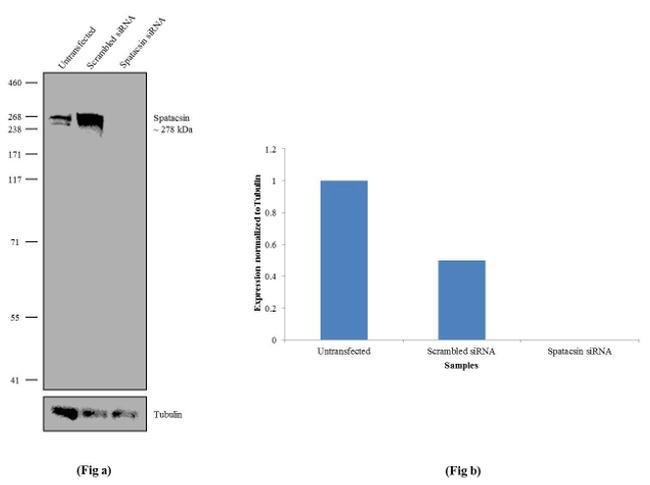
Invitrogen™ SPG11 Recombinant Rabbit Monoclonal Antibody (2H25L11)

Description
This antibody is predicted to react with Monkey, Horse, Bovine, Sheep Recombinant rabbit monoclonal antibodies are produced using in vitro expression systems. The expression systems are developed by cloning in the specific antibody DNA sequences from immunoreactive rabbits. Then, individual clones are screened to select the best candidates for production. The advantages of using recombinant rabbit monoclonal antibodies include: better specificity and sensitivity, lot-to-lot consistency, animal origin-free formulations, and broader immunoreactivity to diverse targets due to larger rabbit immune repertoire.
Hereditary spastic paraplegias (HSPs) are genetically and phenotypically heterogeneous disorders. Spastic paraplegia with thinning of the corpus callosum (ARHSP-TCC) is a relatively frequent form of complicated hereditary spastic paraplegia (cHSP) in which mental retardation and muscle stiffness at onset are followed by slowly progressive paraparesis and cognitive deterioration. Mutations of the SPG11 gene encoding the spatacsin protein have been identified as a major cause of HSP-TCC. Spatacsin is a potential transmembrane protein that is phosphorylated upon DNA damage. It is expressed in all structures of the brain, with a high expression in the cerebellum. SPG11 mutations may occur more frequently in familial than sporadic forms of cHSP without TCC. Kjellin syndrome is found to be associated with mutations in not only the SPG15 gene but also SPG11 gene. Recent studies show Parkinsonism may initiate SPG11-linked HSP TCC and that SPG11 may cause juvenile Parkinsonism.
Spécifications
Spécifications
| Antigène | SPG11 |
| Applications | Western Blot, Immunocytochemistry |
| Classification | Recombinant Monoclonal |
| Clone | 2H25L11 |
| Concentration | 0.5 mg/mL |
| Conjugué | Unconjugated |
| Formule | PBS with 0.09% sodium azide; pH 7.2-7.4 |
| Gène | SPG11 |
| Numéro d’acquisition du gène | Q96JI7 |
| Alias du gène | 6030465E24Rik; A330015I11; ALS5; C530005A01Rik; CMT2X; Colorectal carcinoma-associated protein; KIAA1840; RGD1562529; spastic paraplegia 11; spastic paraplegia 11 (autosomal recessive); spastic paraplegia 11 protein; Spastic paraplegia 11 protein homolog; spatacsin; Spg11 |
| Afficher plus de résultats |