missing translation for 'onlineSavingsMsg'
Learn More

Invitrogen™ SPG11 Recombinant Superclonal™ Antibody (2HCLC)

Numéro de catalogue. 711811
Encompass
Modifier l'affichage
Click to view available options
Quantité:
100 μg
1 product options available for selection
Product selection table with 1 available options. Use arrow keys to navigate and Enter or Space to select.
Numéro de catalogue. Quantité
711811 100 μg
Use arrow keys to navigate between rows. Press Enter or Space to select a product option. 1 options available.
1 options
Numéro de catalogue. 711811 Fournisseur Invitrogen™ Code fournisseur 711811
Saison des économies
Afficher toutes les promotions

Pour de l'aide SVP utiliser la function de clavardage; nous envoyer un couriel à help@thermofisher.com ou appelez le service à la clientèle au 1-800-234-7437.

Rabbit Recombinant Superclonal Antibody

This antibody is predicted to react with Monkey, Horse, Bovine, Sheep Recombinant rabbit Superclonal™ antibodies are unique offerings from Thermo Fisher Scientific. They are comprised of a selection of multiple different recombinant monoclonal antibodies, providing the best of both worlds - the sensitivity of polyclonal antibodies with the specificity of monoclonal antibodies - all delivered with the consistency only found in a recombinant antibody. While functionally the same as a polyclonal antibody - recognizing multiple epitope sites on the target and producing higher detection sensitivity for low abundance targets - a recombinant rabbit Superclonal™ antibody has a known mixture of light and heavy chains. The exact population can be produced in every lot, circumventing the biological variability typically associated with polyclonal antibody production. Note: Formerly called 'Recombinant polyclonal antibody', this product is now rebranded as 'Recombinant Superclonal™ antibody'. The physical product and the performance remain unchanged.

Hereditary spastic paraplegias (HSPs) are genetically and phenotypically heterogeneous disorders. Spastic paraplegia with thinning of the corpus callosum (ARHSP-TCC) is a relatively frequent form of complicated hereditary spastic paraplegia (cHSP) in which mental retardation and muscle stiffness at onset are followed by slowly progressive paraparesis and cognitive deterioration. Mutations of the SPG11 gene encoding the spatacsin protein have been identified as a major cause of HSP-TCC. Spatacsin is a potential transmembrane protein that is phosphorylated upon DNA damage. It is expressed in all structures of the brain, with a high expression in the cerebellum. SPG11 mutations may occur more frequently in familial than sporadic forms of cHSP without TCC. Kjellin syndrome is found to be associated with mutations in not only the SPG15 gene but also SPG11 gene. Recent studies show Parkinsonism may initiate SPG11-linked HSP TCC and that SPG11 may cause juvenile Parkinsonism.

Spécifications

Antigène SPG11
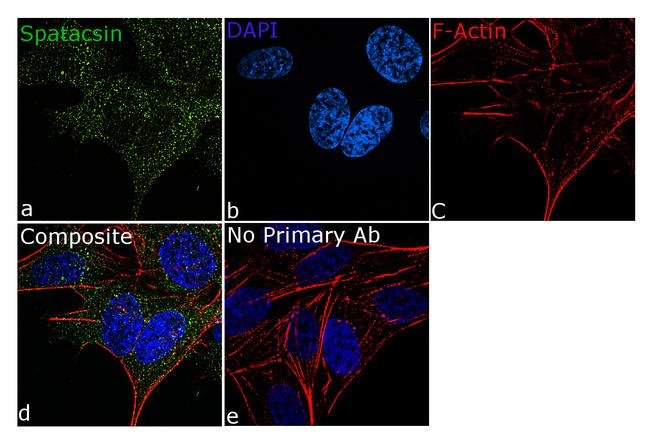
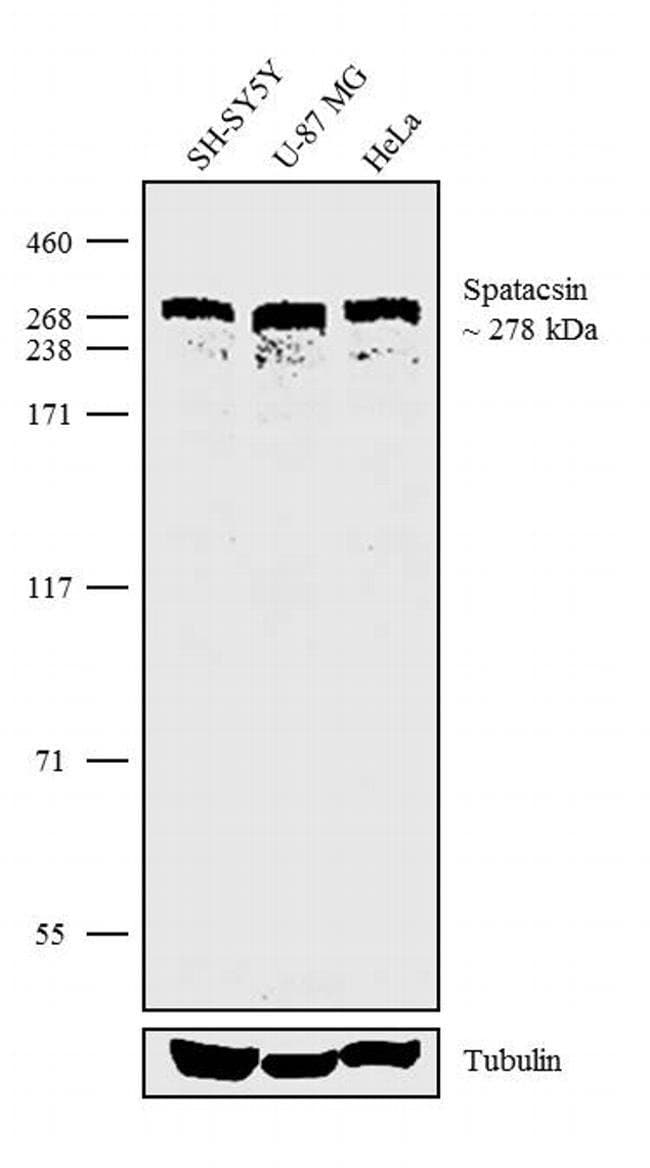
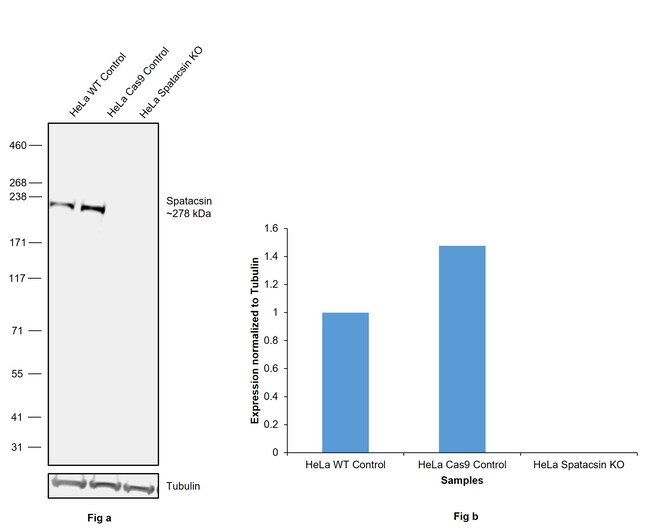
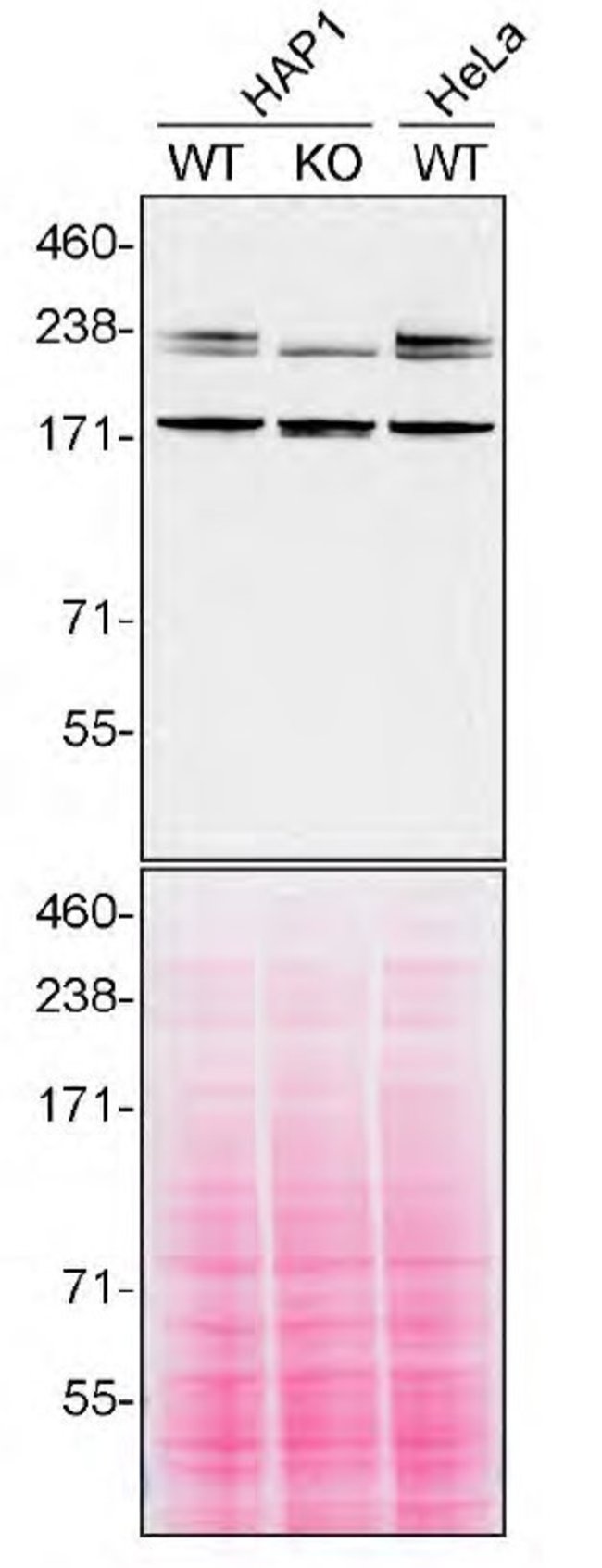
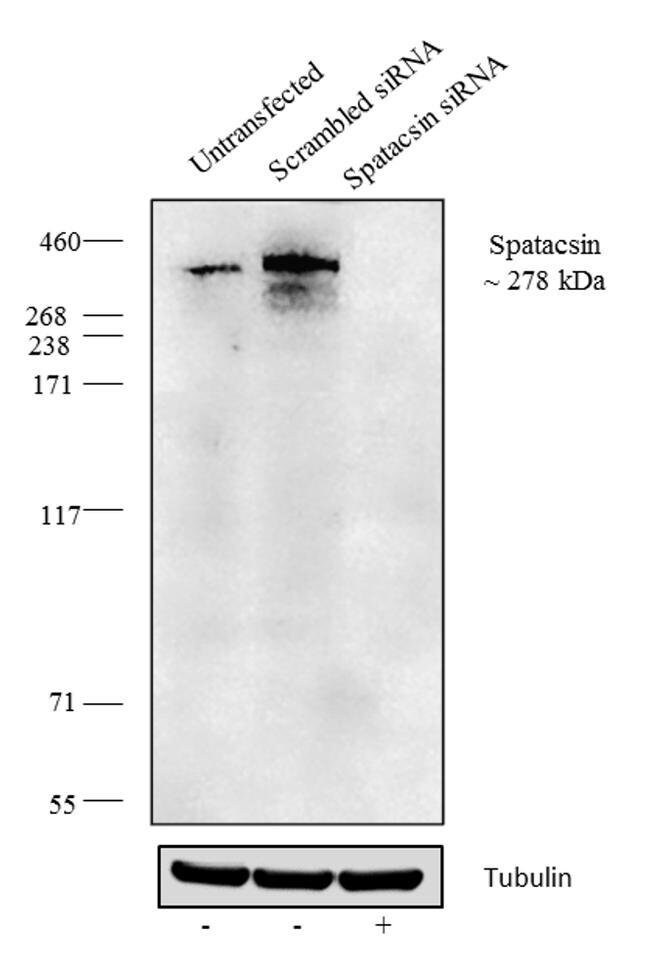
Applications Western Blot, Immunocytochemistry
Classification Recombinant Superclonal
Clone 2HCLC
Concentration 0.5 mg/mL
Conjugué Unconjugated
Formule PBS with 0.09% sodium azide; pH 7.2-7.4
Gène SPG11
Numéro d’acquisition du gène Q96JI7
Alias du gène 6030465E24Rik; A330015I11; ALS5; C530005A01Rik; CMT2X; Colorectal carcinoma-associated protein; KIAA1840; RGD1562529; spastic paraplegia 11; spastic paraplegia 11 (autosomal recessive); spastic paraplegia 11 protein; Spastic paraplegia 11 protein homolog; spatacsin; Spg11
Symboles de gène SPG11
Espèces hôtes Rabbit
Immunogène Peptide corresponding to human SPG11 (aa873-aa892).
Méthode de purification Protein A
Quantité 100 μg
Statut réglementaire RUO
Primaire ou secondaire Primary
ID du gène (Entrez) 80208
Espèces cibles Human
Contenu et stockage Store at 4°C short term. For long term storage, store at -20°C, avoiding freeze/thaw cycles.
Type de produit Antibody
Forme Liquid
Isotype IgG
Afficher plus de résultats Afficher moins de résultats