Learn More



Invitrogen™ PSA-NCAM Monoclonal Antibody (12E3), eBioscience™, Invitrogen™

Description
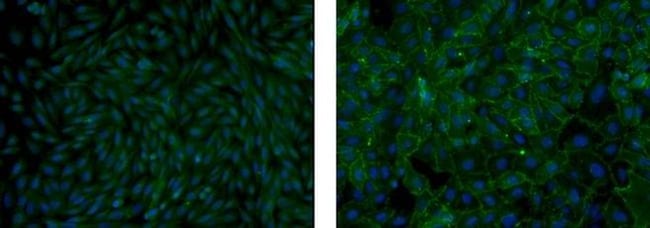
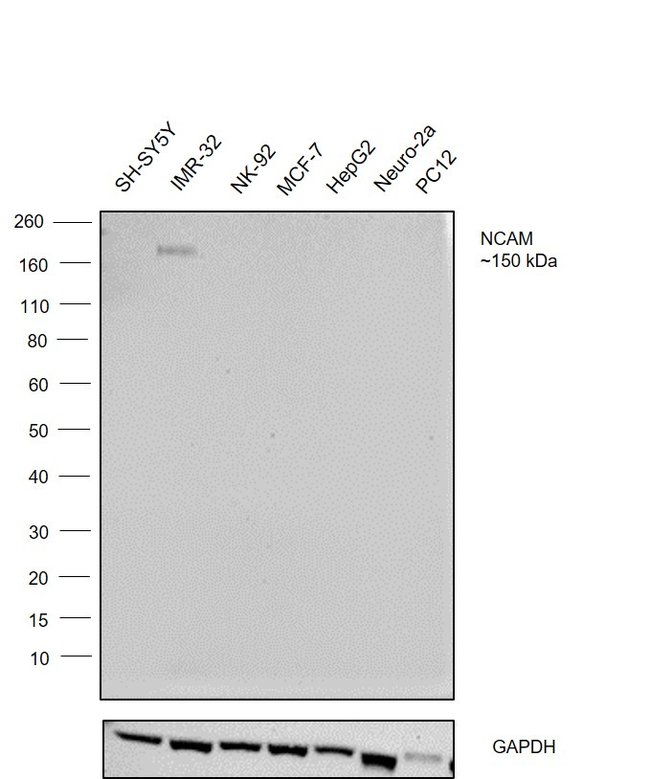
Description: The monoclonal antibody 12E3 specifically recognizes polysialylated neural cell adhesion molecule (PSA-NCAM) in human, mouse and rat. Polysialic acid is a long homopolymer of sialic acid that is negatively charged and is attached to neural cell adhesion molecule (CD56) and serves as a regulator of NCAM function. PSA attachment to NCAM is associated with inhibited adhesion of neural cells. PSA-NCAM expression is highly regulated and corresponds to specific neural developmental windows in which neural precursors are migrating and during the process of axonal sprouting, guidance, and targeting. PSA-NCAM expression is prevalent during development of the brain, but in the adult becomes restricted to regions undergoing self-renewal or exhibiting plasticity such as the olfactory bulb, suprachiasmatic nucleus, hippocampus, hypothalamus, and specific spinal cord nuclei. PSA-NCAM is re-expressed during tumorigenesis and is also expressed on cell lines isolated from neuroblastomas and pheochromocytomas. Applications Reported: This 12E3 antibody has been reported for use in immunohistochemical staining of frozen tissue sections, immunohistochemical staining of formalin-fixed paraffin embedded tissue sections, microscopy, and immunocytochemistry. Applications Tested: This 12E3 antibody has been tested by immunocytochemistry of formaldehyde-fixed PC-12 (rat) cells and can be used at less than or equal to 20 μg/mL.
Spécifications
Spécifications
| Antigène | PSA-NCAM |
| Applications | Immunohistochemistry (Frozen), Immunohistochemistry (Paraffin), Western Blot, Immunocytochemistry |
| Classification | Monoclonal |
| Clone | 12E3 |
| Concentration | 0.5 mg/mL |
| Conjugué | Unconjugated |
| Formule | PBS with 0.09% sodium azide; pH 7.2 |
| Gène | NCAM1 |
| Numéro d’acquisition du gène | P13591, P13595, P13596 |
| Alias du gène | antigen recognized by monoclonal antibody 5.1H11; CD56; E-NCAM; MSK39; Ncam; N-CAM; NCAM1; N-CAM-1; NCAM-1; NCAMC; NCAM-C; neural cell adhesion molecule 1; neural cell adhesion molecule, NCAM; Polysialylated NCAM; PSA NCAM |
| Afficher plus de résultats |
For Research Use Only.