Learn More
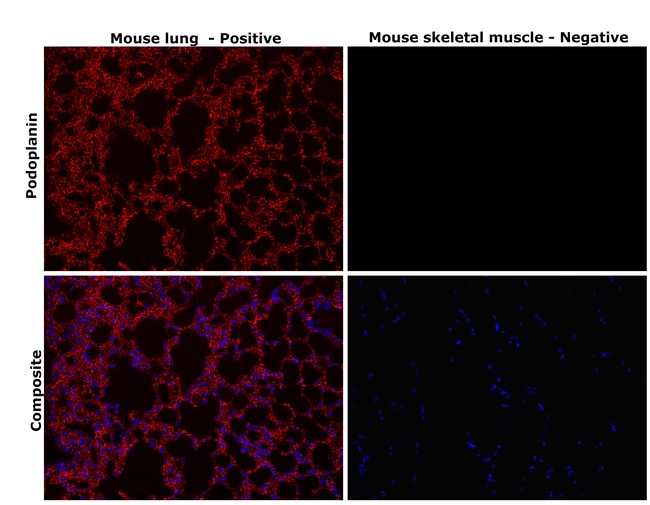
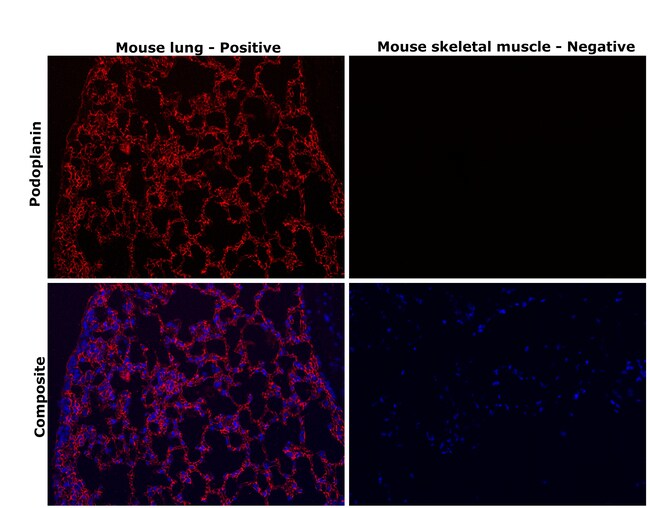
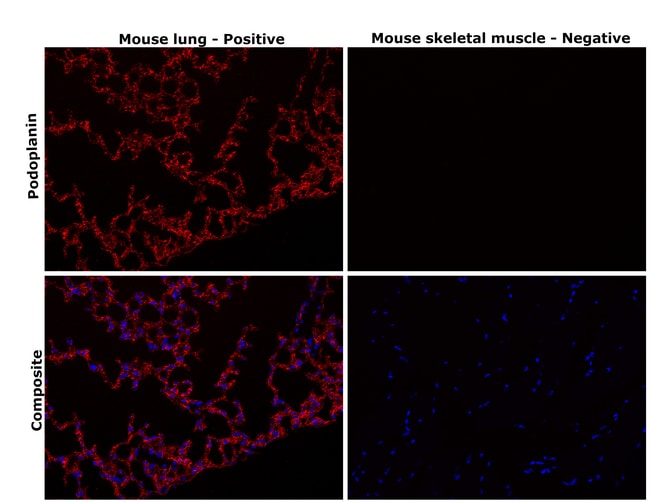
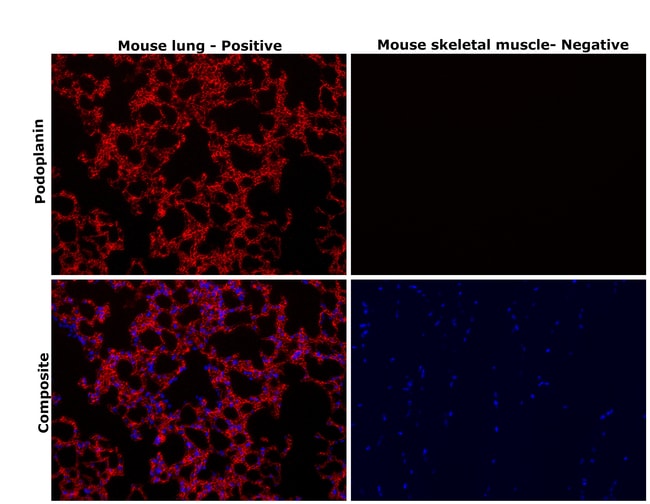
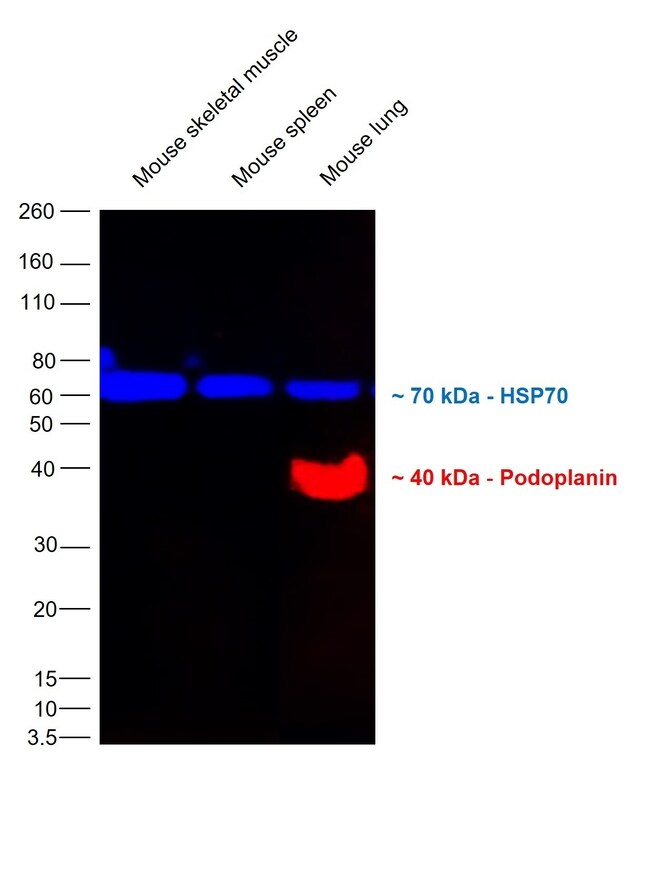

Invitrogen™ Podoplanin Monoclonal Antibody (eBio8.1.1 (8.1.1)), eFluor™ 660, eBioscience™, Invitrogen™
Description
Description: The 8.1.1 monoclonal antibody reacts with mouse podoplanin (T1a, gp38, aggrus), a 43 kDa transmembrane glycoprotein, named for its expression in kidney glomerular epithelial cells (podocytes). In addition, Podoplanin is expressed in epithelial and mesothelial cells such as intestinal epithelium, alveolar type I cells, podocytes, and mesothelium of the visceral peritoneum. It was also shown to be a potent marker for lymphatic endothelium. Podoplanin is also expressed by subcapsular epithelial cells of the murine thymus. Mice deficient in Podoplanin die at birth because of a respiratory defect and congenital lymphedema due to a failure in lymphatic pattern formation. Applications Reported: This eBio8.1.1 (8.1.1) antibody has been reported for use in flow cytometric analysis. Applications Tested: This eBio8.1.1 (8.1.1) antibody has been tested by flow cytometric analysis of the TE-71 cell line. This can be used at less than or equal to 0.125 μg per test. A test is defined as the amount (μg) of antibody that will stain a cell sample in a final volume of 100 μL. Cell number should be determined empirically but can range from 10^5 to 10^8 cells/test. It is recommended that the antibody be carefully titrated for optimal performance in the assay of interest. eFluor™ 660 is a replacement for Alexa Fluor™ 647. eFluor™ 660 emits at 659 nm and is excited with the red laser (633 nm).
Spécifications
Spécifications
| Antigène | Podoplanin |
| Applications | Flow Cytometry, Immunohistochemistry (Paraffin), Western Blot |
| Classification | Monoclonal |
| Clone | eBio8.1.1 (8.1.1) |
| Concentration | 0.2 mg/mL |
| Conjugué | eFluor 660 |
| Formule | PBS with 0.09% sodium azide; pH 7.2 |
| Gène | PDPN |
| Numéro d’acquisition du gène | Q62011 |
| Alias du gène | 29kDa cytosolic podoplanin intracellular domain; Aggrus; CTA-520D8.1; E11; E11 antigen epitope; epithelial cell surface transmembrane protein antigen; glycoprotein 36; Glycoprotein 38; glycoprotein, 36-KD; GP36; Gp38; GP40; HT1A-1; hT1alpha-1; hT1alpha-2; lung type I cell membrane associated glycoprotein; lung type-I cell membrane-associated glycoprotein (T1A-2); Ots8; OTS-8; OTTHUMP00000009640; OTTHUMP00000044504; PA2.26; PA2.26 antigen; PDPN; PICD; Podoplanin; PSEC0003; PSEC0025; pulmonary type I alveolar epithelial cell transmembrane differentiation marker; RANDAM-2; RP23-348F1.2; RTI140; RTI40; T1a; T1A2; T1A-2; T1alpha; T1-alpha; TI1A; Transmembrane glycoprotein E11; type I cell 40 kDa protein |
| Afficher plus de résultats |
For Research Use Only.