missing translation for 'onlineSavingsMsg'
Learn More
Learn More
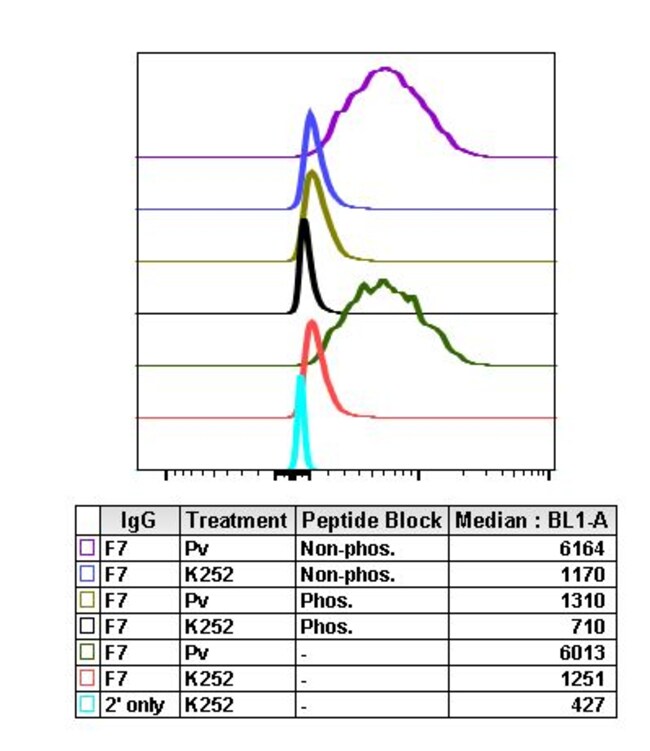
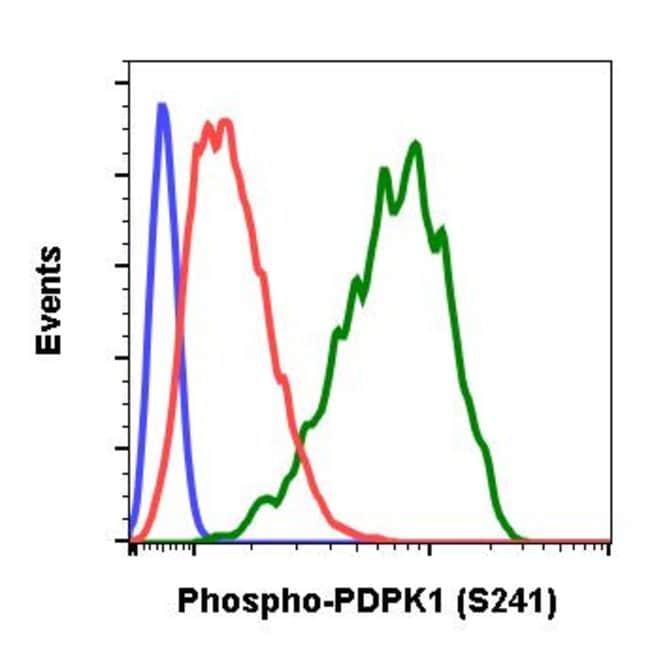
Invitrogen™ Phospho-PDPK1 (Ser241) Recombinant Rabbit Monoclonal Antibody (PDK1S241-F7)
Description
Recombinant rabbit monoclonal antibodies are produced using in vitro expression systems. The expression systems are developed by cloning in the specific antibody DNA sequences from immunoreactive rabbits. Then, individual clones are screened to select the best candidates for production. The advantages of using recombinant rabbit monoclonal antibodies include: better specificity and sensitivity, lot-to-lot consistency, animal origin-free formulations, and broader immunoreactivity to diverse targets due to larger rabbit immune repertoire.
PDPK1 (3 Phosphoinositide Dependent Protein Kinase 1) phosphorylates AGC kinases. PDPK1 activates conventional PKC and PKC zeta through phosphorylation of critical threonine residues in the activation loop. PDPK1 also phosphorylates Protein Kinase B (PKB) at threonine 308 in the presence of phosphatidylinositol-3,4,5-trisphosphate. Active Akt inactivates Glycogen Synthase Kinase 3 (GSK3), eventually leading to the dephosphorylation and activation of glycogen synthase, and the stimulation of glycogen synthesis. Because of the role that PDPK1 plays in insulin-induced glycogen synthesis and PKC activation, it is a potentially important target for metabolic drug research.
Spécifications
Spécifications
| Antigène | Phospho-PDPK1 (Ser241) |
| Applications | Flow Cytometry |
| Classification | Recombinant Monoclonal |
| Clone | PDK1S241-F7 |
| Concentration | 0.5 mg/mL |
| Conjugué | Unconjugated |
| Formule | PBS with 0.1% BSA, 50% glycerol and 0.02% sodium azide; pH 7.4 |
| Gène | Pdpk1 |
| Numéro d’acquisition du gène | O15530 |
| Alias du gène | 3-phosphoinositide dependent protein kinase 1; 3-phosphoinositide dependent protein kinase-1; 3-phosphoinositide-dependent protein kinase 1; 3-phosphoinositide-dependent protein kinase 2 pseudogene; HGNC:8809; hPDK1; isoenzyme 1; kinase isoenzyme 1; lipoamide; mPDK1; OTTHUMP00000174525; OTTHUMP00000205076; PDK1; PDPK1; PDPK2; PDPK2P; Pkb kinase; PkB kinase like gene 1; PkB-like 1; PRO0461; Protein kinase B kinase |
| Afficher plus de résultats |