missing translation for 'onlineSavingsMsg'
Learn More
Learn More
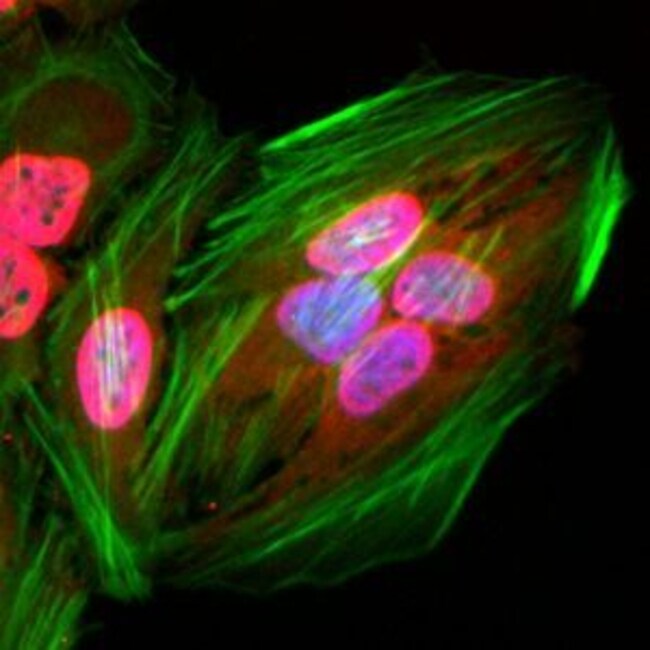
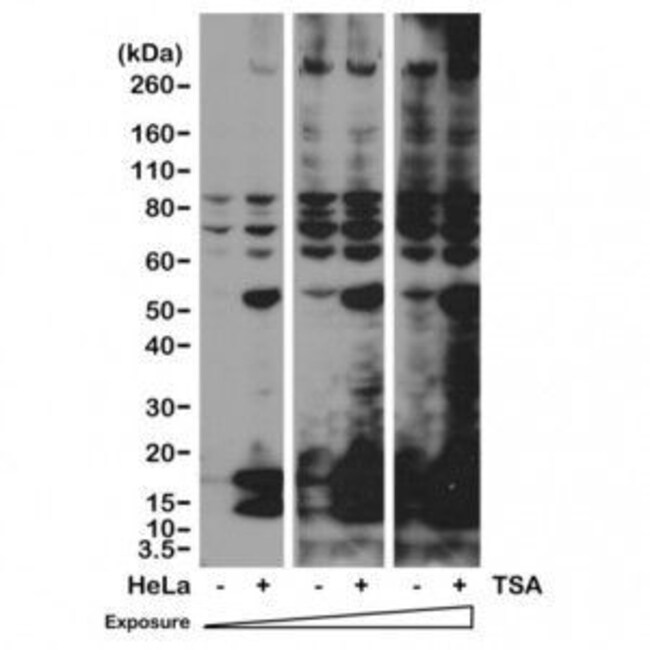
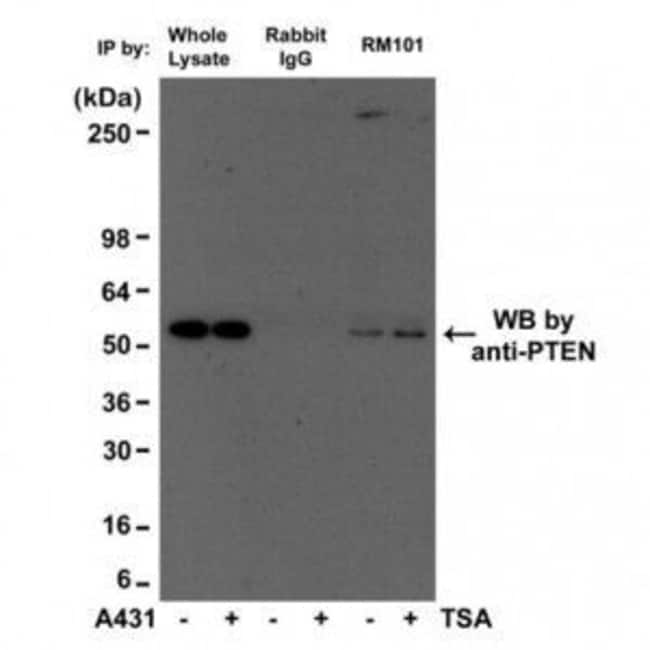
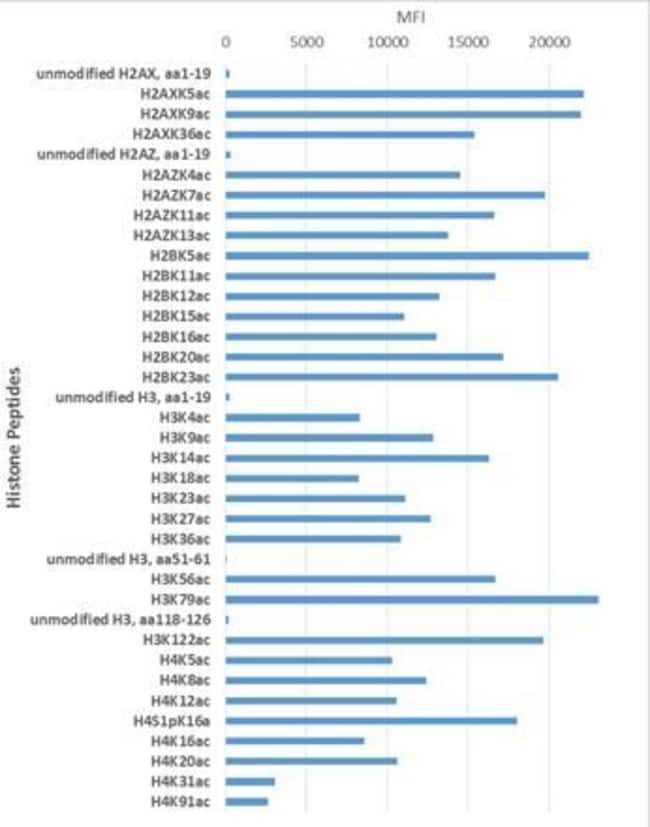
Invitrogen™ Acetylated Lysine Recombinant Rabbit Monoclonal Antibody (RM101)

Description
Specificity: reacts to lysine-acetylated proteins. No cross reactivity with nonacetylated lysine, or lysines with other modifications. Recombinant rabbit monoclonal antibodies are produced using in vitro expression systems. The expression systems are developed by cloning in the specific antibody DNA sequences from immunoreactive rabbits. Then, individual clones are screened to select the best candidates for production. The advantages of using recombinant rabbit monoclonal antibodies include: better specificity and sensitivity, lot-to-lot consistency, animal origin-free formulations, and broader immunoreactivity to diverse targets due to larger rabbit immune repertoire.
In the nucleus, DNA is tightly packed into nucleosomes generating an environment which is highly repressive towards DNA processes such as transcription. Acetylation of lysine residues within proteins has emerged as an important mechanism used by cells to overcome this repression. The acetylation of non-histone proteins such as transcription factors, as well as histones appears to be involved in this process. Acetylation may result in structural transitions as well as specific signaling within discrete chromatin domains. The role of acetylation in intracellular signaling has been inferred from the binding of acetylated peptides by the conserved bromodomain. Furthermore, recent findings suggest that bromodomain/acetylated-lysine recognition can serve as a regulatory mechanism in protein-protein interactions in numerous cellular processes such as chromatin remodeling and transcriptional activation.
Spécifications
Spécifications
| Antigène | Acetylated Lysine |
| Applications | ChIP Assay, Immunohistochemistry, Immunoprecipitation, Western Blot, Luminex, Immunocytochemistry, Western Blot |
| Classification | Recombinant Monoclonal |
| Clone | RM101 |
| Concentration | 1 mg/mL |
| Conjugué | Unconjugated |
| Formule | PBS with 1% BSA, 50% glycerol and 0.09% sodium azide |
| Alias du gène | Acetyl Lysine; Acetylated Lysine; Acetyllysine |
| Espèces hôtes | Rabbit |
| Immunogène | Acetyllysine-BSA. |
| Afficher plus de résultats |