missing translation for 'onlineSavingsMsg'
Learn More
Learn More
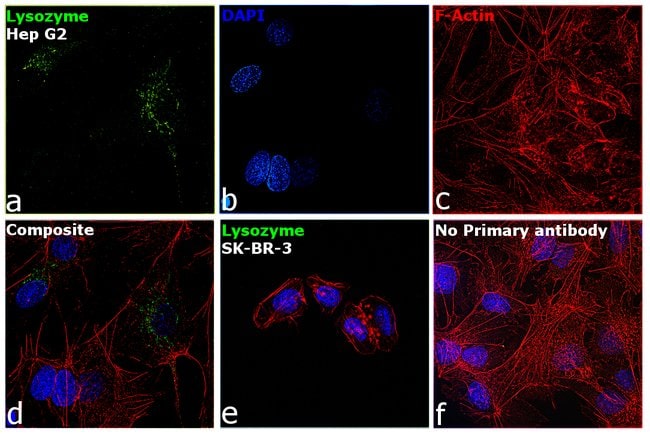
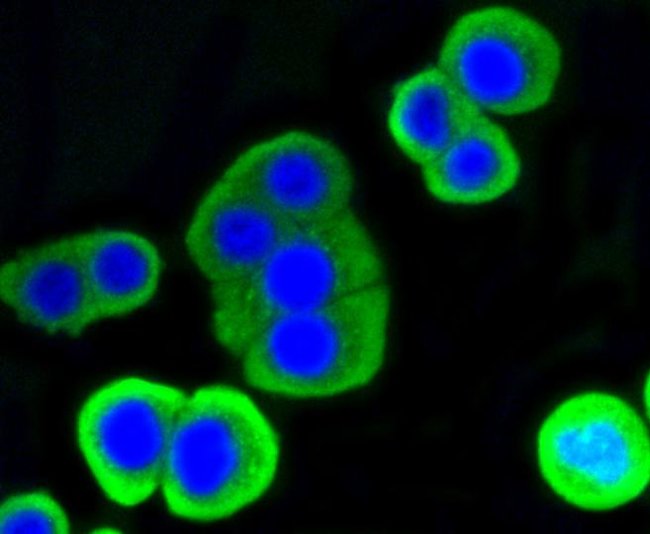
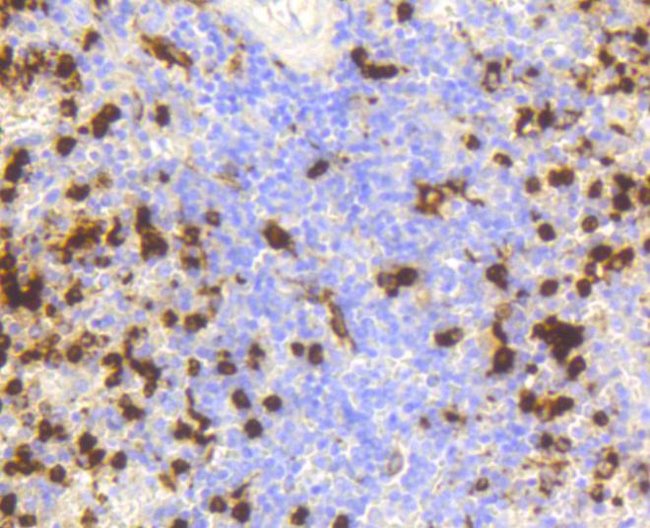
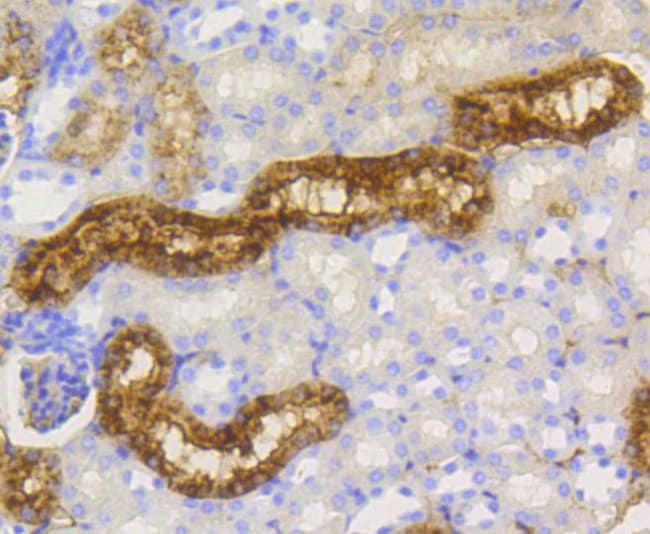
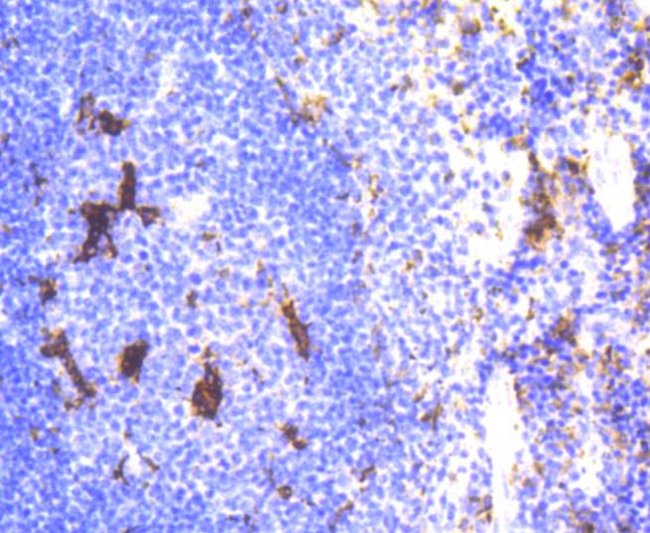
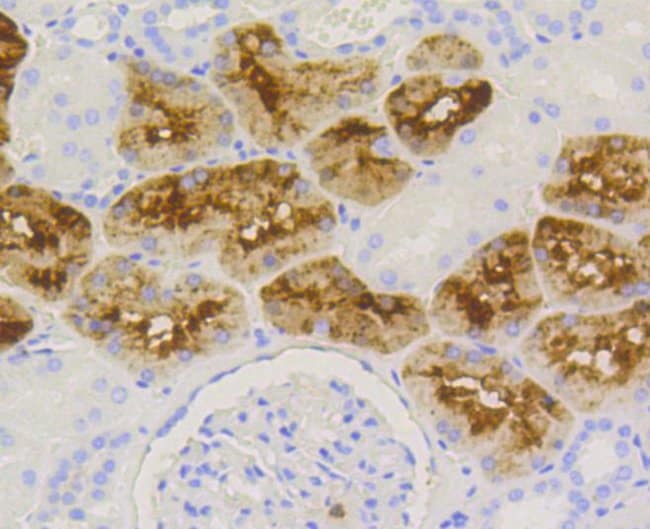
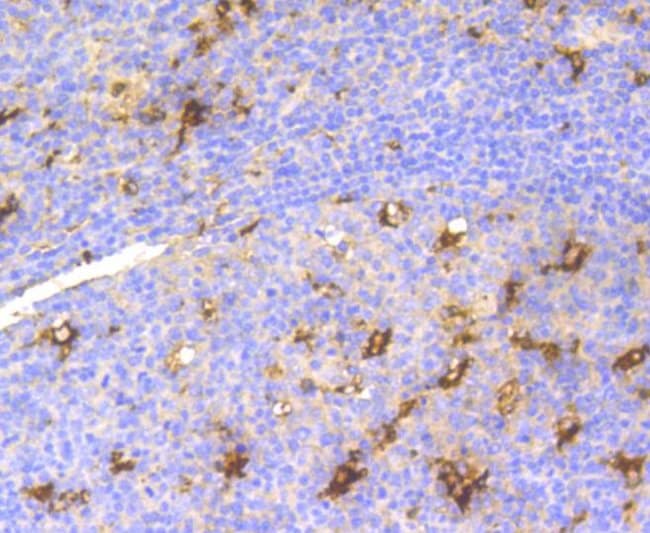
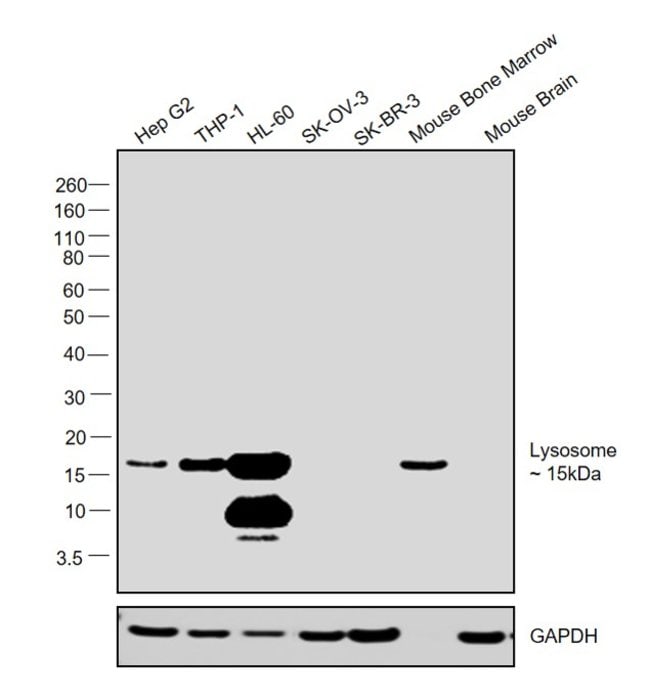
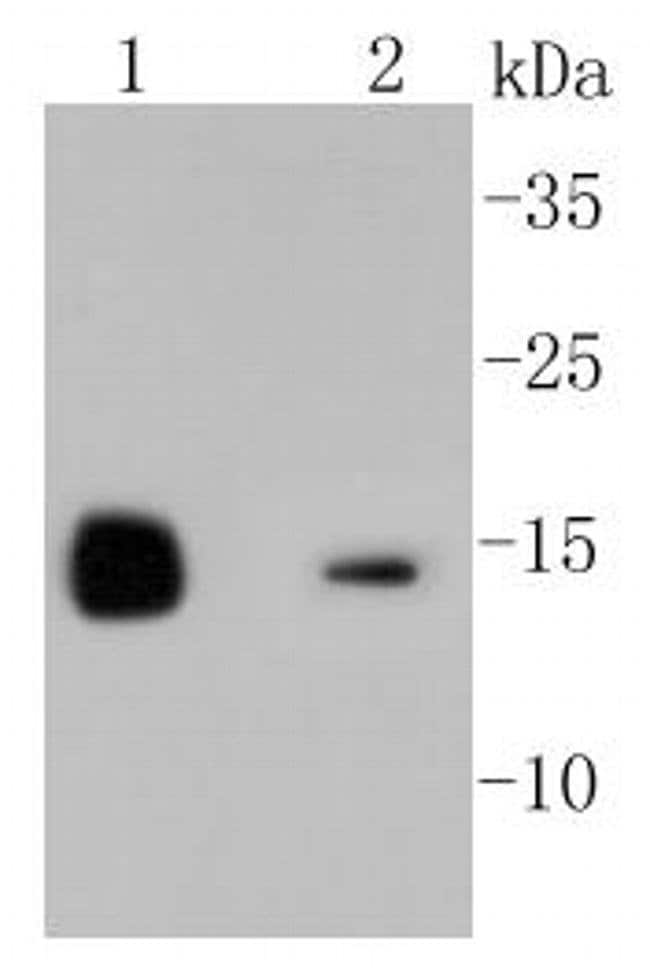
Invitrogen™ Lysozyme Recombinant Rabbit Monoclonal Antibody (ST50-02)

Description
Recombinant rabbit monoclonal antibodies are produced using in vitro expression systems. The expression systems are developed by cloning in the specific antibody DNA sequences from immunoreactive rabbits. Then, individual clones are screened to select the best candidates for production. The advantages of using recombinant rabbit monoclonal antibodies include: better specificity and sensitivity, lot-to-lot consistency, animal origin-free formulations, and broader immunoreactivity to diverse targets due to larger rabbit immune repertoire.
This gene encodes human lysozyme, whose natural substrate is the bacterial cell wall peptidoglycan (cleaving the beta[1-4]glycosidic linkages between N-acetylmuramic acid and N-acetylglucosamine). Lysozyme is one of the anti-microbial agents found in human milk, and is also present in spleen, lung, kidney, white blood cells, plasma, saliva, and tears. Missense mutations in LYZ have been identified in heritable renal amyloidosis.
Spécifications
Spécifications
| Antigène | Lysozyme |
| Applications | Immunocytochemistry, Immunohistochemistry (Paraffin), Western Blot, Western Blot |
| Classification | Recombinant Monoclonal |
| Clone | ST50-02 |
| Concentration | 1 mg/mL |
| Conjugué | Unconjugated |
| Formule | TBS with 0.05% BSA, 40% Glycerol and 0.05% sodium azide; pH 7.4 |
| Gène | LYZ |
| Numéro d’acquisition du gène | P08905, P17897, P61626 |
| Alias du gène | 1,4-beta-N-acetylmuramidase C; 1700038F02Rik; 4-beta-N-acetylmuramidase C; AI326280; Allergen Gal d IV; bA534G20.1; c-type lysozyme; dystrophin; egg white lysozyme; Gal d 4; KAAG648; LYC2; Lys; Lysm; lysozyme; lysozyme (renal amyloidosis); lysozyme 1; lysozyme 2; lysozyme C; Lysozyme C type M; lysozyme C type P; Lysozyme C, spleen isozyme; lysozyme C-1; Lysozyme C-2; lysozyme C-3; lysozyme d1; lysozyme F1; lysozyme like 1; lysozyme-like 1; lysozyme-like protein 1; lysozyme-like protein 2; Lysz; LYZ; Lyz1; Lyz2; LYZC; LYZD1; LYZF1; LYZL1; Lyzs; Lzm; Lzm-s1; Lzp; Lzp-s; P lysozyme structural; PRO1278; renal amyloidosis; RGD1559869; unnamed protein product; UNQ648/PRO1278 |
| Afficher plus de résultats |