missing translation for 'onlineSavingsMsg'
Learn More
Learn More
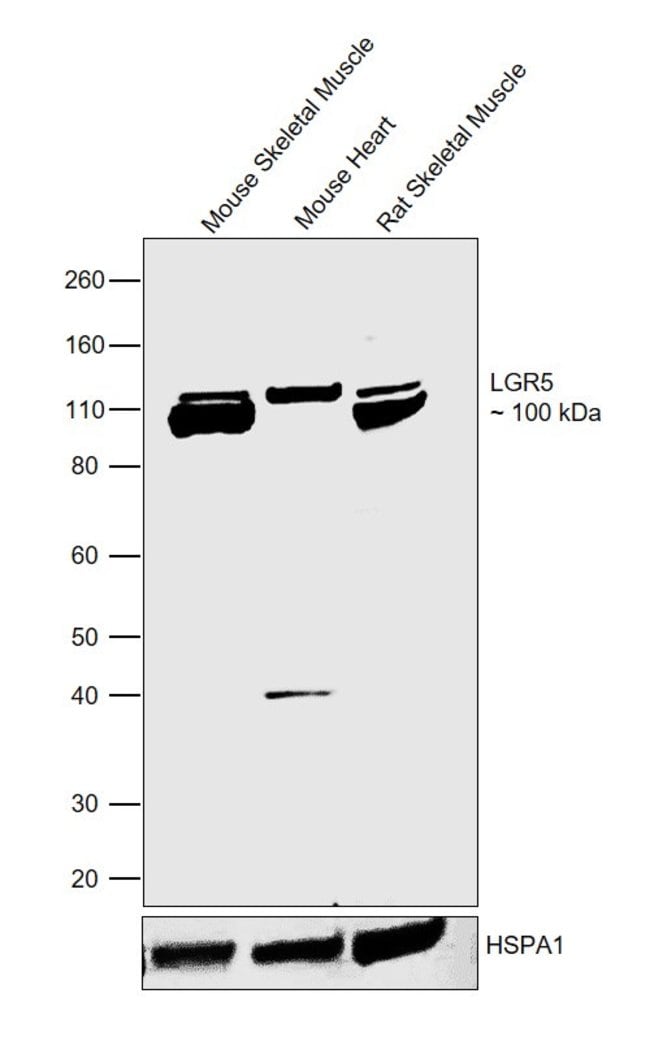
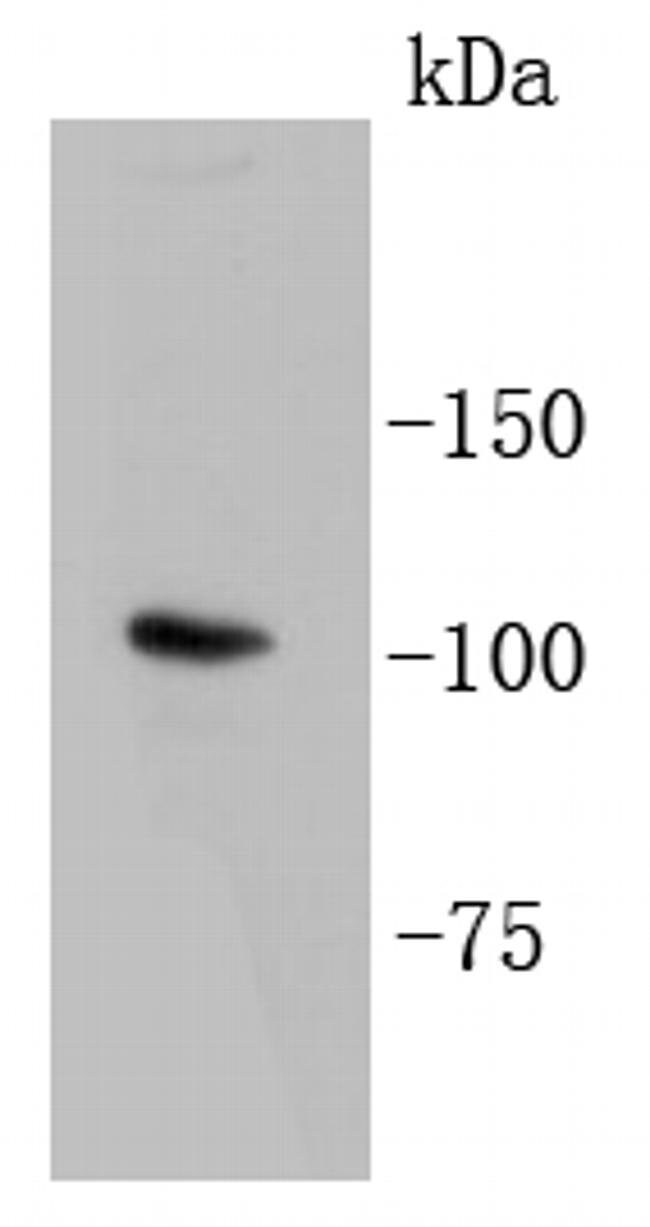
Invitrogen™ LGR5 Recombinant Rabbit Monoclonal Antibody (SU32-04)

Description
Recombinant rabbit monoclonal antibodies are produced using in vitro expression systems. The expression systems are developed by cloning in the specific antibody DNA sequences from immunoreactive rabbits. Then, individual clones are screened to select the best candidates for production. The advantages of using recombinant rabbit monoclonal antibodies include: better specificity and sensitivity, lot-to-lot consistency, animal origin-free formulations, and broader immunoreactivity to diverse targets due to larger rabbit immune repertoire.
G protein-coupled receptor GPR49 has been reported to be expressed in brain, skeletal muscle, placenta, and spinal cord. ESTs have been isolated from normal human brain (amygdala), embryo, and placenta libraries and from human germ cell, uterus, and brain libraries. G-protein Coupled Receptors (GPCRs) comprise one of the largest families of signaling molecules with more than a thousand members currently predicted to exist. All GPCRs share a structural motif consisting of seven membrane-spanning helices, and exist in both active and inactive forms. An array of activating ligands participate in the conformation of GPCRs which leads to signaling via G-proteins and downstream effectors. Ongoing studies have also shown the vast series of reactions which participate in the negative regulation of GPCRs. This 'turn-off' activity has tremendous implications for the physiological action of the cell, and continues to drive pharmacological research for new drug candidates. Two blockbuster drugs which have been developed as GPCR-targeted pharmaceuticals are Zyprexa (Eli Lilly) and Claritin (Schering-Plough) which have multi-billion dollar shares of the mental health and allergy markets, respectively.
Spécifications
Spécifications
| Antigène | LGR5 |
| Applications | Western Blot |
| Classification | Recombinant Monoclonal |
| Clone | SU32-04 |
| Concentration | 1 mg/mL |
| Conjugué | Unconjugated |
| Formule | TBS with 0.05% BSA, 40% Glycerol and 0.05% sodium azide; pH 7.4 |
| Gène | Lgr5 |
| Numéro d’acquisition du gène | D4AC13, O75473, Q9Z1P4 |
| Alias du gène | Fex; follicle expressed hormone; G protein-coupled receptor 49; GPR49; GPR67; G-protein coupled receptor 49; G-protein coupled receptor 67; G-protein coupled receptor HG38; GRP49; HG38; leucine rich repeat containing G protein coupled receptor 5; leucine rich repeat containing G protein-coupled receptor 5; leucine-rich repeat containing G protein-coupled receptor 5; leucine-rich repeat-containing G protein-coupled receptor 5; leucine-rich repeat-containing G-protein coupled receptor 5; Lgr5; orphan G protein-coupled receptor HG38; orphan G-protein coupled receptor FEX |
| Afficher plus de résultats |