missing translation for 'onlineSavingsMsg'
Learn More
Learn More
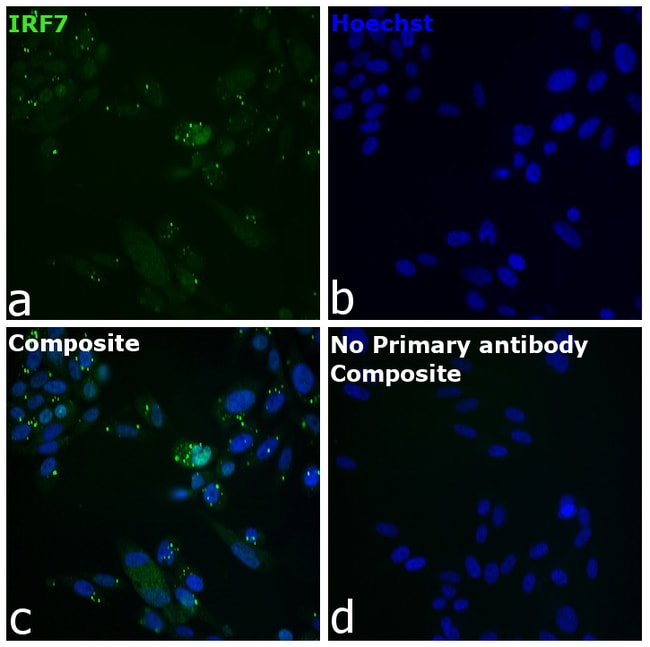
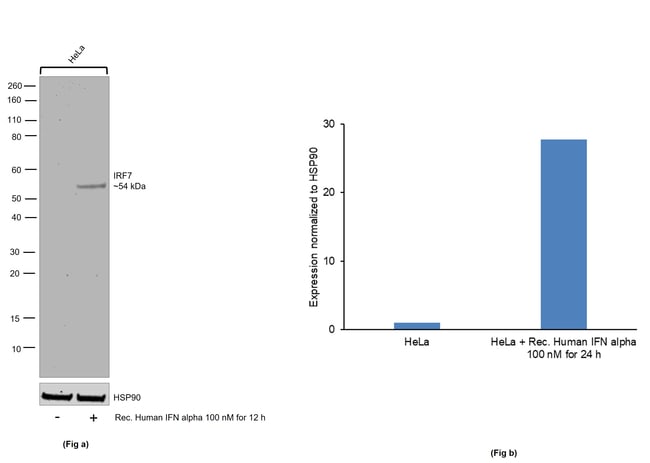
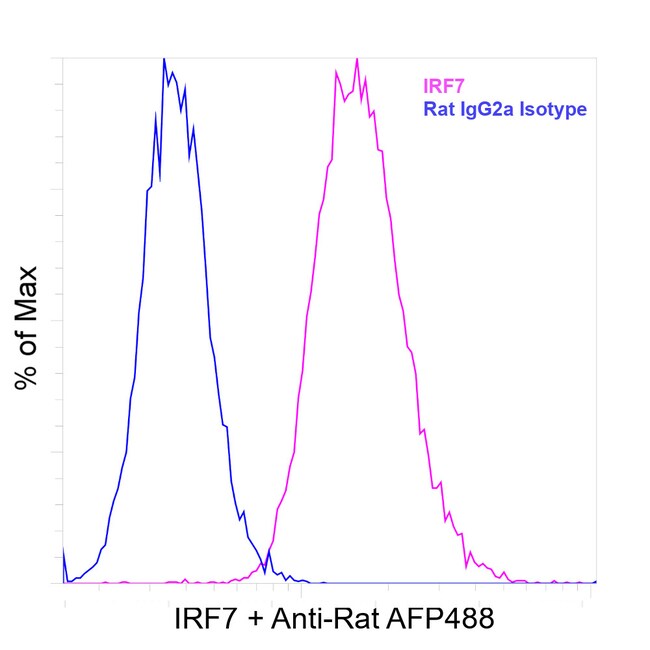
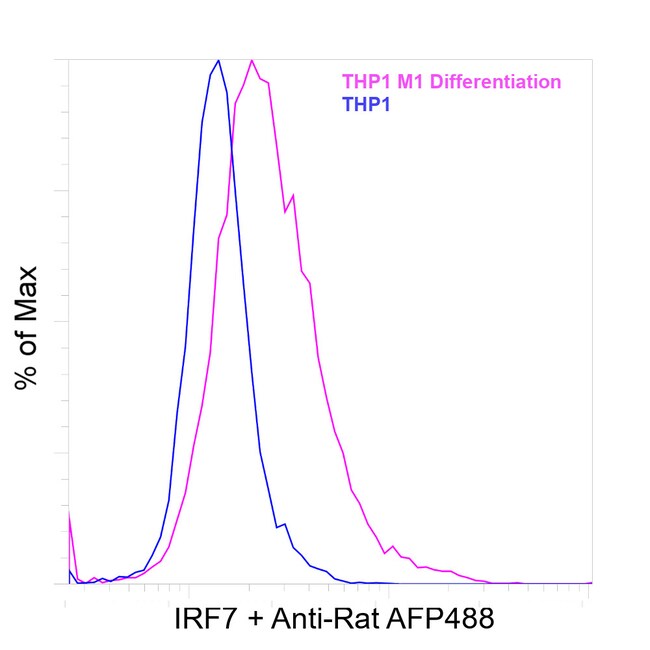
Invitrogen™ IRF7 Recombinant Rat Monoclonal Antibody (RDP4ND4)
Description
Recombinant rat monoclonal antibodies are produced using in vitro expression systems. Recombinant antibodies are produced using specific genes that code for the desired antibodies. These genes are cloned into an expression vector and expressed in vitro. The advantages of recombinant antibodies include better specificity and lot-to-lot consistency. It is recommended that the antibody be carefully titrated for optimal performance in the assay of interest.
Interferons (IFNs) are involved in a multitude of immune interactions during viral infections and play a major role in both the induction and regulation of innate and adaptive antiviral mechanisms. During infection, host-virus interactions signal downstream molecules such as transcription factors such as IFN regulatory factor-3 (IRF3) which can act to stimulate transcription of IFN-a/b genes. IRF7 has been shown to play a role in the transcriptional activation of virus-inducible cellular genes, including interferon beta chain genes. IRF7 play a major role in the innate immune pathway, interacting with the Toll-like receptor (TLR) adaptor proteins MyD88 and Tirp/TRAM and functioning as an intermediate TLR4 and TLR9 signaling. There are at least four differentially spliced isoforms of IRF7, although their function has not been clearly established.
Spécifications
Spécifications
| Antigène | IRF7 |
| Applications | Flow Cytometry, Western Blot, Immunocytochemistry |
| Classification | Recombinant Monoclonal |
| Clone | RDP4ND4 |
| Concentration | 1 mg/mL |
| Conjugué | Unconjugated |
| Formule | PBS with 0.09% sodium azide; pH 7.2-7.4 |
| Gène | IRF7 |
| Numéro d’acquisition du gène | Q92985 |
| Alias du gène | IMD39; Interferon regulatory factor 7; interferon regulatory factor-7H; Irf7; IRF-7; IRF7A; IRF7B; IRF7C; IRF7H; IRF-7H |
| Afficher plus de résultats |