missing translation for 'onlineSavingsMsg'
Learn More

ACROBiosystems Inc Biotinylated Human IL-28 R alpha Protein, His,Avitag™

Numéro de catalogue. 502719274
Encompass

IL-28 R alpha (Interleukin-28 receptor subunit alpha) also known as IFNLR1 (IFN-lambda receptor 1), it heterodimerizes with another subunit, IL-10RB, to form a type II cytokine receptor ,which binds IL-28A, IL-28B and IL-29. These ligands, which are distantly related to class I in terferons, are activated upon viral infection and trigger the JAK-STAT signaling pathway to exert antiviral activity. The ligand/receptor complex stimulate the activation of the JAK/STAT signaling pathway leading to the expression of IFN-stimulated genes (ISG), which contribute to the antiviral state. Determines the cell type specificity of the lambda interferon action. Shows a more restricted pattern of expression in the epithelial tissues thereby limiting responses to lambda interferons primarily to epithelial cells of the respiratory, gastrointestinal, and reproductive tracts.
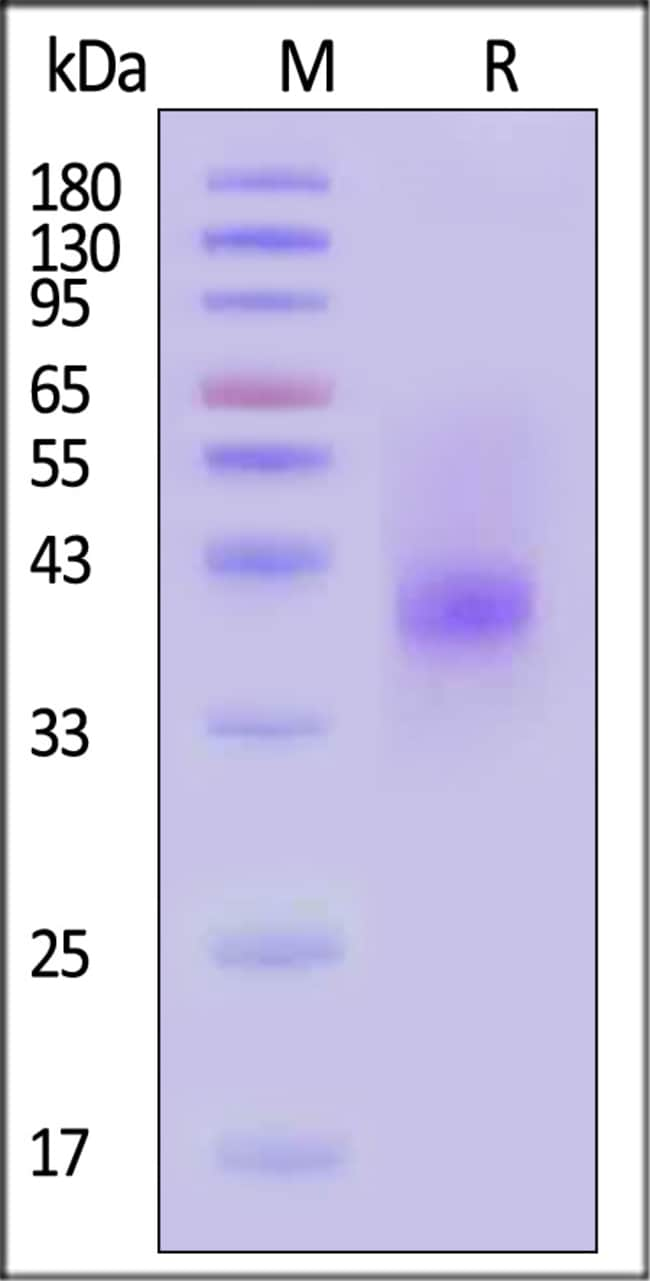
Numéro de catalogue. 502719274 Fournisseur ACROBiosystems Inc Code fournisseur ILRH82E4200UG

Pour de l'aide SVP utiliser la function de clavardage; nous envoyer un couriel à help@thermofisher.com ou appelez le service à la clientèle au 1-800-234-7437.

IL-28 R alpha (Interleukin-28 receptor subunit alpha) also known as IFNLR1 (IFN-lambda receptor 1), it heterodimerizes with another subunit, IL-10RB, to form a type II cytokine receptor ,which binds IL-28A, IL-28B and IL-29. These ligands, which are distantly related to class I in terferons, are activated upon viral infection and trigger the JAK-STAT signaling pathway to exert antiviral activity. The ligand/receptor complex stimulate the activation of the JAK/STAT signaling pathway leading to the expression of IFN-stimulated genes (ISG), which contribute to the antiviral state. Determines the cell type specificity of the lambda interferon action. Shows a more restricted pattern of expression in the epithelial tissues thereby limiting responses to lambda interferons primarily to epithelial cells of the respiratory, gastrointestinal, and reproductive tracts.