missing translation for 'onlineSavingsMsg'
Learn More

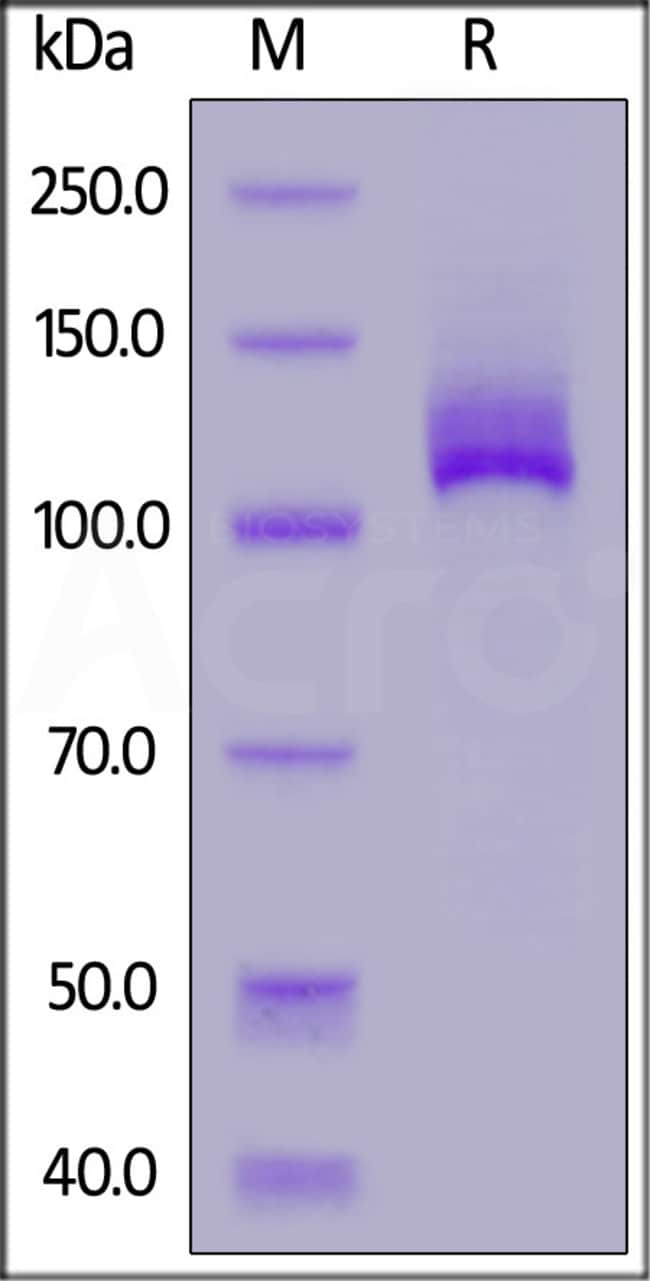
ACROBiosystems Inc Biotinylated ENPP3, His,Avitag (EN3-H82E5) is expressed from human 293 cells (HEK293). It contains AA Leu 48 - Ile 875 (Accession # O14638-1).

Numéro de catalogue. 502231273
Encompass

The human NPP family contains seven members which can be classified into two groups according to their substrate preferences. The first class comprises the nucleotide-degrading proteins NPP1, 3 and 4. NPP3 (CD203c, ENPP3) is expressed in multiple organs, including on epithelial and mucosal surfaces, and notably on basophils and mast cells. Activation of basophils by antigen-bound IgE leads to release of inflammatory mediators and rapid upregulation of NPP3 to the cell surface. This protein is in fact a common marker for diagnosing allergen sensitivity with patient basophils by flow cytometry. Basophils and mast cells mediate the response to certain pathogens, as well as acute and chronic allergic reactions. Following activation, these cells release ATP, which further stimulates them in an autocrine manner. NPP3 upregulation serves to degrade ATP and suppress chronic allergic inflammation (but not the acute response).
Numéro de catalogue. 502231273 Fournisseur ACROBiosystems Inc Code fournisseur EN3H82E525UG

Pour de l'aide SVP utiliser la function de clavardage; nous envoyer un couriel à help@thermofisher.com ou appelez le service à la clientèle au 1-800-234-7437.

The human NPP family contains seven members which can be classified into two groups according to their substrate preferences. The first class comprises the nucleotide-degrading proteins NPP1, 3 and 4. NPP3 (CD203c, ENPP3) is expressed in multiple organs, including on epithelial and mucosal surfaces, and notably on basophils and mast cells. Activation of basophils by antigen-bound IgE leads to release of inflammatory mediators and rapid upregulation of NPP3 to the cell surface. This protein is in fact a common marker for diagnosing allergen sensitivity with patient basophils by flow cytometry. Basophils and mast cells mediate the response to certain pathogens, as well as acute and chronic allergic reactions. Following activation, these cells release ATP, which further stimulates them in an autocrine manner. NPP3 upregulation serves to degrade ATP and suppress chronic allergic inflammation (but not the acute response).