missing translation for 'onlineSavingsMsg'
Learn More
Learn More
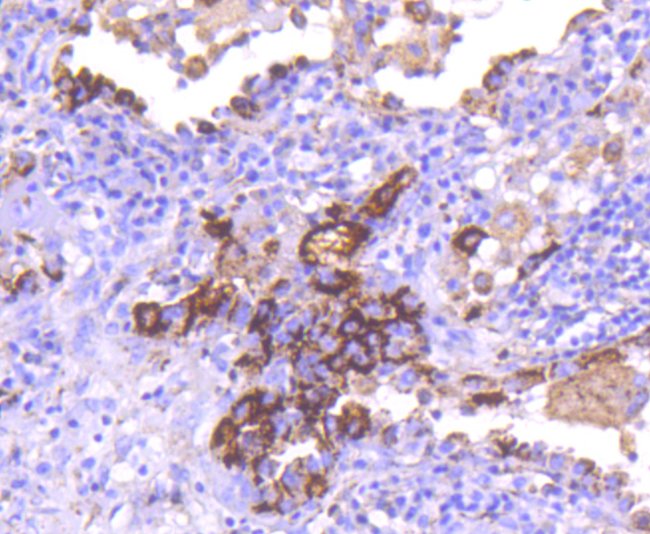

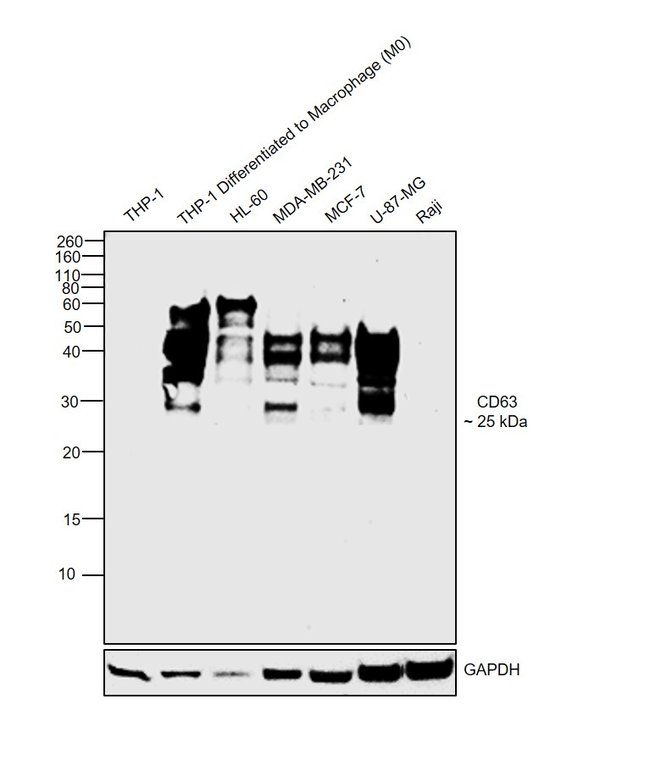
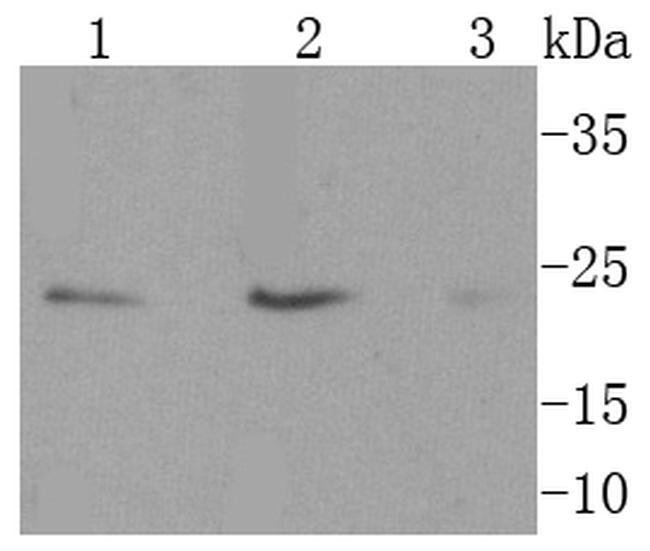
Invitrogen™ CD63 Recombinant Rabbit Monoclonal Antibody (SY21-02)

Description
Recombinant rabbit monoclonal antibodies are produced using in vitro expression systems. The expression systems are developed by cloning in the specific antibody DNA sequences from immunoreactive rabbits. Then, individual clones are screened to select the best candidates for production. The advantages of using recombinant rabbit monoclonal antibodies include: better specificity and sensitivity, lot-to-lot consistency, animal origin-free formulations, and broader immunoreactivity to diverse targets due to larger rabbit immune repertoire.
CD63, also known as LAMP-3, is a glycoprotein belonging to the tetraspanin family, primarily located in late endosomes, lysosomes, and secretory vesicles across various cell types. It is expressed intracellularly in resting platelets and basophils, but upon activation, CD63 translocates to the plasma membrane, making it a widely used marker for basophil activation. Unlike basophils, mast cells can expose CD63 without activation. CD63 is expressed on activated platelets, monocytes, macrophages, and granulocytes, as well as endothelial cells, fibroblasts, and smooth muscle cells. It interacts with integrins (such as VLA-3 and VLA-6) and TIMP-1, playing roles in mediating allergic responses, phagocytosis, and cell migration. Additionally, CD63 is involved in the regulation of H/K-ATPase trafficking and ROMK1 channels, and serves as a T-cell costimulation molecule. CD63 expression can be used to predict prognosis in early-stage carcinomas and is identical to the melanoma-associated antigen ME491 and the platelet antigen PTLGP40. Diseases associated with CD63 dysfunction include melanoma and Hermansky-Pudlak Syndrome, highlighting its significance in both immune responses and disease processes.
Specifications
Specifications
| Antigène | CD63 |
| Applications | Immunohistochemistry (Paraffin), Western Blot |
| Classification | Recombinant Monoclonal |
| Clone | SY21-02 |
| Concentration | 1 mg/mL |
| Conjugué | Unconjugated |
| Formule | TBS with 40% Glycerol, 0.05% BSA and 0.05% sodium azide; pH 7.4 |
| Gène | CD63 |
| Numéro d’acquisition du gène | P08962 |
| Alias du gène | C75951; CD 63; Cd63; CD63 antigen; CD63 antigen (melanoma 1 antigen); Cd63 molecule; CD63 protein; granulophysin; LAMP-3; Lysosomal-associated membrane protein 3; lysosome-associated membrane glycoprotein 3; mast cell antigen AD1; ME491; melanoma 1 antigen; melanoma-associated antigen ME491; melanoma-associated antigen MLA1; MLA1; Ocular melanoma-associated antigen; OMA81H; Tetraspanin-30; TSPAN30; tspan-30 |
| Show More |