missing translation for 'onlineSavingsMsg'
Learn More
Learn More
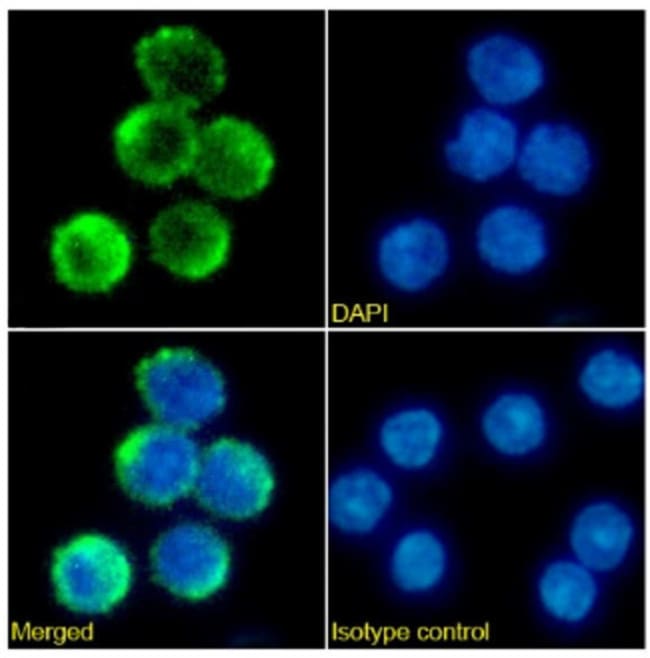
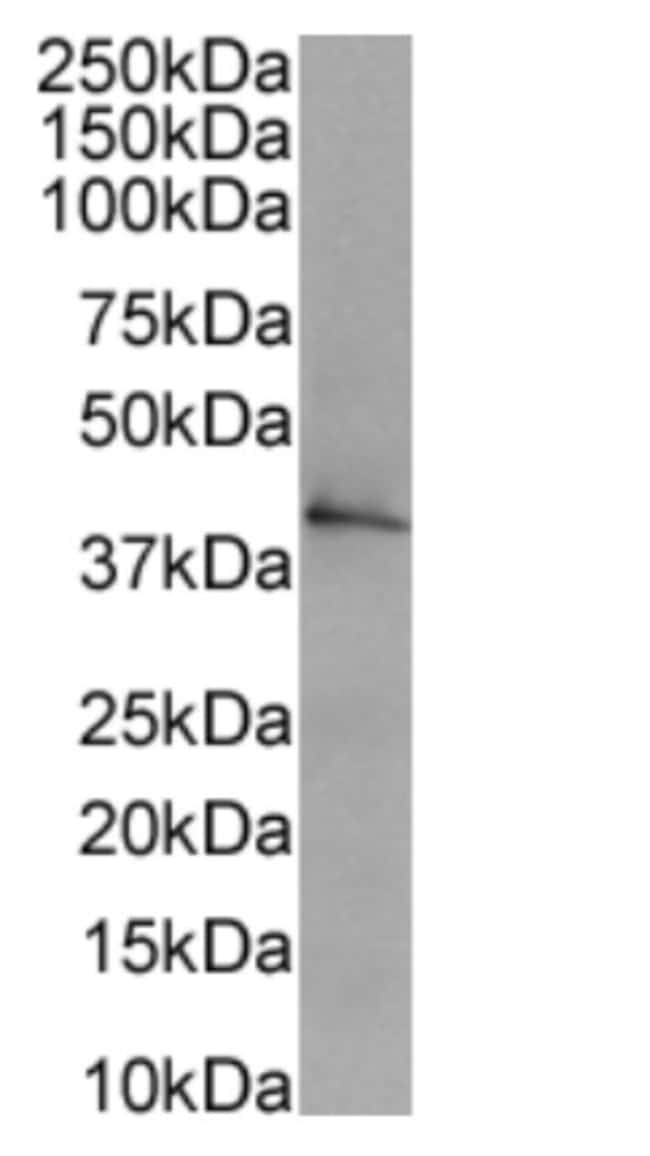
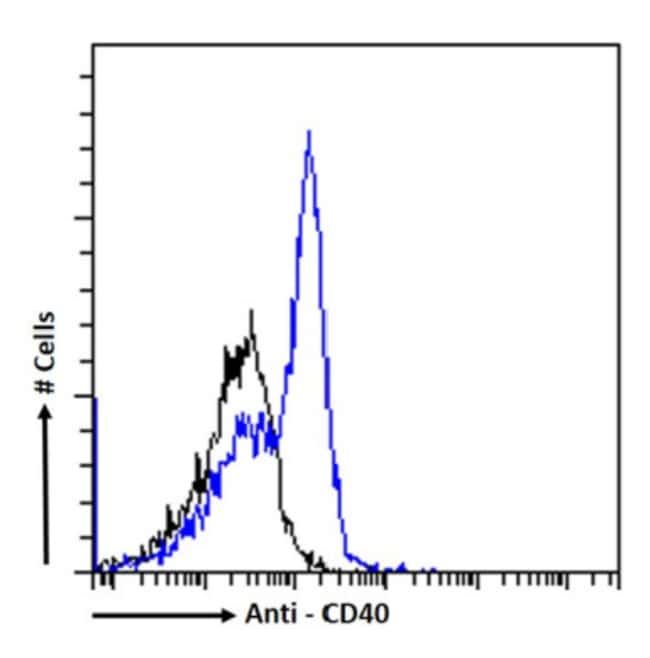
Invitrogen™ CD40 Chimeric Recombinant Rabbit Monoclonal Antibody (FGK45)

Description
This antibody recognizes CD40. It is a type I transmembrane glycoprotein that belongs to the tumor necrosis factor receptor (TNFR) superfamily. CD40 is expressed broadly on antigen-presenting cells (APCs) such as dendritic cells, B cells, macrophages, and monocytes as well as non-immune endothelial cells, basal epithelial cells, and a range of tumors. Upon binding to its ligand CD154, CD40 acts as a costimulatory molecule for the activation of B cells, dendritic cells, monocytes, and other APCs.
CD40 is a single-chain glycoprotein and a member of the tumor necrosis factor receptor (TNFR) family, exhibiting significant homology to the Hodgkin's disease-associated antigen, CD30. It is expressed by B lymphocytes, follicular dendritic cells, thymic epithelium, and a subset of peripheral T cells, as well as some epithelial cells, carcinomas, and lymphoid dendritic cells. Notably, CD40 is present on all B cells except plasma cells. CD40 plays a crucial role in regulating B cell development and maturation, inducing immunoglobulin isotype-switching, and protecting B cells from surface Ig-induced apoptosis when combined with other signals such as IL-4. It promotes proliferation and is essential for T cell-dependent immunoglobulin class switching, memory B cell development, and germinal center formation. The interaction between CD40 and its ligand CD154 (gp39) on T cells is vital for T-B cell crosstalk, costimulation, and immune regulation. Adaptor protein TNFR2 interacts with CD40, mediating signal transduction, while the AT-hook transcription factor AKNA is reported to regulate CD40 expression, which may be important for homotypic cell interactions. Additionally, the interaction between CD40 and its ligand is necessary for amyloid-beta-induced microglial activation, suggesting a role in the early pathogenesis of Alzheimer's disease. Two alternatively spliced transcript variants encoding distinct isoforms of CD40 have been identified. Diseases associated with CD40 dysfunction include Type 3 Hyper-IgM immunodeficiency and CD40 ligand deficiency, highlighting its importance in immune and inflammatory responses.
Spécifications
Spécifications
| Antigen | CD40 Chimeric |
| Applications | Flow Cytometry, Functional Assay, T-Cell Activation, Western Blot, Immunocytochemistry |
| Classification | Recombinant Monoclonal |
| Clone | FGK45 |
| Concentration | 1 mg/mL |
| Conjugate | Unconjugated |
| Formulation | PBS with 0.02% ProClin 300 |
| Gene | CD40 |
| Gene Accession No. | P27512 |
| Gene Alias | AI326936; B cell surface antigen CD40; B cell-associated molecule; B-cell surface antigen CD40; Bp50; CD antigen CD40; Cd40; CD40 antigen; CD40 antigen (TNF receptor superfamily member 5); CD40 antigen, TNF receptor superfamily member 5; CD40 molecule; CD40 molecule, TNF receptor superfamily member 5; CD40L receptor; CDw40; GP39; HIGM1; I79_006806; IGM; IMD3; Immunoglobulin M; ImmunoglobulinM; membrane protein CD40; MGC9013; p50; receptor for ligand CD154; sCD40; soluble CD40; T-BAM; T-cell differentiation antigen; Tnfrsf5; TRAP; tumor necrosis factor receptor superfamily member 5; tumor necrosis factor receptor superfamily, member 5 |
| Afficher plus de résultats |