missing translation for 'onlineSavingsMsg'
Learn More
Learn More




Invitrogen™ CD23 Polyclonal Antibody

Description
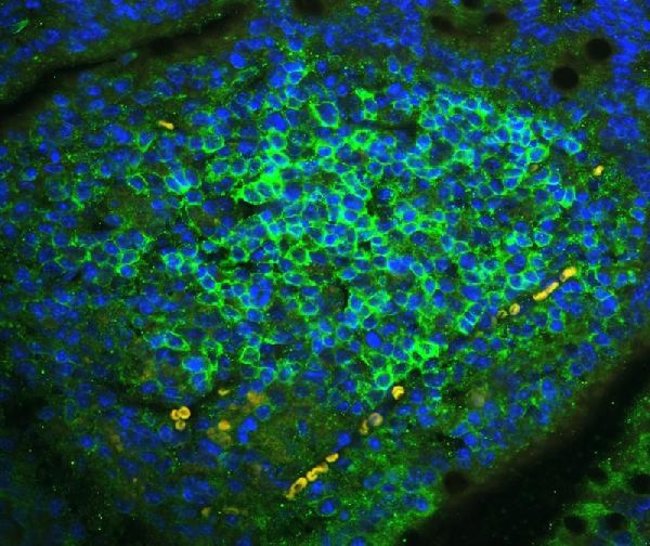
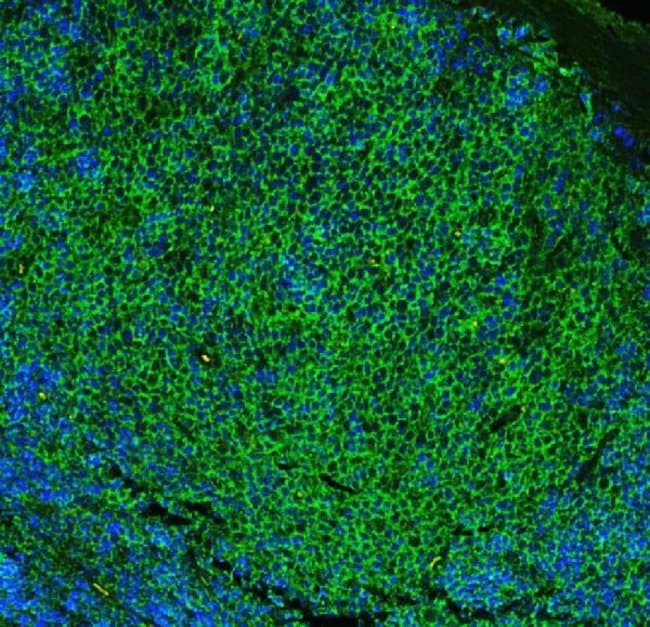
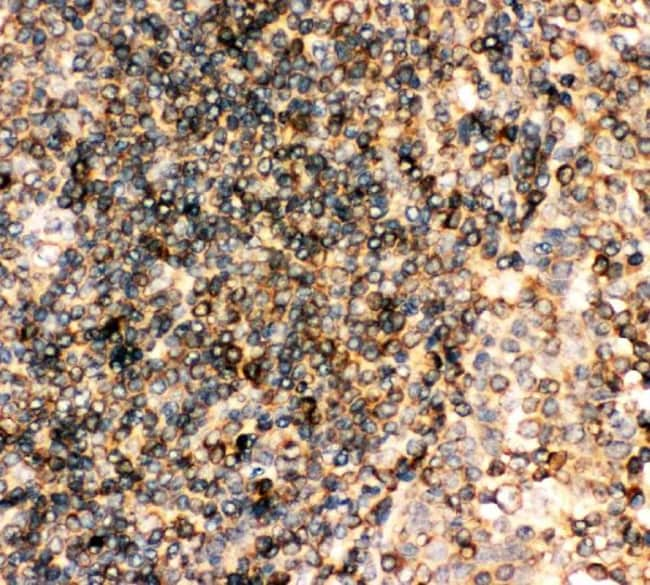
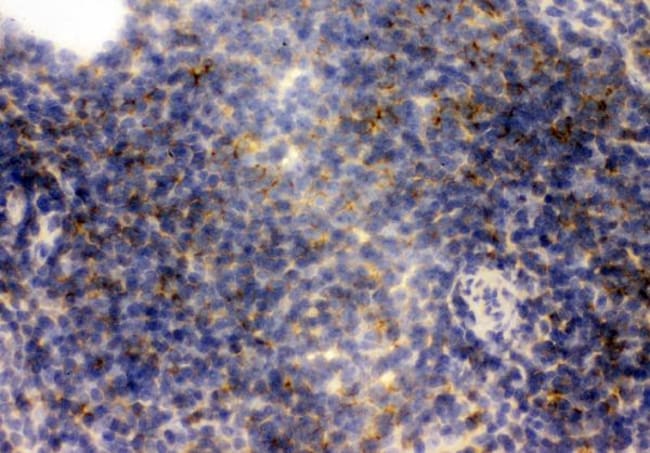
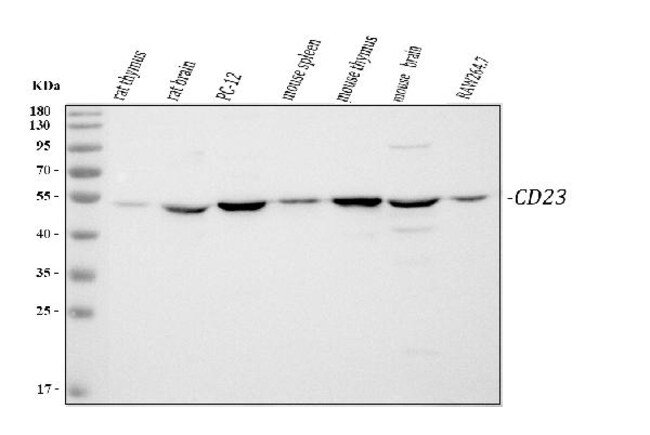
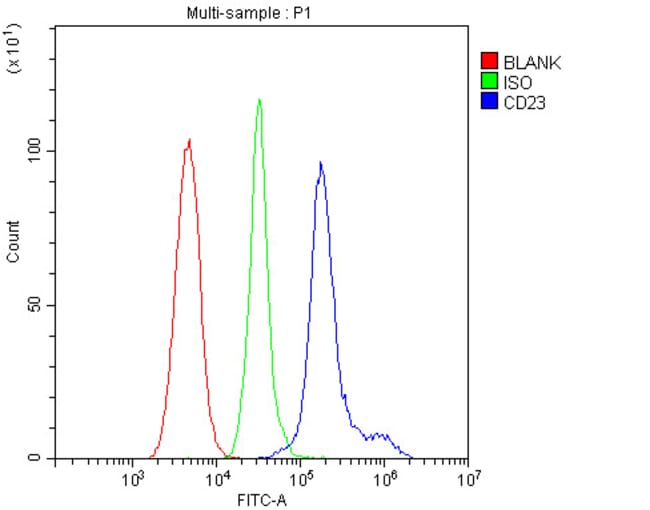
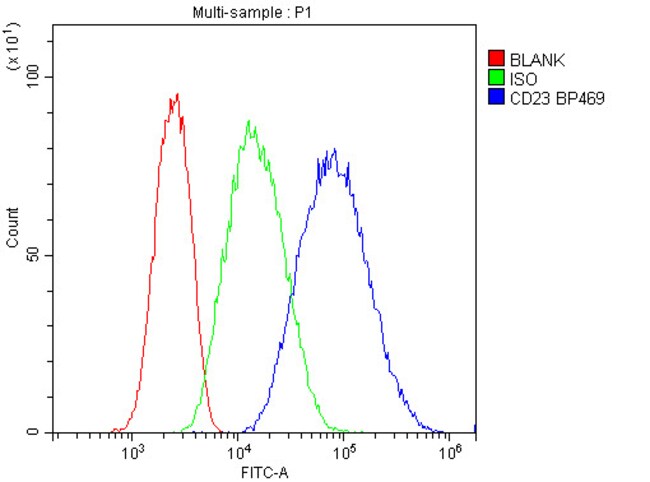
Reconstitute with 0.2 mL of distilled water to yield a concentration of 500 μg/mL. Positive Control - WB: rat thymus tissue, rat brain tissue, rat PC-12 whole cell, mouse spleen tissue, mouse thymus tissue, mouse brain tissue, mouse RAW2647 whole cell. IHC: Mouse Spleen tissue, Rat Spleen tissue, Human Tonsil tissue IHC-F: mouse spleen tissue. Flow: mouse PBMC cell, mouse BMC cell.
CD23 is a 45 kDa glycoprotein that serves as a low-affinity receptor for IgE, playing a crucial role in regulating IgE responses and B cell activation. It is expressed on mature B cells, mantle zone B cells, follicular dendritic cells, and at lower levels on T cells, NK cells, Langerhans cells, and platelets. CD23 expression is upregulated upon B cell activation, and its soluble forms are biologically active, acting as potent mitogenic factors. CD23 is strongly expressed on Epstein-Barr virus (EBV)-transformed B lymphoblasts and is present on a subpopulation of freshly isolated peripheral blood and tonsil B cells. It is also detected in neoplastic cells from cases of B cell chronic lymphocytic leukemia and some centroblastic/centrocytic lymphomas. Functionally, CD23 is involved in B cell growth, differentiation, and IgE production. It interacts with CD21 and the alpha subunits of CD11b and CD11c, further influencing immune responses. Diseases associated with CD23 dysfunction include chronic conjunctivitis and chronic lymphocytic leukemia, highlighting its importance in both normal immune function and disease states. This makes CD23 a valuable target for antibody customers interested in B-cell-related research and diagnostics.
Spécifications
Spécifications
| Antigène | CD23 |
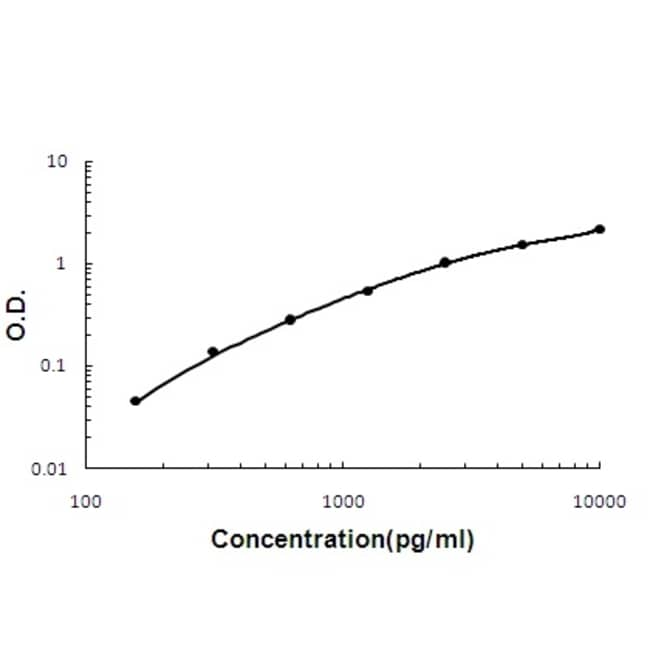
| Applications | ELISA, Flow Cytometry, Immunocytochemistry, Immunohistochemistry (Frozen), Immunohistochemistry (Paraffin), Western Blot |
| Classification | Polyclonal |
| Concentration | 500 μg/mL |
| Conjugué | Unconjugated |
| Formule | PBS with 4mg trehalose and 0.05mg sodium azide |
| Gène | FCER2 |
| Numéro d’acquisition du gène | P06734, P20693 |
| Alias du gène | BLAST-2; CD23; CD23 antigen; CD23A; CLEC4J; C-type lectin domain family 4 member J; C-type lectin domain family 4, member J; Fc epsilon receptor II; FC epsilon RII; Fc fragment of IgE receptor II; Fc fragment of IgE, low affinity II, receptor for (CD23); Fc receptor alpha multiple ligand receptor; Fc receptor, IgE, low affinity II, alpha polypeptide; Fcalpha muR; Fcalpha RII; Fce2; fc-epsilon-RII; FCER2; Fcer2a; FceRII; IGEBF; Immunoglobulin E-binding factor; immunoglobulin epsilon-chain; low affinity immunoglobulin epsilon Fc receptor; Low affinity immunoglobulin epsilon Fc receptor membrane-bound form; Low affinity immunoglobulin epsilon Fc receptor soluble form; low-affinity IgE receptor; Ly-42; lymphocyte IgE receptor |
| Symboles de gène | FCER2, Fcer2a |
| Afficher plus de résultats |