missing translation for 'onlineSavingsMsg'
Learn More
Learn More
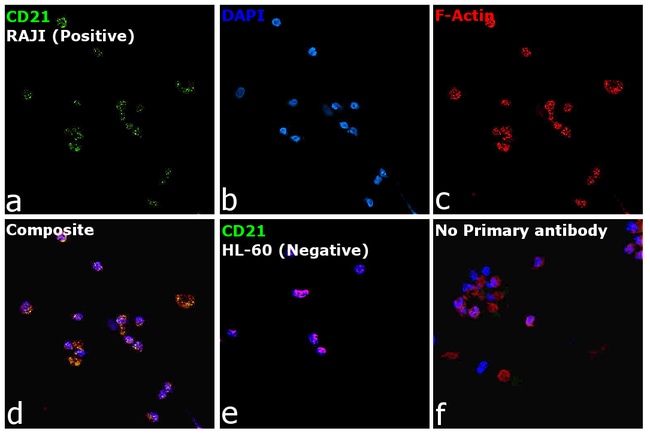
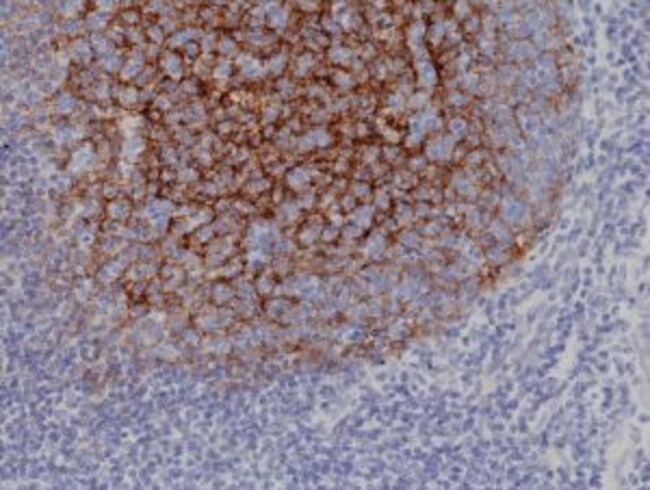
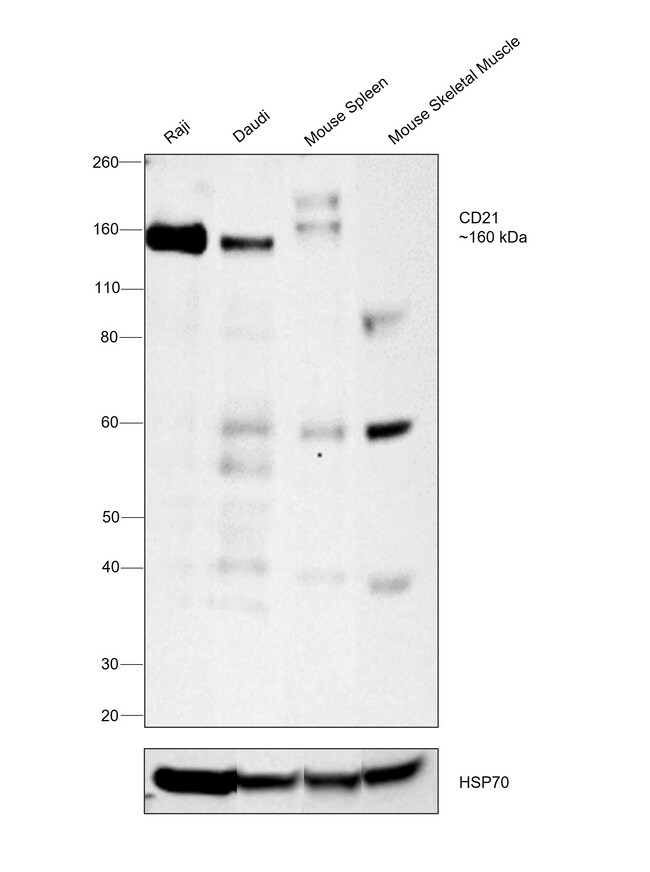
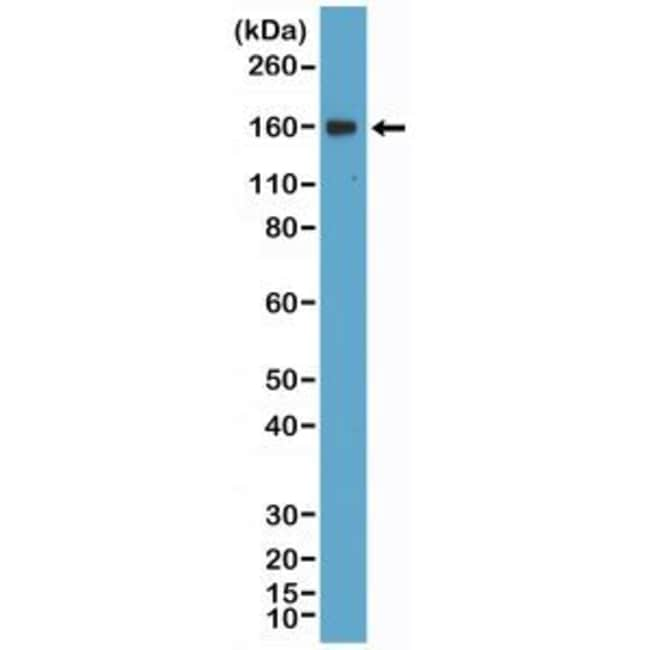
Invitrogen™ CD21 Recombinant Rabbit Monoclonal Antibody (RM372)

Description
Recombinant rabbit monoclonal antibodies are produced using in vitro expression systems. Recombinant antibodies are produced using specific genes that code for the desired antibodies. These genes are cloned into an expression vector and expressed in vitro. The advantages of recombinant antibodies include better specificity and lot-to-lot consistency.It is recommended that the antibody be carefully titrated for optimal performance in the assay of interest.
CD21 (complement receptor 2, CR2, C3D receptor, EBV receptor) binds C3 complement fragments, especially its breakdown fragments, which remain covalently attached to complement activating surfaces or antigen. CD21 has important roles in uptake and retention of immunocomplexes, survival of memory B cells and in development and maintenance of the humoral response to T-dependent antigens. CD21 also serves as a key receptor for Epstein-Barr virus binding and is involved in targeting prions to follicular dendritic cells and expediting neuroinvasion following peripheral exposure to prions. A soluble form of the CD21 (sCD21) is shed from the lymphocyte surface and retains its ability to bind respective ligands. CD21 functions as receptor for C3d, C3dg and iC3b complement components, for EBV and for IFNalpha. CD21 binds to CD23 and associates with CD19, CD81 and Leu13 to form a large signal-transduction complex involved in B cell activation. Genetic variations in the CD21 gene are associated with susceptibility to systemic lupus erythematosus type 9 (SLEB9). Alternatively, spliced transcript variants encoding different isoforms of CD21 have been found.
Spécifications
Spécifications
| Antigène | CD21 |
| Applications | Flow Cytometry, Immunohistochemistry (Paraffin), Western Blot, Immunocytochemistry |
| Classification | Recombinant Monoclonal |
| Clone | RM372 |
| Concentration | 1 mg/mL |
| Conjugué | Unconjugated |
| Formule | PBS with 0.09% sodium azide; pH 7.2-7.4 |
| Gène | CR2 |
| Numéro d’acquisition du gène | P20023 |
| Alias du gène | C3b/C4b receptor; C3-binding protein; C3BR; C3DR; C4BR; CD21; CD35; CD35 antigen; cell surface receptor for C3d; complement C3b/C4b receptor 1 (Knops blood group); complement C3d receptor; Complement C3d receptor (C3DR); complement C3d receptor 2; complement component (3b/4b) receptor 1 (Knops blood group); complement component (3d/Epstein Barr virus) receptor 2; complement component 3b/4b receptor 1 (Knops blood group); complement component 3d receptor 2; complement component receptor 2; complement receptor 1 long isoform; complement receptor 2; complement receptor type 1; complement receptor type 1-like protein; complement receptor type 2; Complement Receptor type 2 (CR2); CR; CR1; Cr-1; CR1-L; Cr2; Cr-2; CVID7; EBV receptor; EBV-R; Epstein-Barr virus receptor; EVBR; expressed in B lymphocytes; KN; Knops blood group antigen; LOW QUALITY PROTEIN: complement receptor type 1; SLEB9 |
| Afficher plus de résultats |