missing translation for 'onlineSavingsMsg'
Learn More
Learn More
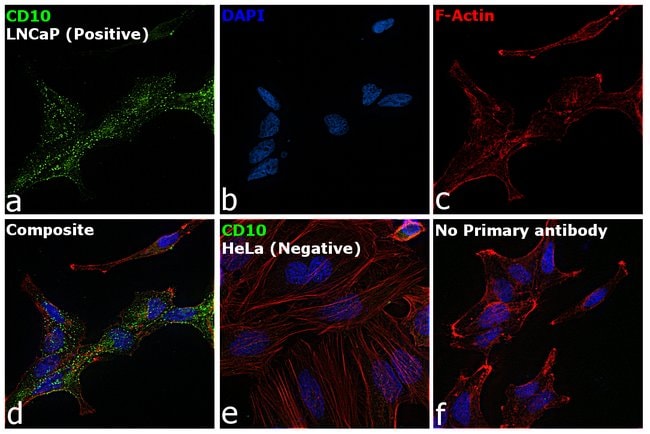
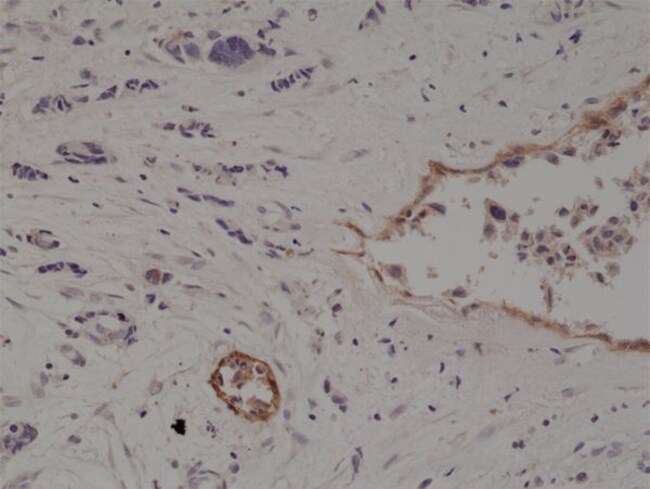
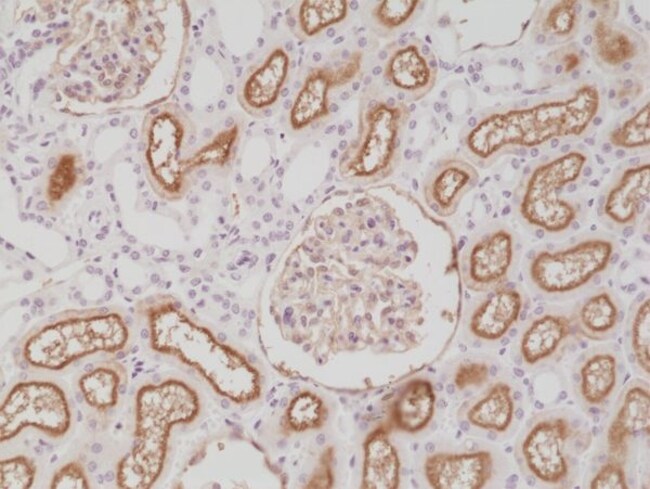
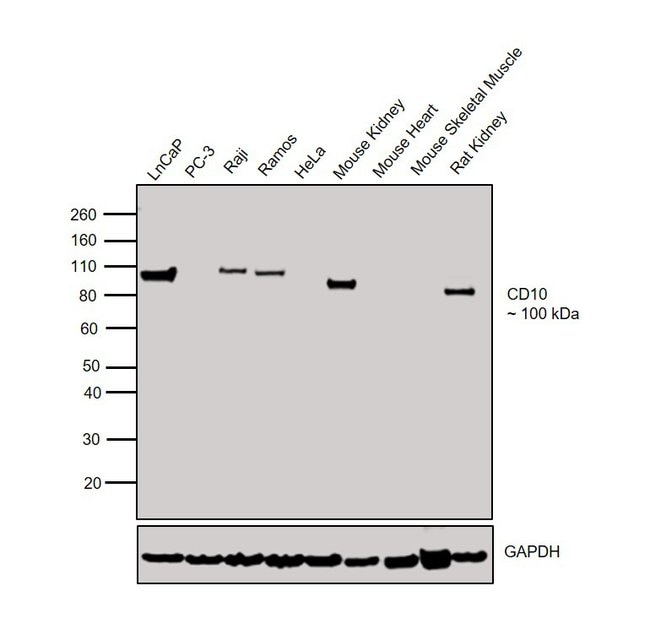
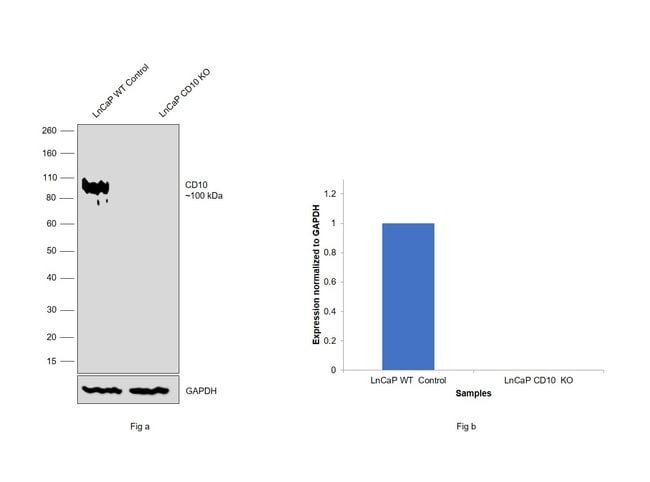
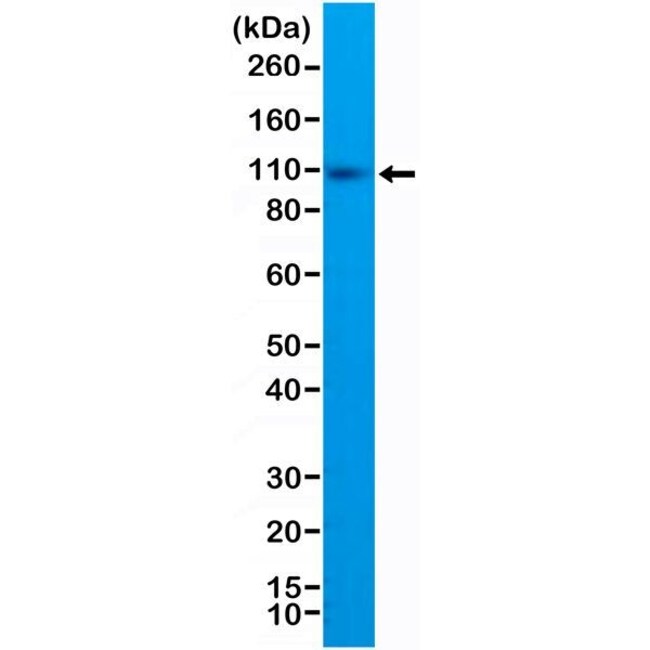
Invitrogen™ CD10 Recombinant Rabbit Monoclonal Antibody (RM337)

Description
Recombinant rabbit monoclonal antibodies are produced using in vitro expression systems. The expression systems are developed by cloning in the specific antibody DNA sequences from immunoreactive rabbits. Then, individual clones are screened to select the best candidates for production. The advantages of using recombinant rabbit monoclonal antibodies include: better specificity and sensitivity, lot-to-lot consistency, animal origin-free formulations, and broader immunoreactivity to diverse targets due to larger rabbit immune repertoire.
CD10, also known as the Common Acute Lymphocytic Leukemia Antigen (CALLA) and neutral endopeptidase (NEP), is a Zn2+-dependent metallo-peptidase with neutral metalloendopeptidase activity. It is a 100 kDa type II transmembrane glycoprotein encoded by a gene that exists in a single copy of greater than 45 kb. The 5' untranslated region of the CD10 gene is alternatively spliced, resulting in four separate mRNA transcripts, although the coding region remains unaffected by alternative splicing. CD10 is involved in the regulation of chemotactic and inflammatory processes involving neutrophils and plays a role in stromal cell-dependent B lymphopoiesis. It is expressed on immature B cells in adult bone marrow, mature B cells in germinal centers, and cells from patients with chronic myelocytic leukemia (CML). Additionally, CD10 is present on the cells of lymphoblastic, Burkitt's, and follicular germinal center lymphomas. Beyond the hematopoietic compartment, CD10 is highly expressed on the brush border of enterocytes and renal tubules and glomeruli, as well as on breast myoepithelial cells, bile canaliculi, and fibroblasts. CD10 cleaves peptides at the amino side of hydrophobic residues, inactivating several biologically active peptides, including endothelin, glucagon, gastrin, neurotensin, bradykinin, enkephalins, substance P, oxytocin, and others. Diseases associated with CD10 dysfunction include spinocerebellar ataxia 43 and Charcot-Marie Tooth Disease, highlighting its significance in both normal physiological processes and disease states.
Spécifications
Spécifications
| Antigène | CD10 |
| Applications | Immunohistochemistry (Paraffin), Western Blot, Immunocytochemistry |
| Classification | Recombinant Monoclonal |
| Clone | RM337 |
| Concentration | 0.1 mg/mL |
| Conjugué | Unconjugated |
| Formule | PBS with 1% BSA, 50% glycerol and 0.09% sodium azide |
| Gène | Mme |
| Numéro d’acquisition du gène | P07861, P08473, Q61391 |
| Alias du gène | 6030454K05Rik; Atriopeptidase; C85356; CALLA; CD10; CMT2T; common acute lymphoblastic leukemia antigen; common acute lymphocytic leukemia antigen; Enkephalinase; EPN; membrane metallo endopeptidase; membrane metalloendopeptidase; membrane metallo-endopeptidase; membrane metallo-endopeptidase (neutral endopeptidase, enkephalinase, CALLA, CD10); membrane metallo-endopeptidase (neutral endopeptidase/enkephalinase); membrane metallo-endopeptidase variant 1; membrane metallo-endopeptidase variant 2; MME; NEP; neprilysin; neprilysin-390; neprilysin-411; neutral endopeptidase 24.11; SFE; Skin fibroblast elastase |
| Afficher plus de résultats |