missing translation for 'onlineSavingsMsg'
Learn More
Learn More
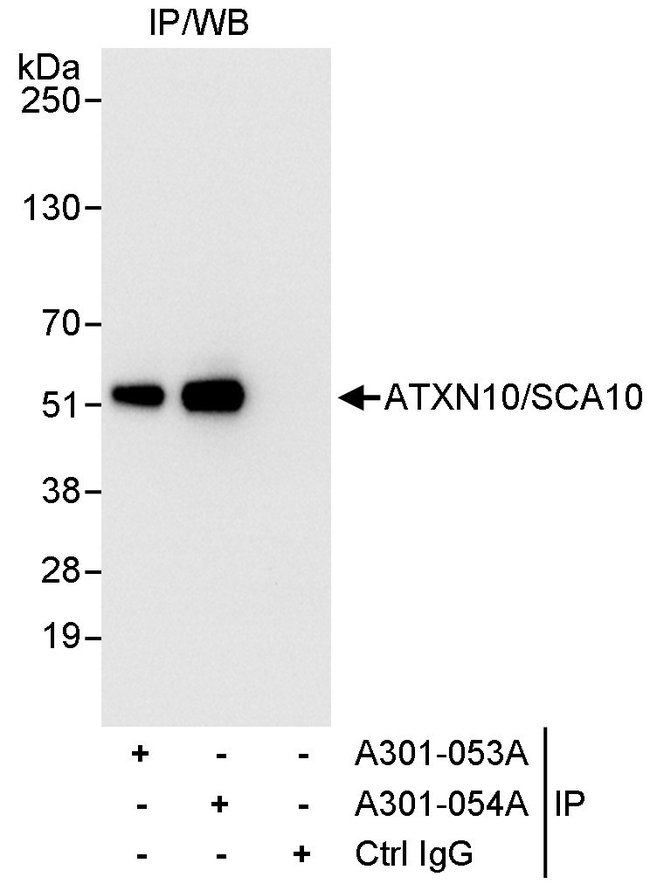
ATXN10/SCA10 Rabbit anti-Human, Polyclonal, Bethyl Laboratories

Description
The recommended shelf life for this product is 1 year from date of receipt. Based on 100% sequence identity, this antibody is predicted to react with Mouse, Rat and Orangutan
The autosomal domit cerebellar ataxias (ADCAs) are a clinically and genetically heterogeneous group of disorders characterized by ataxia, dysarthria, dysmetria, and intention tremor. All ADCAs involve some degree of cerebellar dysfunction and a varying degree of signs from other components of the nervous system. A commonly accepted clinical classification (Harding, 1993) divides ADCAs into 3 different groups based on the presence or absence of associated symptoms such as brainstem signs or retinopathy. The presence of pyramidal and extrapyramidal symptoms and ophthalmoplegia makes the diagnosis of ADCA I, the presence of retinopathy points to ADCA II, and the absence of associated signs to ADCA III. Genetic linkage and molecular analyses revealed that ADCAs are genetically heterogeneous even within the various subtypes.
Spécifications
Spécifications
| Antigène | ATXN10/SCA10 |
| Applications | Immunoprecipitation |
| Classification | Polyclonal |
| Concentration | 1 mg/ml |
| Conjugué | Unconjugated |
| Formule | phosphate, tris citrate with 0.09% sodium azide; pH 7-8 |
| Gène | ATXN10 |
| Numéro d’acquisition du gène | Q9UBB4 |
| Alias du gène | E46L, HUMEEP, SCA10, ataxin-10, brain protein E46 homolog, spinocerebellar ataxia type 10 protein |
| Symboles de gène | ATXN10 |
| Afficher plus de résultats |