Learn More
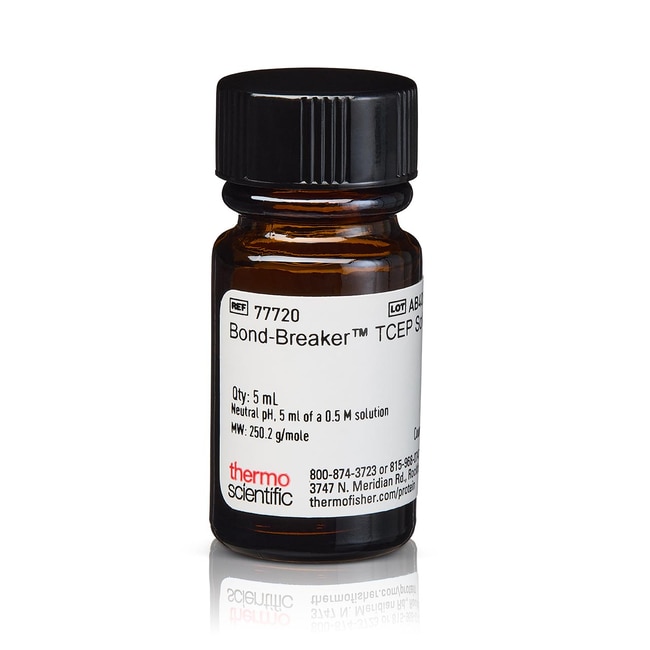
Thermo Scientific™ Bond-Breaker™ TCEP Solution, Neutral pH
Description
Thermo Scientific™ Bond-Breaker TCEP Solution, Neutral pH is a stable, 0.5M solution of the thiol-free, phosphine-based TCEP compound, useful as a 10X stock for addition to SDS-PAGE sample loading buffers to reduce protein disulfide bonds.
Highlights:
- Ready-to-use, odorless, stable and neutral 0.5M TCEP solution
- Eliminates TCEP·HCl stock solution preparation and neutralization prior to SDS-PAGE gel loading
- Convenient, time-saving format for TCEP reductions
- Neutral pH minimizes possibility of amide bond cleavage during reduction
- Room temperature-stable, saves valuable refrigerator space
- Contributes to more pleasant, safer laboratory environment
Specifications
Specifications
| Content And Storage | Store at room temperature. |
| Product Line | Bond-Breaker |
| Form | Liquid |
| Quantity | 5 mL |
| Product Type | Disulfide Reducing Reagent |
Frequently Asked Questions (FAQs)
TCEP, Tris Carboxy Ethyl Phosphene is an alternative sulfhydryl reducing agent for protein samples. It is an extremely potent and effective reducing agent for particularly ‘difficult' proteins. It is compatible with the Tris-Glycine gels and NuPAGE gels. It should be added to the sample buffer for these systems. 20 mM final (maximum) concentration is sufficient for samples. You may add alkylating agents, e.g. Iodine (50 mM Iodoacetic acid), to prevent re-forming of S-S bonds but it is not necessary. Do not heat because this will hydrolyze much of your sample. Instead let the sample sit for several minutes at RT and then load.
For Research Use Only. Not for use in diagnostic procedures.