missing translation for 'onlineSavingsMsg'
Learn More
Learn More
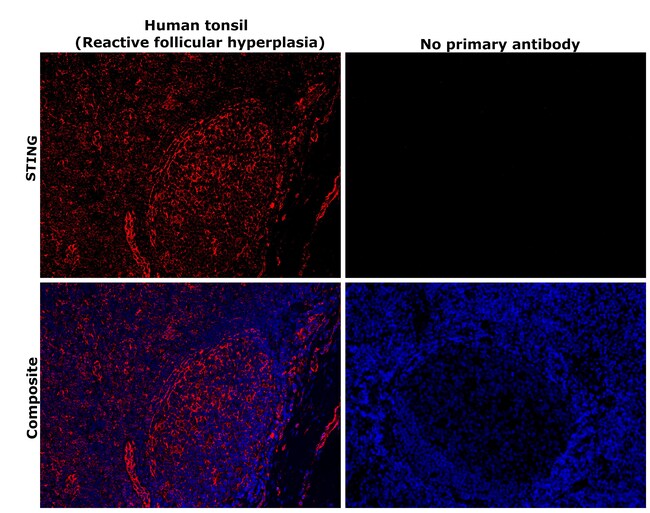
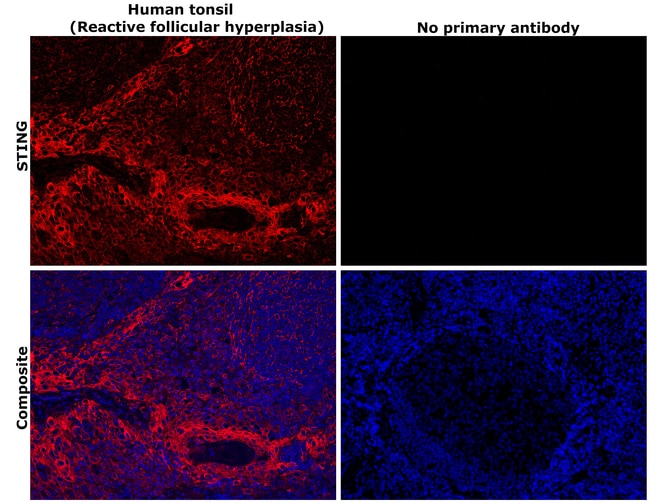
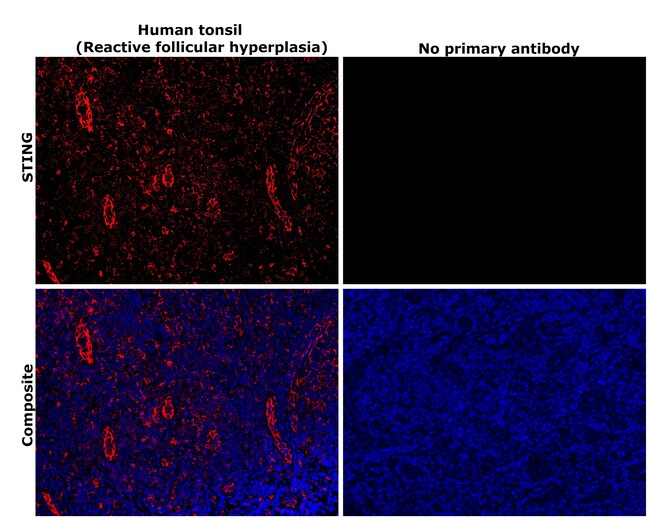
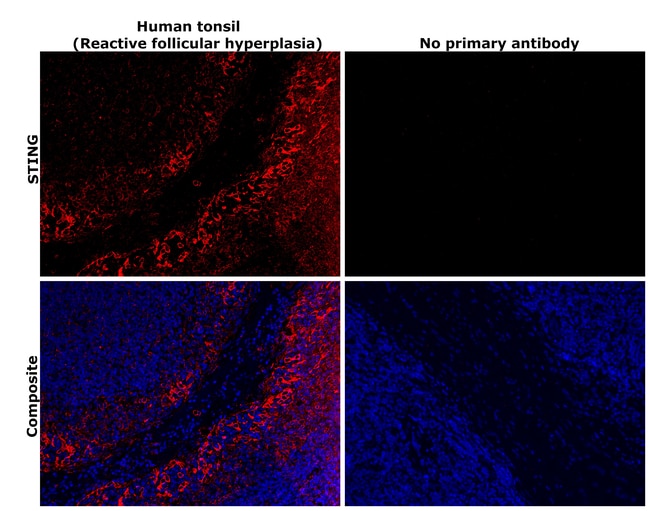
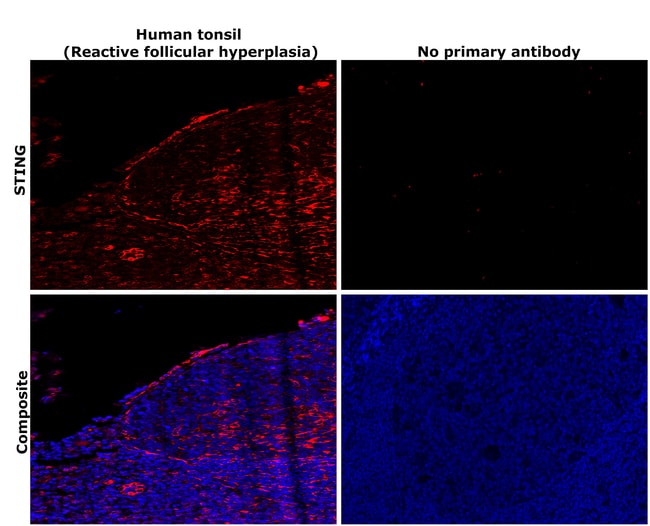
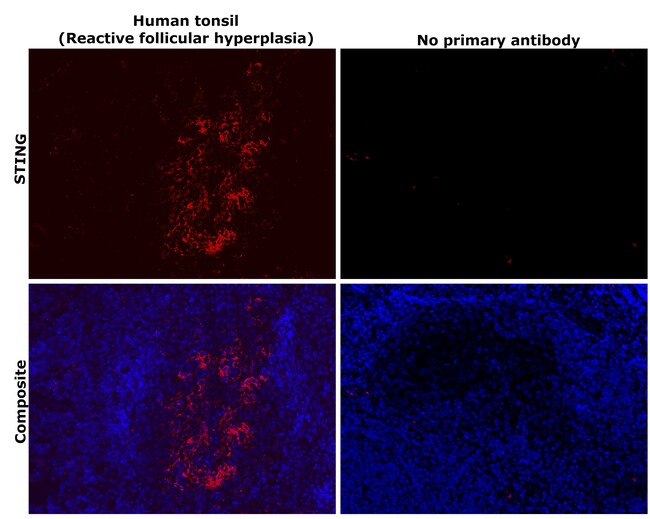
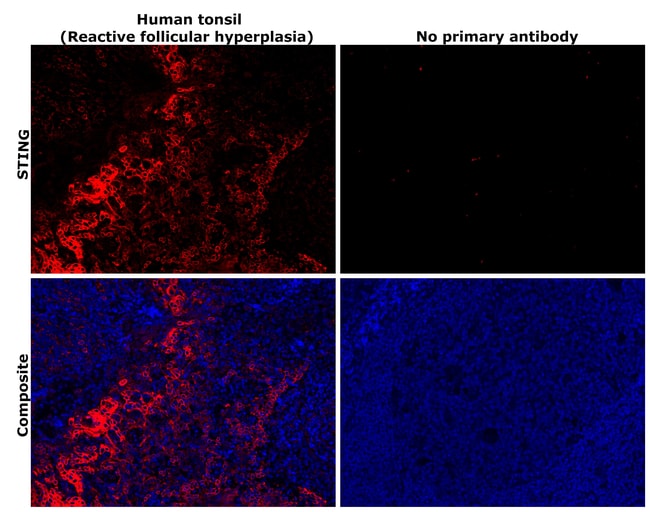
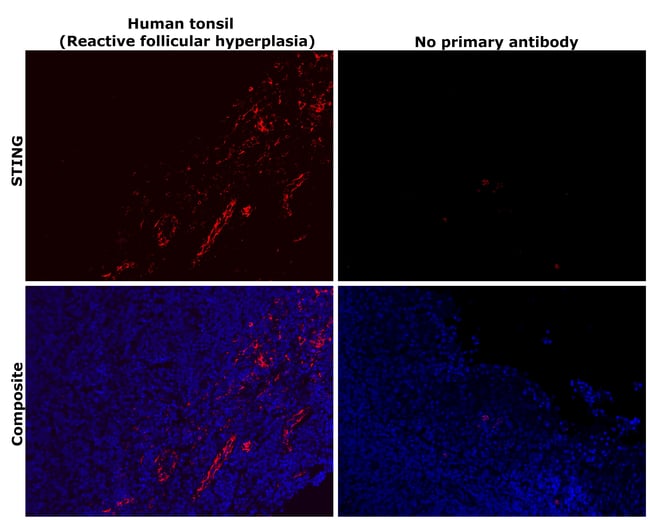
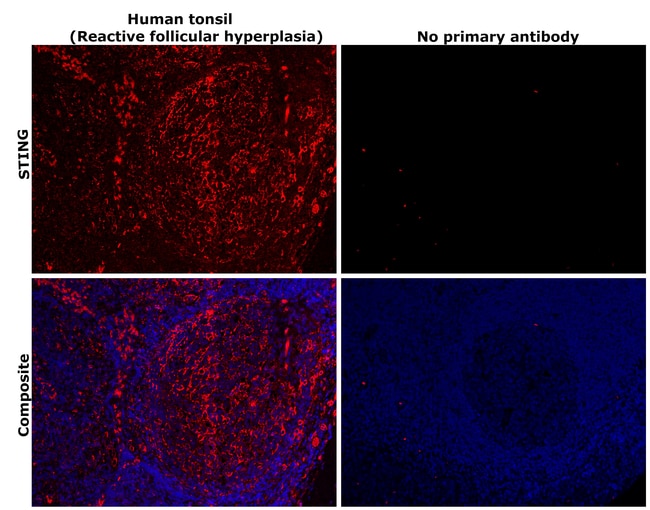
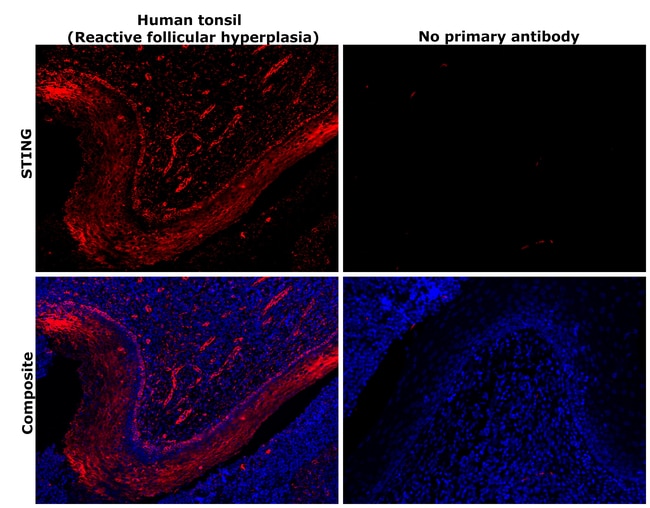
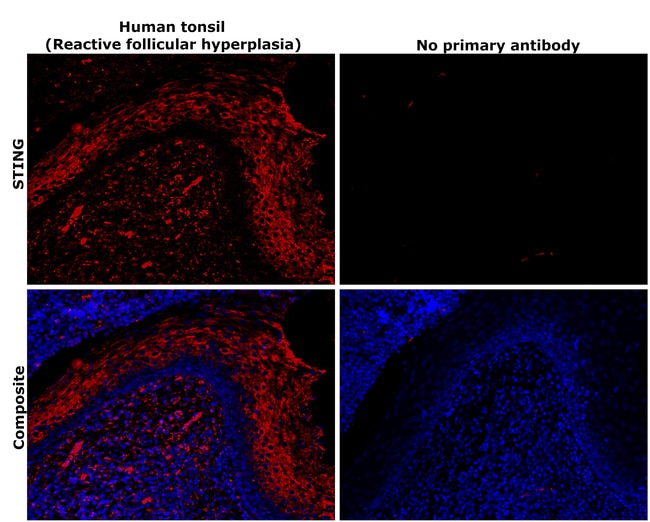
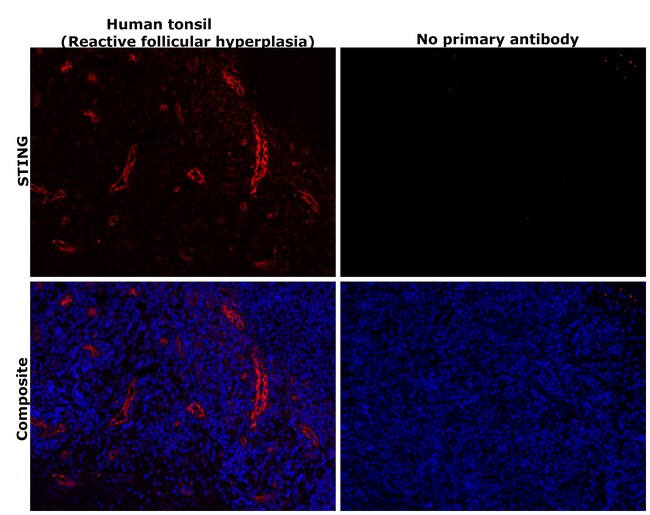
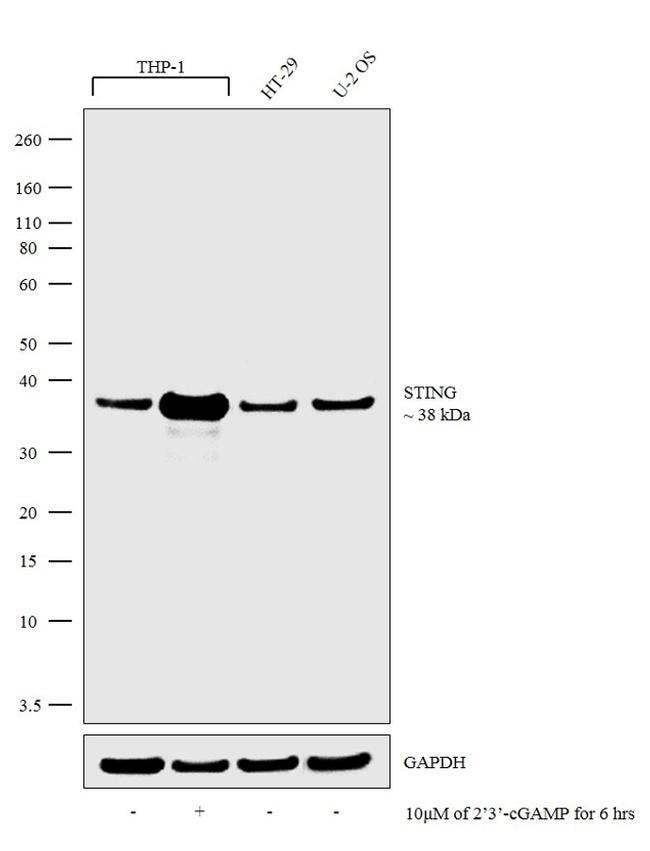
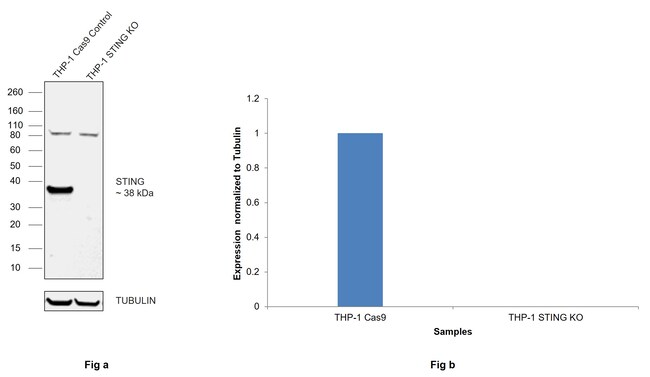
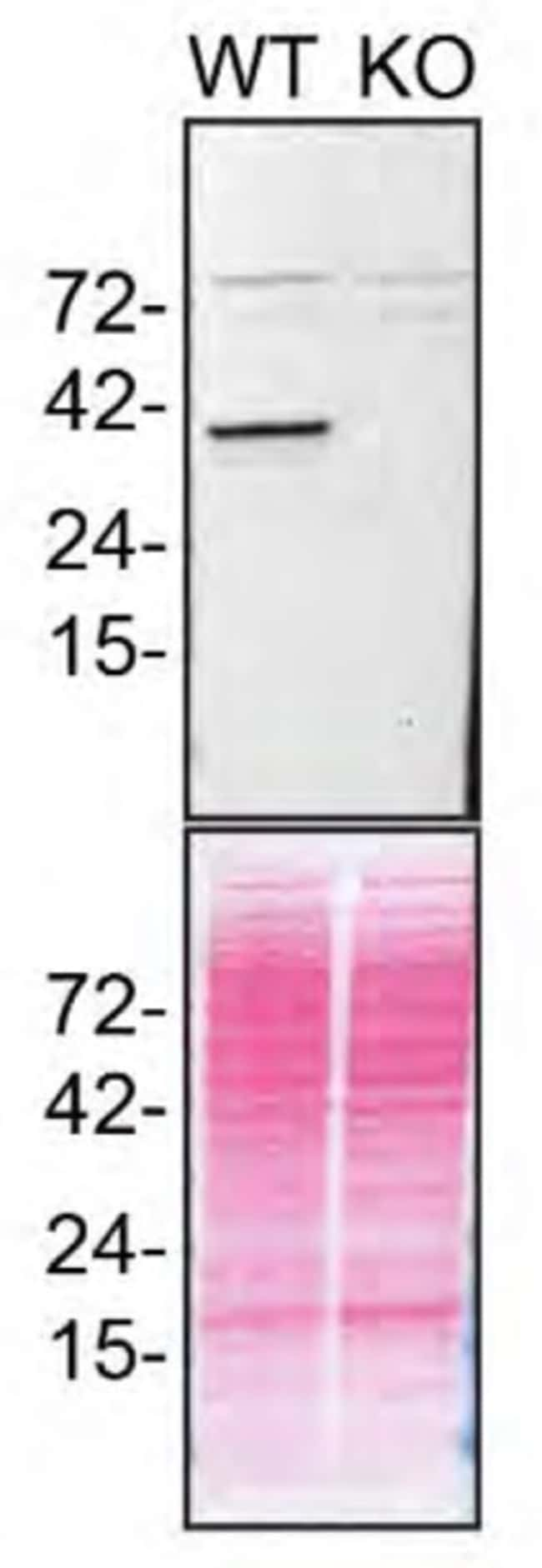
Invitrogen™ STING Recombinant Rabbit Monoclonal Antibody (2H1L5)

Description
This antibody is predicted to react with Monkey, Goat, Sheep. Recombinant rabbit monoclonal antibodies are produced using in vitro expression systems. The expression systems are developed by cloning in the specific antibody DNA sequences from immunoreactive rabbits. Then, individual clones are screened to select the best candidates for production. The advantages of using recombinant rabbit monoclonal antibodies include: better specificity and sensitivity, lot-to-lot consistency, animal origin-free formulations, and broader immunoreactivity to diverse targets due to larger rabbit immune repertoire.
STING is a 379 amino acid containing signaling protein that acts as an important component of innate immune signaling. This signaling protein is able to activate both NF-kappa-B and IRF3 transcription pathways to induce expression of type I interferon (IFN-alpha and IFN-beta) and exert a potent anti-viral state following expression. STING may have translocon function, the translocon possibly being able to influence the induction of type I interferons and is also involved in transduction of apoptotic signals via its association with the major histocompatibility complex class II (MHC-II) thus facilitating the detection of intracellular viral RNA species as well as B-form DNA and mediates death signaling via activation of the extracellular signal-regulated kinase (ERK) pathway. Generally seen in endoplasmic reticulum membrane, cell membrane and mitochondrion outer membrane, it is ubiquitously expressed in most of tissues.
Specifications
Specifications
| Antigen | STING |
| Applications | Immunohistochemistry (Paraffin), Western Blot, Immunocytochemistry |
| Classification | Recombinant Monoclonal |
| Clone | 2H1L5 |
| Concentration | 0.5 mg/mL |
| Conjugate | Unconjugated |
| Formulation | PBS with 0.09% sodium azide; pH 7.2-7.4 |
| Gene | TMEM173 |
| Gene Accession No. | Q86WV6 |
| Gene Alias | 2610307O08Rik; endoplasmic reticulum IFN stimulator; endoplasmic reticulum interferon stimulator; ERIS; hMITA; hSTING; hypothetical LOC533661; mediator of IRF3 activation; Mita; mitochondrial mediator of IRF3 activation; mitochondrial transmembrane protein 173; MMITA; Mpys; mSTING; NET23; N-terminal methionine-proline-tyrosine-serine plasma membrane tetraspanner; poSTING; RGD1562552; rSTING; SAVI; Stimulator of interferon genes protein; stimulator of interferon response cGAMP interactor 1; STING; STING1; tm173; Tmem173; Transmembrane protein 173 |
| Show More |