missing translation for 'onlineSavingsMsg'
Learn More

Thermo Scientific™ Rapid Equilibrium Dialysis (RED) Inserts and Plates

Catalog No. PI99006
Change view
Click to view available options
Quantity:
1 Plate
1 Plate Set
1 Tool
10 Inserts
10 Plates
2 Plates
250 Inserts
5 Plate Set
50 Inserts
Product Type:
Competition RED Device Base Plate
Red Device Insert
RED Device Insert Removal Tool
RED Device Reusable Base Plate
RED Device Single-Use Base Plates
RED Device Single-Use Plate with Inserts
12 product options available for selection
Product selection table with 12 available options. Use arrow keys to navigate and Enter or Space to select.
Catalog No. Quantity Product Type
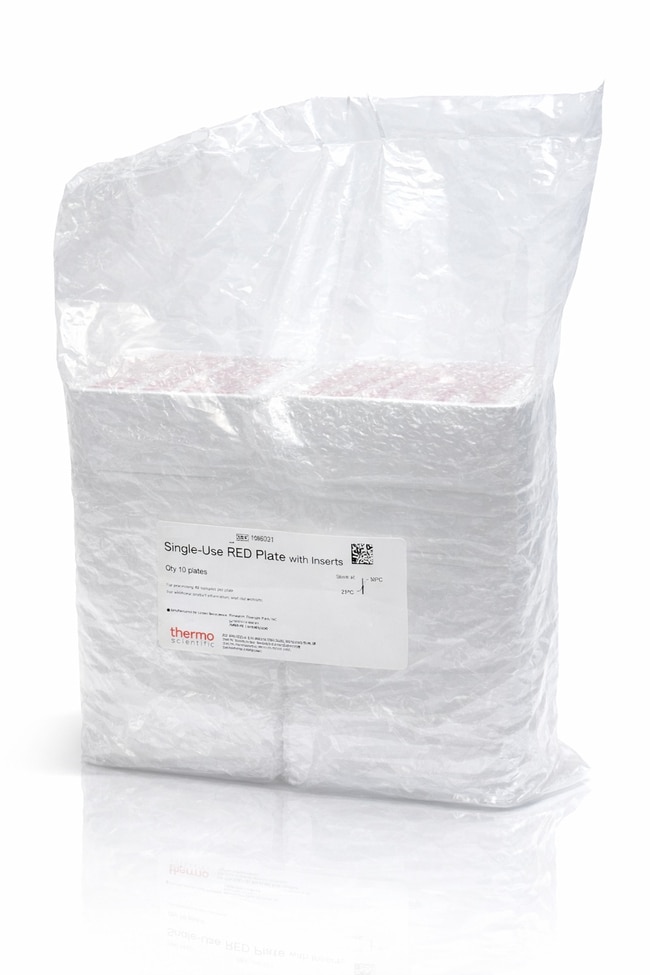
PI99006 10 Plates RED Device Single-Use Plate with Inserts
PI90006 1 Plate Set RED Device Single-Use Plate with Inserts
PI90007 5 Plate Set RED Device Single-Use Plate with Inserts
PI89809 50 Inserts Red Device Insert
PI89810 250 Inserts Red Device Insert
PI90112 1 Plate Set RED Device Single-Use Plate with Inserts
PI90087 10 Inserts Competition RED Device Base Plate
PI90088 50 Inserts Competition RED Device Base Plate
PI90004 2 Plates RED Device Single-Use Base Plates
PI90005 10 Plates RED Device Single-Use Base Plates
PI89811 1 Plate RED Device Reusable Base Plate
PI89812 1 Tool RED Device Insert Removal Tool
Use arrow keys to navigate between rows. Press Enter or Space to select a product option. 12 options available.
12 options
Catalog No. PI99006 Supplier Thermo Scientific™ Supplier No. 99006
Only null left

Equilibrium dialysis is a method used in plasma protein binding (PPB) studies to determine the amount of free, active drugs present in plasma. The Rapid Equilibrium Dialysis (RED) Device is widely accepted as the gold standard device for measuring interactions between drugs and PPB.

Rapid Equilibrium Dialysis (RED) Devices have been widely adopted as an effective in vitro technique for conducting plasma protein binding (PPB) assays in drug development. This measurement is used to assess the biological availability of drug candidates and guides critical downstream decisions such as drug design, in vivo testing prioritization, and drug-drug interaction evaluation. RED Devices were developed through close collaboration with the pharmaceutical industry, ensuring that they meet the highest standards of accuracy and reliability in equilibrium dialysis testing.

Equilibrium dialysis is commonly used in drug-plasma protein binding (PPB) studies to quantitate the free fraction of drugs in plasma. The binding of drugs to plasma proteins is a critical factor that affects their pharmacokinetics and pharmacodynamics, as only the free fraction of a drug can exert a physiological effect. The Thermo Scientific Pierce Rapid Equilibrium Dialysis (RED) Device is a superior method for conducting this analysis because it delivers accurate and consistent data with shorter preparation and dialysis times.

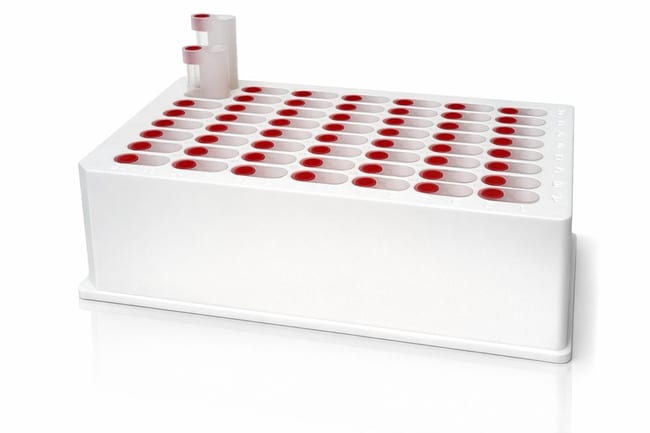
RED Devices use a size-defined dialysis membrane to quantitate the amount of free (active) drug molecules that are not bound to plasma proteins. They consist of disposable inserts and a base plate with a standard microplate footprint. The inserts are made of two side-by-side chambers separated by a dialysis membrane and are used along with a required base plate or are available as single-use plates with Inserts. Competition RED Devices are also available to enable competitive dialysis experiments with multiple tissue or protein fluid samples.

Features of RED Devices include:
Ease of use—disposable tubes do not require presoaking, assembly, or specialized equipment
Rapid dialysis—high surface-to-volume ratio of the membrane enables equilibrium in 2–4 hours
High-throughput—96-well footprint is suitable for automation
Multi-sample processing—can be used for 1–48 assays/plate without wasting an entire plate
Robustness—compartmentalized design eliminates the potential for cross-contamination or leakage
Reproducibility and accuracy—validated for plasma protein binding assays, producing results consistent with those reported in the literature
Flexible format—available in pre-inserted disposable polypropylene plates and packs of individual inserts

In addition to plasma protein binding, the device is used for determining drug partitioning between red blood cells and plasma, protein binding of liver microsomes to improve the correlation between in vitro and in vivo intrinsic clearance, drug metabolism and pharmacokinetics (DMPK) assays, and competition between tissue protein binding against plasma proteins.

RED Device Inserts, 8K MWCO
Pierce RED Device Inserts are designed for use with a required base plate for equilibrium dialysis experiments. Each single-use, disposable insert is made of two side-by-side chambers separated by an O-ring-sealed vertical cylinder of dialysis membrane (8K MWCO) validated for minimal nonspecific binding. They are available in packs of 50 or 250 each and are useful for testing a variable number of samples per run.

RED Device Base Plates
Pierce RED Device Inserts are used with either the RED Device Reusable Base Plate made of high-grade PTFE (Teflon™) or the RED Device Single-Use Base Plate made of high-density polypropylene. The Single-Use Base Plate is disposable and lightweight, allowing routine automation. Each Base Plate holds up to 48 RED Device Inserts and has a standard 96-well plate footprint with 9 x 9 mm well spacing for compatibility with multichannel pipettors and automated liquid handling systems.

RED Device Single-Use Plate with Inserts, 8K or 12K MWCO
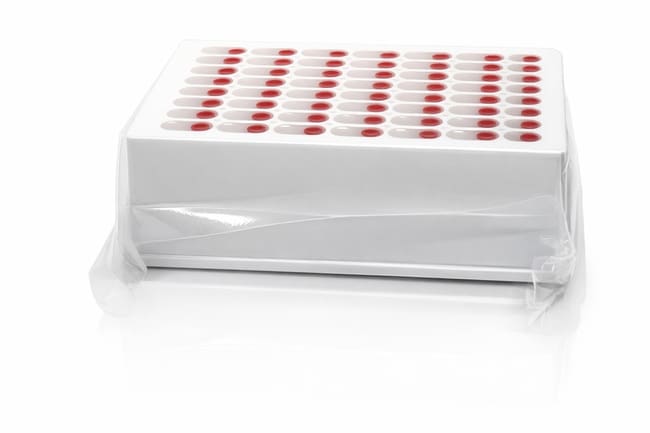
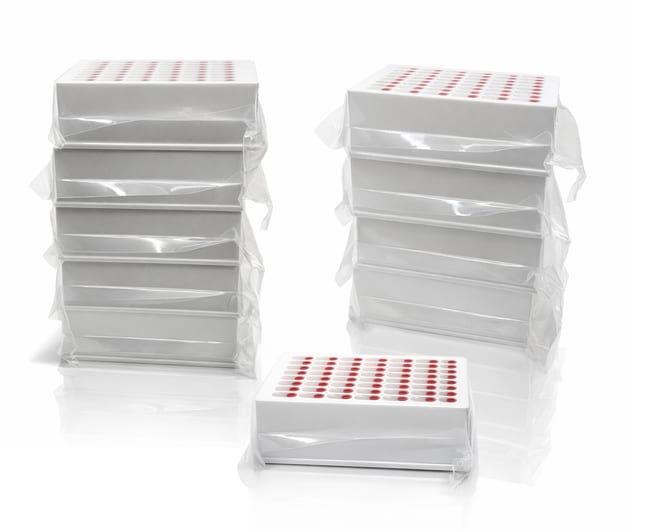
The RED Device Single-Use Plate with Inserts is composed of disposable high-density polypropylene and comes preloaded with 48 equilibrium dialysis membrane inserts. Each insert includes two side-by-side chambers separated by an O ring sealed vertical cylinder of dialysis membrane (8K or 12K MWCO). The device is automation-friendly and has a standard 96-well plate footprint with 9 x 9 mm well spacing. The single-use plate is easily disposed of to avoid contamination and cleaning, making it useful when performing PPB assays with radioactive or hazardous materials.

Competition RED Device Inserts and Base Plate, 12K MWCO
The Pierce Competition RED Device facilitates the analysis of simultaneous drug interactions and partitioning among multiple tissues to accurately model in vivo drug interactions. The system consists of disposable dialysis tube inserts (12K MWCO) and a reusable base plate made of chemically inert high-grade PTFE, eliminating non-specific binding and risk of contamination. The base plate is divided into different size chambers for positioning 2–8 RED Device Inserts per well, enabling competitive dialysis experiments with 2–15 separate tissue or protein fluid samples. Each Competition RED Insert contains either one or two separate dialysis chambers (each package includes both types).

Applications of the Competition RED Devices include:
• ADME-Tox studies: in vitro screening of drug partitioning between plasma and multiple tissues before in vivo studies with animal models
• Determine formulation of drug dosage for in vivo studies
• Drug-drug interaction studies
• Competitive binding and dissociation constant determination for small molecules versus multiple targets

RED Device Insert Removal Tool
This tool enables fast removal of 8 inserts at once.

Specifications

Content And Storage Upon receipt store inserts at room temperature
Purification Target Binding Equilibrium, Protein
Membrane Cellulose Membrane, Dialysis
MWCO 8.0 kDa
Quantity 10 Plates
For Use With (Application) Equilibrium Dialysis
Product Type RED Device Single-Use Plate with Inserts
Product Line Pierce
Why can I only process 48 samples on a 96-well plate using the RED device?

Each sample requires two chambers for equilibrium dialysis to take place (96/2 = 48).

Can I heat the PTFE block on a hot plate to maintain the temperature of the RED Device?

Yes, as most assays are performed at physiological temperature (37.5 degrees C).

If I see vapor condensing on the clear sealing film, will the loss of water vapor affect the result when using the RED Device?

No. It will not affect the equilibrium.

How do I mix the samples to speed reaching equilibrium when using the RED Device?

Once samples are loaded into the PTFE plate it should be placed on a shaking device. With an orbital shaker 100 rpm works well. For an up and down shaker, 20 rpm is sufficient.

With the rapid equilibrium dialysis (RED) system, if my compound has low solubility in aqueous buffer, can I use DMSO and if so, at what concentration?

A final concentration of 1% DMSO is acceptable and will not affect the study. While DMF has not been tested, it is expected that DMF should be similar to DMSO in terms of use.

If we use radioactive compounds in our study, will the PTFE plate be contaminated, preventing reuse of the RED Device?

No. After use, rinse the PTFE plate in 20% ethanol in water and rinse with ultrapure water at least two times. No radioactivity will remain after these rinses.

Can the RED Devices be reused?

No, these are designed for a single use, as plasma is sticky and cannot be removed from the unit. The PTFE plate is designed for multiple uses.

What is the minimum volume of plasma that I can use with the RED Device?

The lowest validated volume for the RED Device sample chamber is 50 µl of plasma.

What samples are typically tested for binding of ligands with the RED Device?

Plasma samples from human, mouse and rat. For toxicology studies, monkey is also typically tested. Typically pooled plasma samples purchased from commercial vendors are used, although researchers could test the differences in plasma from various physiological states using the RED Devices.

Is there any non-specific binding of compounds to the RED device?

The container for the device is PTFE and the insert is made of high density polyethylene (HDPE) and are highly hydrophobic. The regenerated cellulose membrane is a standard material for commercial dialysis devices. A recovery study shows a consistency of 85% recovery of high and low protein binding compounds. This result is indicative of minimal non-specific binding.

Is there a volume shift in either RED Device sample?

Volume shift in the plasma is unusual due to how quickly equilibrium can be reached with the RED Device. If much longer incubation times are used, there can be an increase in the volume of the plasma. However, the ligand will still reach equilibrium, having free ligand at the same concentration on both sides of the membrane.

Why is the volume different between the membrane chamber and the buffer chamber of the RED Device? Will it affect the results?

The difference in liquid volume is to maintain the same level (height) between the two chambers. The equilibrium constant depends only on the concentration of the ligand, not the volume.

How long does it take the RED Device to reach equilibrium dialysis?

In most cases 4 hours is sufficient to reach equilibrium. This is due to the high surface area to volume ratio for the membrane (7.4:1).

Are the RED Device units sterile or endotoxin free?

The units do not undergo a sterilization procedure nor are they tested for endotoxin content.

Is there any preprocessing, such as rinsing the RED Device Inserts, which is required before they can be used?

No. The inserts can be used directly out of the package, no presoaking or rinsing of the membrane is needed.

What is the pore size or molecular weight cut-off (MWCO) for the membrane of the RED Device Inserts?

The nominal MWCO is 6,000-8,000 Daltons as specified by the manufacturer.

What is the membrane material in the RED Device Inserts?

Regenerated cellulose with a low glycerol content as a humectant.

Why can I only process 48 samples on a 96-well plate with the rapid equilibrium dialysis (RED) system?

Each sample requires two chambers for equilibrium dialysis to take place (96/2 = 48); one chamber for the plasma sample, the other for buffer.

Can the rapid equilibrium dialysis (RED) device be used with cells or virus included in the "plasma" side?

We have not tested the units with cells or viral particles. Customers would have to design and optimize their experiments to use the RED device with this type of sample.

What samples are typically tested for binding of ligands with the rapid equilibrium dialysis (RED) device?

Plasma samples from human, mouse, and rat are typically tested for binding of ligands with the rapid equilibrium dialysis (RED) device. For toxicology studies, a monkey sample is also tested. Typically, pooled plasma samples purchased from commercial vendors are used, although researchers could test the differences in plasma from various physiological states using the RED devices.

In the rapid equilibrium dialysis (RED) system, do you observe nonspecific binding of compounds to the device?

The container for the device is Teflon (PTFE), the insert is made of high-density polyethylene (HDPE), and they are highly hydrophobic. The regenerated cellulose membrane is a standard material for commercial dialysis devices. A recovery study consistently shows 85% recovery of high and low protein binding compounds. This result is indicative of minimal nonspecific binding, since the recovery between the membrane side and the PTFE/HDPE housing side showed very small difference.

How long does it take to reach equilibrium dialysis in the rapid equilibrium dialysis (RED) system?

In most cases, 4 hours is sufficient to reach equilibrium. This is due to the high surface area-to-volume ratio for the membrane (7.4:1), but can vary with different compounds.

Are the rapid equilibrium dialysis (RED) devices GMP-certified?

No. They are manufactured in an ISO environment. The Teflon plate is also ISO-certified.

Are the rapid equilibrium dialysis (RED) Device units sterile or endotoxin-free?

No. The units do not undergo a sterilization procedure nor are they tested for endotoxin content.

Is the rapid equilibrium dialysis (RED) system compatible with automation?

Yes. The Teflon Base Plate has the standard 96-well footprint. It can be used with any system compatible with standardized 96-well ELISA plates with 9 by 9 mm well spacing. The single-use format for the RED Device is especially convenient for labs using radioactive materials because the plate can easily be disposed of to minimize contamination and the need for cleaning.

What is the pore size or molecular weight cut-off (MWCO) for the membrane in the rapid equilibrium dialysis (RED) system?

We offer 8K and 12K MWCOs.

What is the membrane material in the rapid equilibrium dialysis (RED) system?

The membrane used is regenerated cellulose with a low glycerol content (acts as a humectant).

Which rapid equilibrium dialysis (RED) system should I use?

Please use our selection table (https://www.thermofisher.com/us/en/home/life-science/protein-biology/protein-mass-spectrometry-analysis/plasma-protein-binding-equilibrium-dialysis.html) to choose the right plasma or tissue-to-plasma protein binding product for your experiment.

What is equilibrium dialysis?

Equilibrium dialysis uses size-defined membranes to separate the free molecules (i.e., those molecules not bound to plasma proteins at equilibrium state). This type of dialysis mimics an in vivo environment. We offer our RED (rapid equilibrium dialysis) and competition RED systems to conduct plasma or tissue-to-plasma protein-binding studies.

What is the difference between your dialysis devices (plates, device, cassettes, flasks)?

Please view our selection table to choose the right dialysis device for your experiment - https://www.thermofisher.com/us/en/home/life-science/protein-biology/protein-purification-isolation/protein-dialysis-desalting-concentration/dialysis-products.html.

What is protein dialysis?

Dialysis is the separation of small and large molecules in a solution by selective diffusion through a semi-permeable membrane. It is generally used for larger sample volumes, and can take hours to overnight for complete dialysis.


Patent pending.