missing translation for 'onlineSavingsMsg'
Learn More
Learn More
Invitrogen™ RAI3 Polyclonal Antibody

Description
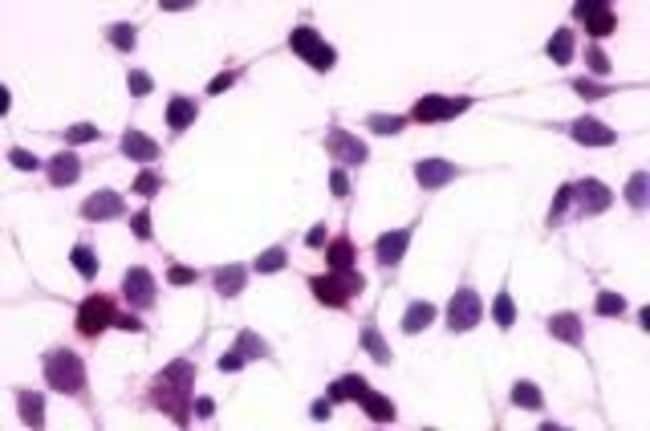
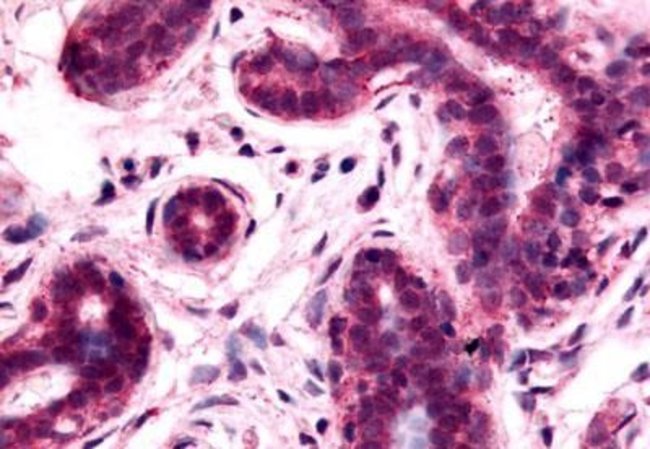
PA1-20698 detects RAI3 in human samples.
Retinoic acid plays a critical role in development, cellular growth, and differentiation. The specific function for this retinoic acid-induced gene has not yet been determined; however, it may play a role in embryonic development and epithelial cell differentiation. This gene is a member of the type 3 G protein-coupling receptor family, characterized by the signature 7-transmembrane domain motif. This gene may also be involved in interaction between retinoid acid and G protein signalling pathways. RAI3 has been reported in lung, kidney, colon, pancreas, prostate, and small intestine. ESTs have been isolated from amnion, breast, colon, eye, lung, nasal cavity, placenta, skin, uterus, and vessel libraries.
Specifications
Specifications
| Antigen | RAI3 |
| Applications | Immunohistochemistry (Paraffin), Immunocytochemistry |
| Classification | Polyclonal |
| Concentration | 1 mg/mL |
| Conjugate | Unconjugated |
| Formulation | PBS with 0.1% sodium azide |
| Gene | GPRC5A |
| Gene Accession No. | Q8NFJ5 |
| Gene Alias | G protein-coupled receptor class C group 5 member A; G protein-coupled receptor, class C, group 5, member A; G protein-coupled receptor, family C, group 5, member A; GPCR5A; Gprc5a; G-protein coupled receptor family C group 5 member A; orphan G-protein-coupling receptor PEIG-1; PEIG-1; Phorbol ester induced gene 1; phorbol ester induced protein-1; Rai3; Raig1; RAIG-1; retinoic acid induced 3; retinoic acid responsive; retinoic acid-induced gene 1 protein; Retinoic acid-induced protein 3; TIG1; TPA induced gene 1 |
| Gene Symbols | GPRC5A |
| Show More |