Learn More
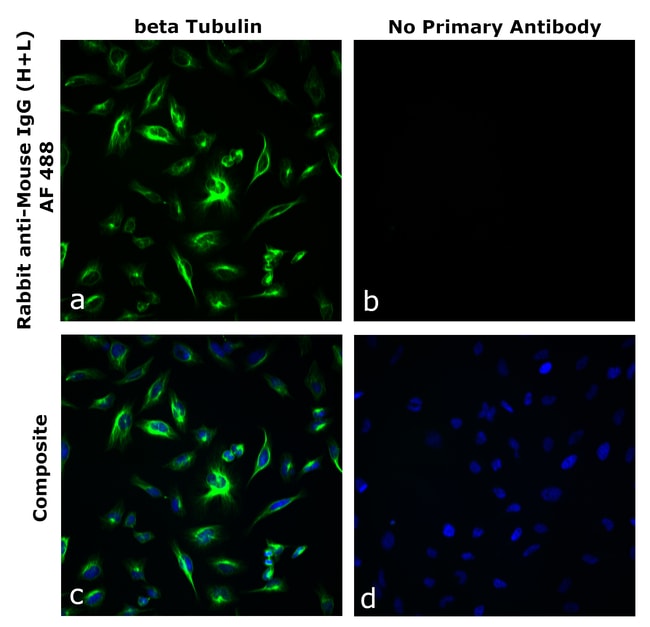
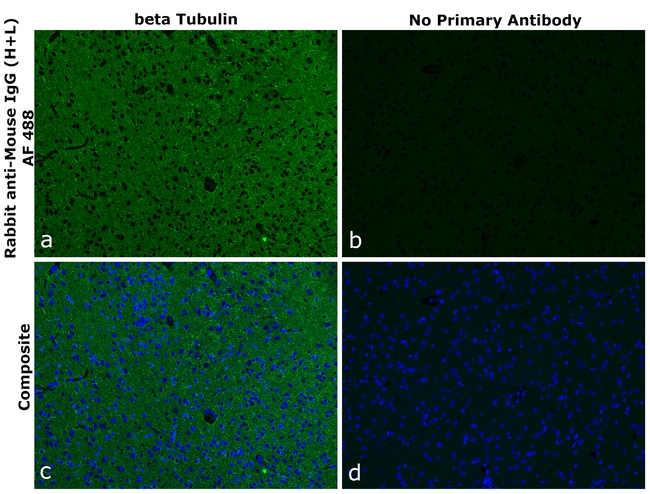
Invitrogen™ Rabbit anti-Mouse IgG (H+L) Superclonal™ Secondary Antibody, Alexa Fluor™ 488
Description
Rabbit anti-Mouse IgG (H+L) Superclonal™ Recombinant Secondary Antibody, Alexa Fluor™ 488 can detect both Fab2 and Fc region of Mouse IgG. It can also detect all subtypes of Mouse IgG (Mouse IgG1,2a,2b and 3). It has <20% cross reactivity to Human IgG and Rat IgM. It showed minimum to no cross-reactivity to various species immunoglobulins tested. This recombinant antibody has been engineered with point mutations that eliminate binding to Fc receptors, enabling reduction in background and superior signal to noise. Superclonal™ recombinant secondary antibodies are produced using a multifaceted clonal selection process that involves several phenotypic screens to ensure enhanced specificity, animal origin free formulation and lot-to-lot consistency. Protein conjugates made with Alexa Fluor™ dyes produce fluorescence output that surpasses that of other spectrally similar fluorophore-labeled proteins. Alexa Fluor™ dyes are available in a wide selection of fluorescent colors and are more photostable than most other dyes. Photostability is a key characteristic of Alexa Fluor dye™ conjugates, allowing more time for image capture. In addition to their exceptional brightness and the wide selection of dyes across the spectrum, you'll get photostability you can rely on with Alexa Fluor™ dyes and dye conjugates. It is recommended that the antibody be carefully titrated for optimal performance in the assay of interest.
Specifications
Specifications
| Antigen | Mouse IgG (H+L) |
| Applications | Immunohistochemistry (Paraffin), Immunocytochemistry |
| Classification | Recombinant Superclonal |
| Concentration | 1 mg/mL |
| Conjugate | Alexa Fluor 488 |
| Formulation | Proprietary buffer with 0.008% Bromonitrodioxane, 0.008% Methylisothiazolone; pH 6.3-7.3 |
| Host Species | Rabbit |
| Immunogen | Purified Mouse IgG. |
| Purification Method | Affinity chromatography |
| Quantity | 1 mg |
| Show More |