missing translation for 'onlineSavingsMsg'
Learn More
Learn More
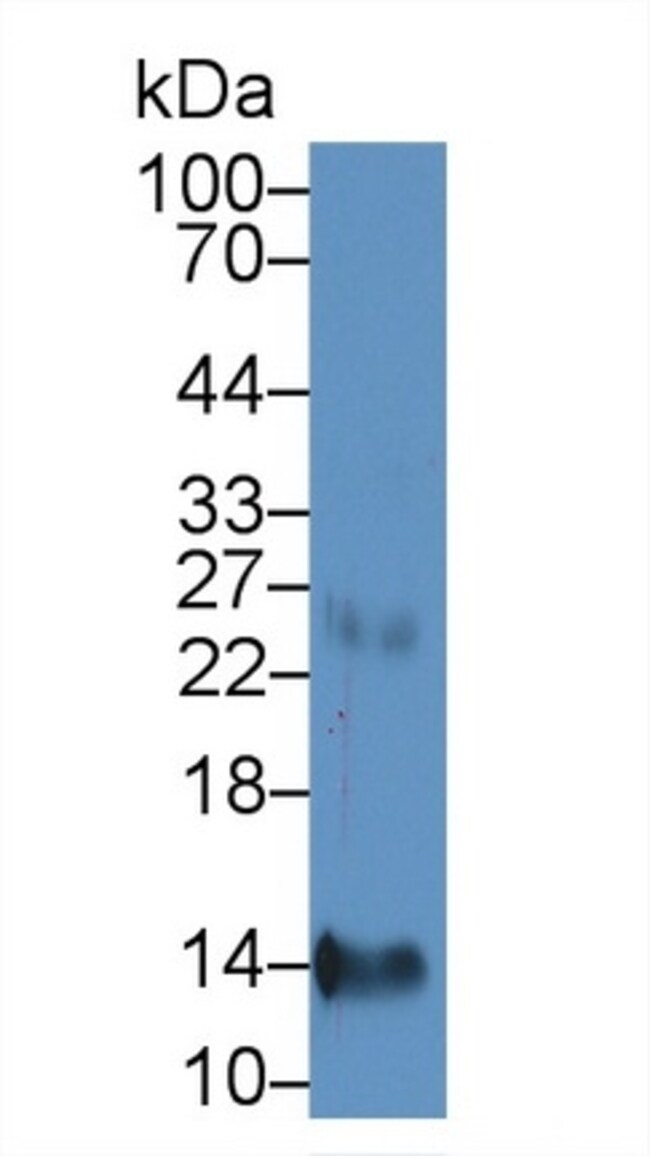
Invitrogen™ PPBP Monoclonal Antibody (14#)

Description
PPBP Monoclonal Antibody for Western Blot, IHC, ICC/IF
Members of the a-chemokine subfamily of inducible, secreted, pro-inflammatory cytokines contain a similar motif, in which the first two cysteine residues are separated by a single residue (Cys-X-Cys), and are also chemotactic for neutrophils. The platelet basic protein (PBP), a member of the a-chemokine family, resides in the a-granules of platelets and is released upon their activation. Proteolytic cleavage of the amino terminus of PBP leads to the generation of several peptides, which include mature PBP, connective tissue-activating peptide III (CTAP III, also designated low affinity platelet factor IV (LA-PF4)), b-thromboglobulin (b-TG), and neutrophil-activating peptide 2 (NAP-2). PBP and its N-truncated derivatives mediate inflammation and wound healing. Specifically, NAP-2 activates chemotaxis and degranulation in neutrophils during inflammation. The gene encoding human PBP maps to chromosome 4q12-q13.
Specifications
Specifications
| Antigen | PPBP |
| Applications | Immunohistochemistry, Western Blot, Immunocytochemistry |
| Classification | Monoclonal |
| Clone | 14# |
| Concentration | 1 mg/mL |
| Conjugate | Unconjugated |
| Formulation | PBS with 50% glycerol and 0.05% ProClin 300; pH 7.4 |
| Gene | PPBP |
| Gene Accession No. | P02775 |
| Gene Alias | 2400003M24Rik; AI854500; Beta-TG; Beta-thromboglobulin; b-TG1; chemokine (C-X-C motif) ligand 7; connective tissue-activating peptide III; Connective tissue-activating peptide III(1-81); CTAP3; CTAPIII; CTAP-III; CTAP-III(1-81); CXC chemokine ligand 7; C-X-C motif chemokine 7; CXCL7; LA-PF4; LDGF; Leukocyte-derived growth factor; low-affinity platelet factor IV; Macrophage-derived growth factor; MDGF; NAP-2; NAP-2(1-63); NAP-2(1-66); NAP-2(73); NAP-2(74); NAP-2-L1; neutrophil activating peptide-2; neutrophil-activating peptide 2; Neutrophil-activating peptide 2(1-63); Neutrophil-activating peptide 2(1-66); Neutrophil-activating peptide 2(73); Neutrophil-activating peptide 2(74); neutrophil-activating peptide-2; PBP; Platelet basic protein; PPBP; pro-platelet basic protein; pro-platelet basic protein (chemokine (C-X-C motif) ligand 7); SCYB7; small inducible cytokine B7; small inducible cytokine subfamily B, member 7; small-inducible cytokine B7; TC1; TC-1; TC2; TC-2; TGB; TGB1; THBGB; THBGB1; thrombocidin 1; thrombocidin 2; thromboglobulin, beta-1 |
| Show More |