missing translation for 'onlineSavingsMsg'
Learn More
Learn More
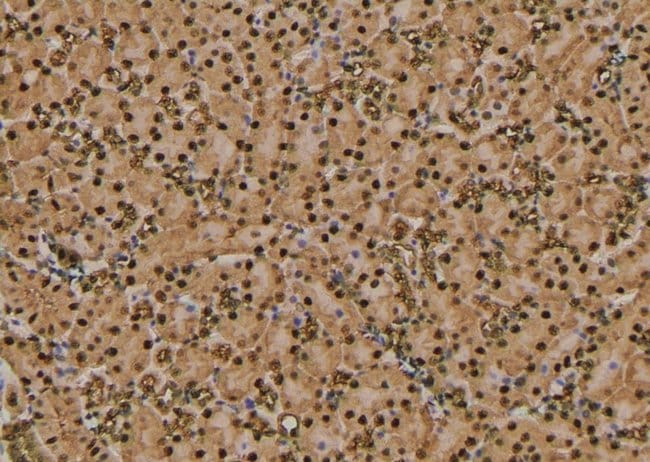
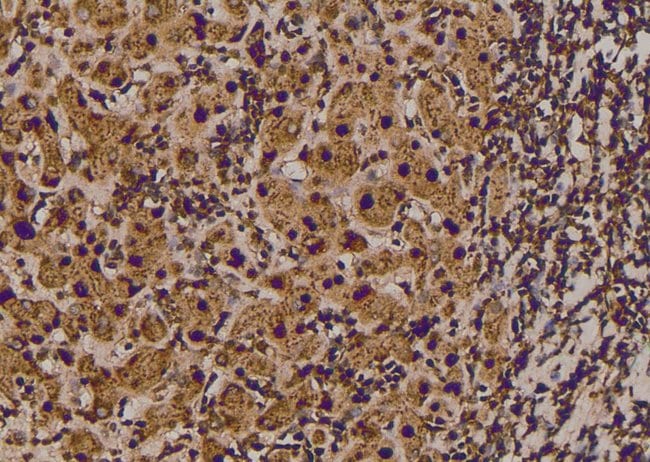
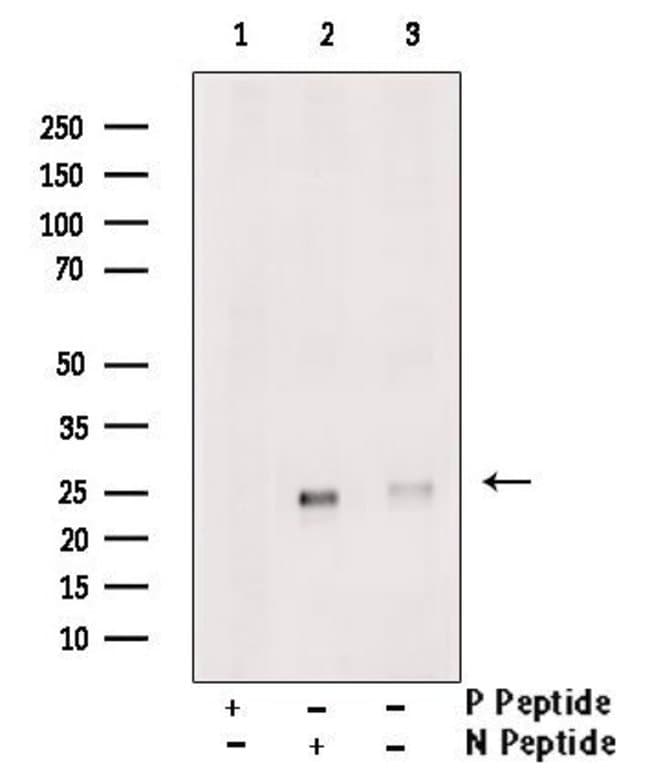
Invitrogen™ Phospho-RHOA (Thr100) Polyclonal Antibody

Description
Antibody detects endogenous levels of RhoA only when phosphorylated at Thr100.
RhoA regulates a signal transduction pathway linking plasma membrane receptors to the assembly of focal adhesions and actin stress fibers. It is involved in a microtubule-dependent signal that is required for the myosin contractile ring formation during cell cycle cytokinesis, and plays an essential role in cleavage furrow formation. RhoA is required for the apical junction formation of keratinocyte cell-cell adhesion, and serves as a target for the yopT cysteine peptidase from Yersinia pestis, vector of the plague, and Yersinia pseudotuberculosis, which causes gastrointestinal disorders. RhoA stimulates PKN2 kinase activity and may be an activator of PLCE1. It is activated by ARHGEF2, which promotes the exchange of GDP for GTP. It is essential for the SPATA13-mediated regulation of cell migration and adhesion assembly and disassembly. The MEMO1-RHOA-DIAPH1 signaling pathway plays an important role in ERBB2-dependent stabilization of microtubules at the cell cortex. It controls the localization of APC and CLASP2 to the cell membrane, via the regulation of GSK3B activity. In turn, membrane-bound APC allows the localization of the MACF1 to the cell membrane, which is required for microtubule capture and stabilization.
Specifications
Specifications
| Antigen | Phospho-RHOA (Thr100) |
| Applications | Immunohistochemistry (Paraffin), Western Blot |
| Classification | Polyclonal |
| Concentration | 1 mg/mL |
| Conjugate | Unconjugated |
| Formulation | PBS with 50% glycerol and 0.02% sodium azide; pH 7.4 |
| Gene | RHOA |
| Gene Accession No. | P61586, P61589, Q9QUI0 |
| Gene Alias | Aplysia ras-related homolog 12; Aplysia RAS-related homolog 6; aplysia ras-related homolog A; aplysia ras-related homolog A1; aplysia ras-related homolog A2; ARH12; ARH6; ARH9; ARHA; Arha1; Arha2; ARHB; ARHC; h12; h6; H9; MGC72339; MST081; MSTP081; oncogene RHO H12; oncogene RHO H6; oncogene RHO H9; plysia ras-related homolog A2; Ras family member A; ras homolog A1; ras homolog A2; ras homolog family member A; ras homolog family member B; ras homolog family member C; ras homolog gene family, member A; ras homolog gene family, member A1; ras homolog gene family, member A2; ras homolog gene family, member B; ras homolog gene family, member C; RAS-related homolog 9; Rho; Rho cDNA clone 12; Rho cDNA clone 6; rho cDNA clone 9; Rho family GTPase; RHO12; Rhoa; RHOB; RHOC; rhoC GTPase; RHOH12; RHOH6; RHOH9; rho-related GTP-binding protein RhoB; Rho-related GTP-binding protein RhoC; small GTP binding protein RhoA; small GTP binding protein RhoC; transforming protein RhoA |
| Gene Symbols | RHOA |
| Show More |