missing translation for 'onlineSavingsMsg'
Learn More
Learn More
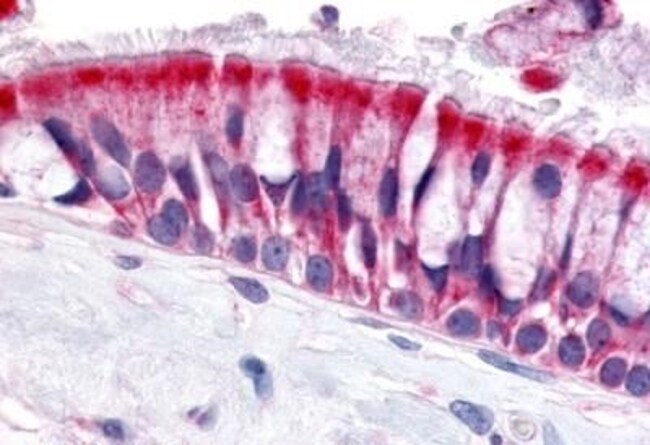
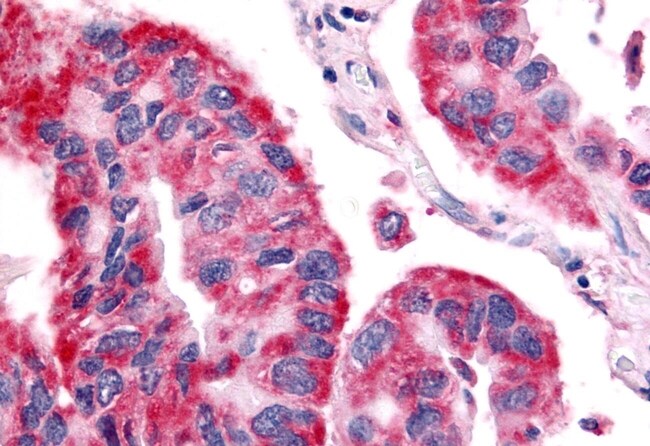
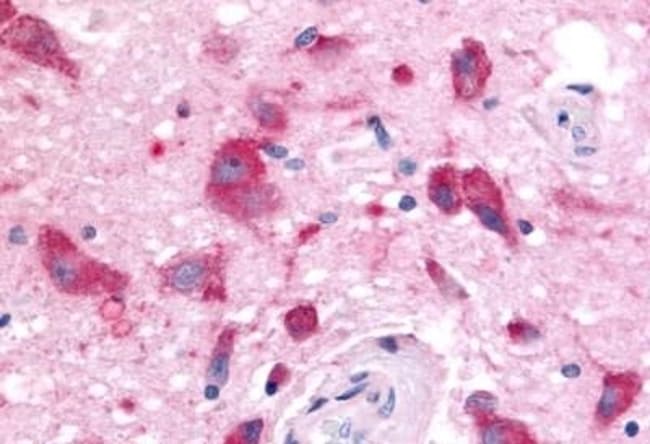
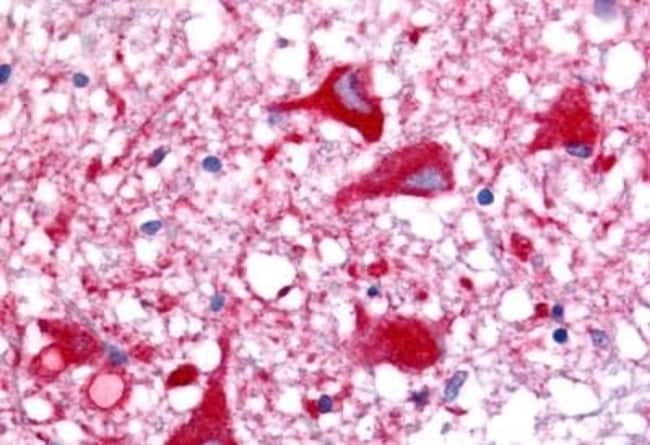
Invitrogen™ OR6N1 Polyclonal Antibody

Description
Percent identity with other species by BLAST analysis: Human, Gorilla, Gibbon, Monkey, Mouse, Rat, Hamster, Horse, Rabbit, Platypus (93%).
Olfactory receptors function by associating with odorant molecules to launch a neuronal response that elicits the perception of smell. Olfactory receptor genes are unevenly dispersed among 51 loci on 21 human chromosomes, and are composed of 172 subfamilies. OR6N1 (olfactory receptor, family 6, subfamily N, member 1), also known as olfactory receptor OR1-22, is a 312 amino acid multi-pass membrane protein belonging to the G-protein coupled receptor 1 family. As the largest family in the genome, the G-protein coupled receptor 1 family originated from single coding-exon genes. Encoded by a gene that maps to human chromosome 1q23.1, OR6N1 functions as an odorant receptor. Like many hormone and neurotransmitter receptors, OR6N1 shares a 7-transmembrane domain structure and recognizes G protein-mediated transduction of odorant signals.
Specifications
Specifications
| Antigen | OR6N1 |
| Applications | Immunohistochemistry (Paraffin) |
| Classification | Polyclonal |
| Concentration | 1 mg/mL |
| Conjugate | Unconjugated |
| Formulation | PBS with 0.1% sodium azide |
| Gene | OR6N1 |
| Gene Accession No. | Q8NGY5 |
| Gene Alias | Olfactory receptor 6N1; olfactory receptor family 6 subfamily N member 1; olfactory receptor OR1-22; olfactory receptor, family 6, subfamily N, member 1; OR1-22; OR6N1 |
| Gene Symbols | OR6N1 |
| Show More |