missing translation for 'onlineSavingsMsg'
Learn More
Learn More

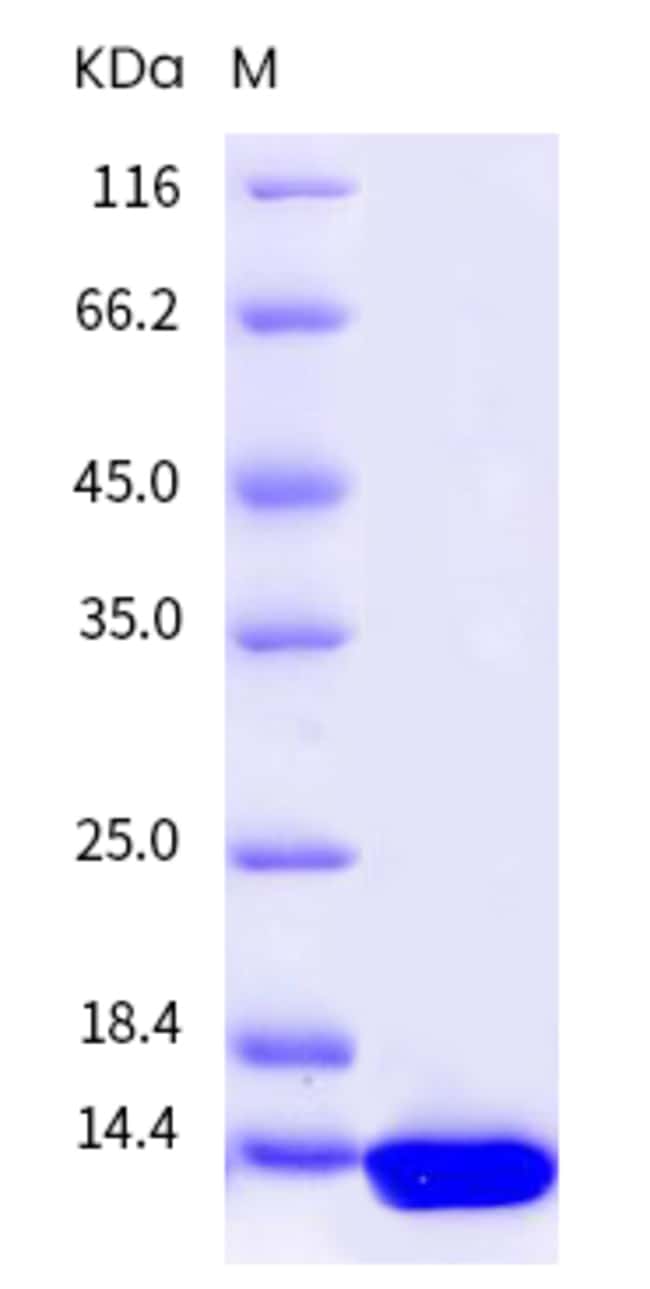
Invitrogen™ Mouse NGF Recombinant Protein

Description
Reconstitution: Dissolve the protein in sterile double distilled water to a concentration of 0.2 mg/mL or lower. It is recommended that the protein be aliquoted and be used as soon as possible. Store aliquots under sterile conditions at -20°C. Avoid repeated freeze-thaw cycles.
Nerve growth factor (NGF) influences the survival and differentiation of a variety of neuronal and nonneuronal cells. The actions of this polypeptide result from binding to specific cell surface receptors which are present as both high and low affinity sites. Although both types of receptor bind NGF only the high affinity form is capable of signal transduction. Cross-linking studies with 125I-NGF have shown that the high affinity receptor of rat PC12 cells forms an Mr 158,000 complex with NGF while the low affinity receptor forms an Mr 100,000 complex. Full length cDNA clones for both the human and rat NGF receptor genes have been produced and sequenced, revealing greater than 90% homology between the two species. NGF exhibits nerve growth stimulating activity and is involved in the regulation of growth and the differentiation of sympathetic and certain sensory neurons. Further, NGF stimulates division and differentiation of sympathetic and embryonic sensory neurons. Mutations in the NGF gene have been associated with hereditary sensory and autonomic neuropathy, type 5 (HSAN5), and dysregulation of NGF gene expression is associated with allergic rhinitis.
Specifications
Specifications
| Accession Number | P01139 |
| For Use With (Application) | Control, Bioactivity, Immunohistochemistry, Western Blot |
| Formulation | 50mM sodium acetate with 5% mannitol, 150mM NaCl, 5% trehalose and no preservative; pH 5.5 |
| Gene ID (Entrez) | 18049 |
| Molecular Weight (g/mol) | 13.5 kDa |
| Name | Mouse NGF |
| pH Range | 5.5 |
| Purification Method | Purified |
| Quantity | 50 μg |
| Source | CHO cells |
| Show More |