missing translation for 'onlineSavingsMsg'
Learn More
Learn More
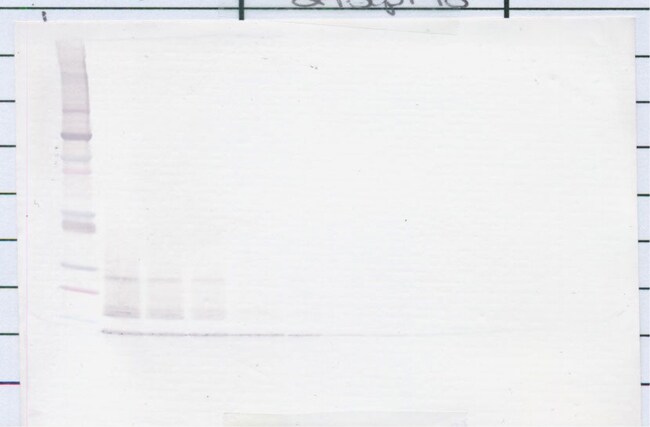
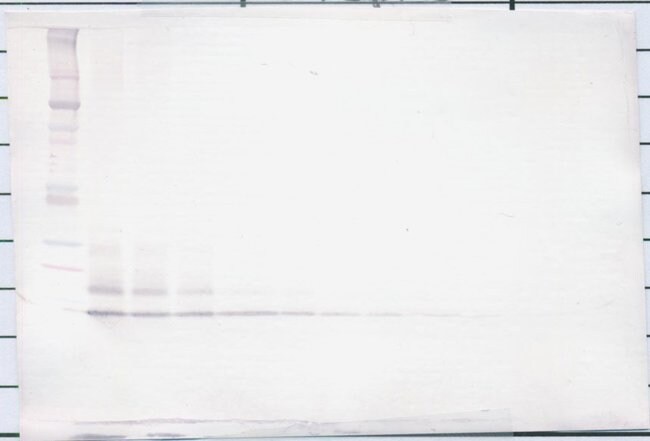

PeproTech MIP-3 beta Polyclonal Antibody, Biotin, PeproTech®, Invitrogen™ 
Rabbit Polyclonal Antibody
Supplier: PeproTech 500P95BBT25UG
Description
AA Sequence of recombinant protein: GTNDAEDCCL SVTQKPIPGY IVRNFHYLLI KDGCRVPAVV FTTLRGRQLC APPDQPWVER IIQRLQRTSA KMKRRSS. Preparation: Produced from sera of rabbits immunized with highly pure Recombinant Human MIP-3beta (CCL19). Anti-Human MIP-3beta (CCL19)-specific antibody was purified by affinity chromatography and then biotinylated. Sandwich ELISA: To detect Human MIP-3beta by sandwich ELISA (using 100 μL/well antibody solution) a concentration of 0.25-1.0 μg/mL of this antibody is required. This biotinylated polyclonal antibody, in conjunction with PeproTech Polyclonal Anti-Human MIP-3beta (500-P95B) as a capture antibody, allows the detection of at least 0.2-0.4 ng/well of Recombinant Human MIP-3beta. Western Blot: To detect Human MIP-3beta by Western Blot analysis this antibody can be used at a concentration of 0.1-0.2 μg/mL. When used in conjunction with compatible secondary reagents, the detection limit for Recombinant Human MIP-3beta is 1.5-3.0 ng/lane, under either reducing or non-reducing conditions. 500-P95BBT-1MG will be provided as 2 x 500 μg
CCL19, also known as MIP-3 beta (Macrophage Inflammatory Protein 3 beta), is a member of the CC- subfamily of chemokines. It is most closely related to CCL21, with which it shares 32% amino acid sequence homology. CCL19 and CCL21 are expressed mainly by stromal cells in the T cell-rich zones of lymph nodes. They are critical mediators of the homeostatic trafficking of naive T cells and activated dendritic cells into the secondary lymphoid organs. CCL19 and CCL21 also play a role in T cell priming and activation, as well as the recruitment of lymphocytes to inflamed tissue. Both proteins signal via the G protein-coupled receptor, CCR7, which is expressed on T cells and mature dendritic cells. Although CCL19 and CCL21 both exhibit the same affinity for CCR7, only the binding of CCL19 results in the desensitization and internalization of the receptor.Specifications
| MIP-3 beta | |
| Polyclonal | |
| Biotin | |
| Ccl19 | |
| beta chemokine exodus-3; beta-chemokine exodus-3; CC chemokine ligand 19; C-C motif chemokine; C-C motif chemokine 19; C-C motif chemokine ligand 19; Ccl19; chemokine (C-C motif) ligand 19; chemokine CCL19; CK beta-11; CKb11; EBI1 ligand chemokine; EBI-1 ligand chemokine; EBI1-ligand chemokine; EBV-induced molecule 1 ligand chemokine; ELC; Epstein-Barr virus-induced molecule 1 ligand chemokine; exodus-3; macrophage inflammatory protein 3 beta; macrophage inflammatory protein 3-beta; MIP3B; MIP-3b; MIP-3-beta; M-MIP-3-beta; SCYA19; small inducible cytokine A19; small inducible cytokine subfamily A (Cys-Cys), member 19; small-inducible cytokine A19 | |
| Rabbit | |
| Antigen affinity chromatography | |
| RUO | |
| 6363 | |
| -20°C | |
| Lyophilized |
| ELISA, Western Blot | |
| 0.1-1.0 mg/mL | |
| PBS with no preservative | |
| Q99731 | |
| Ccl19 | |
| E.coli-derived, 8.8 kDa Recombinant Human MIP-3beta (CCL19). | |
| 25 μg | |
| Primary | |
| Human | |
| Antibody |