missing translation for 'onlineSavingsMsg'
Learn More
Learn More
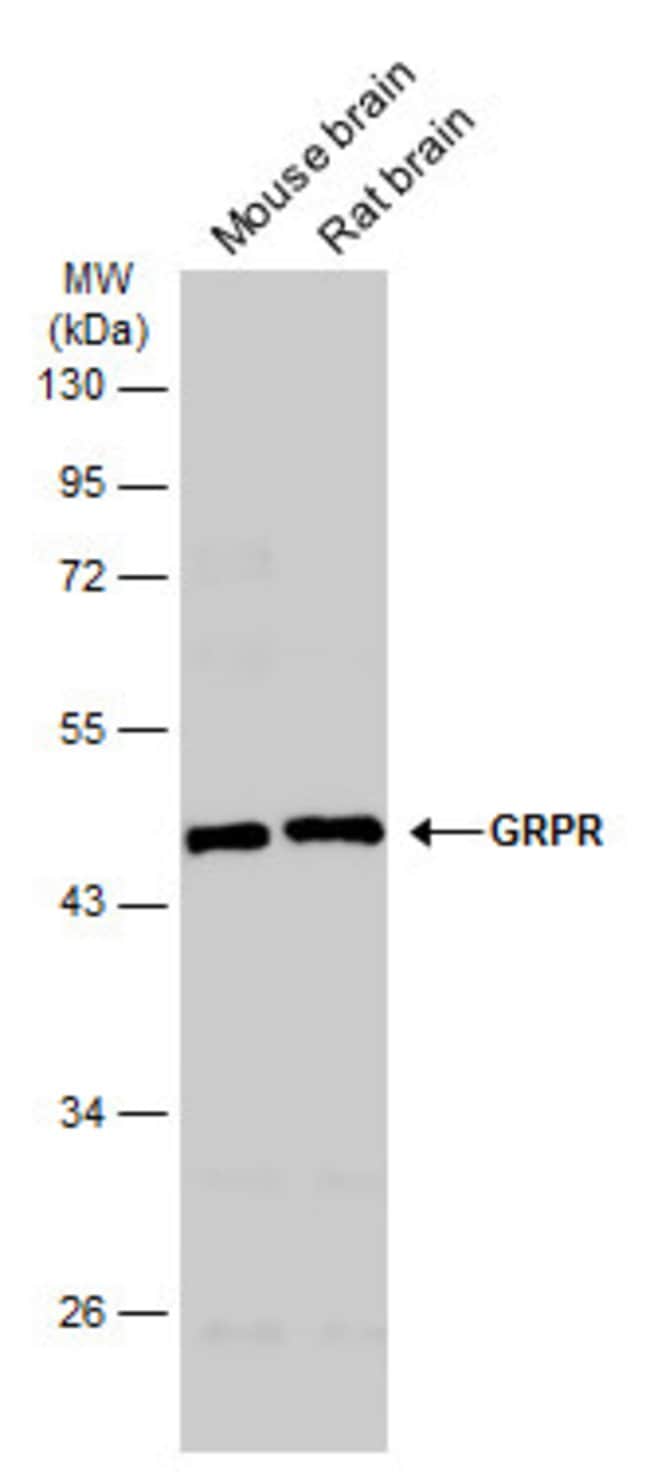
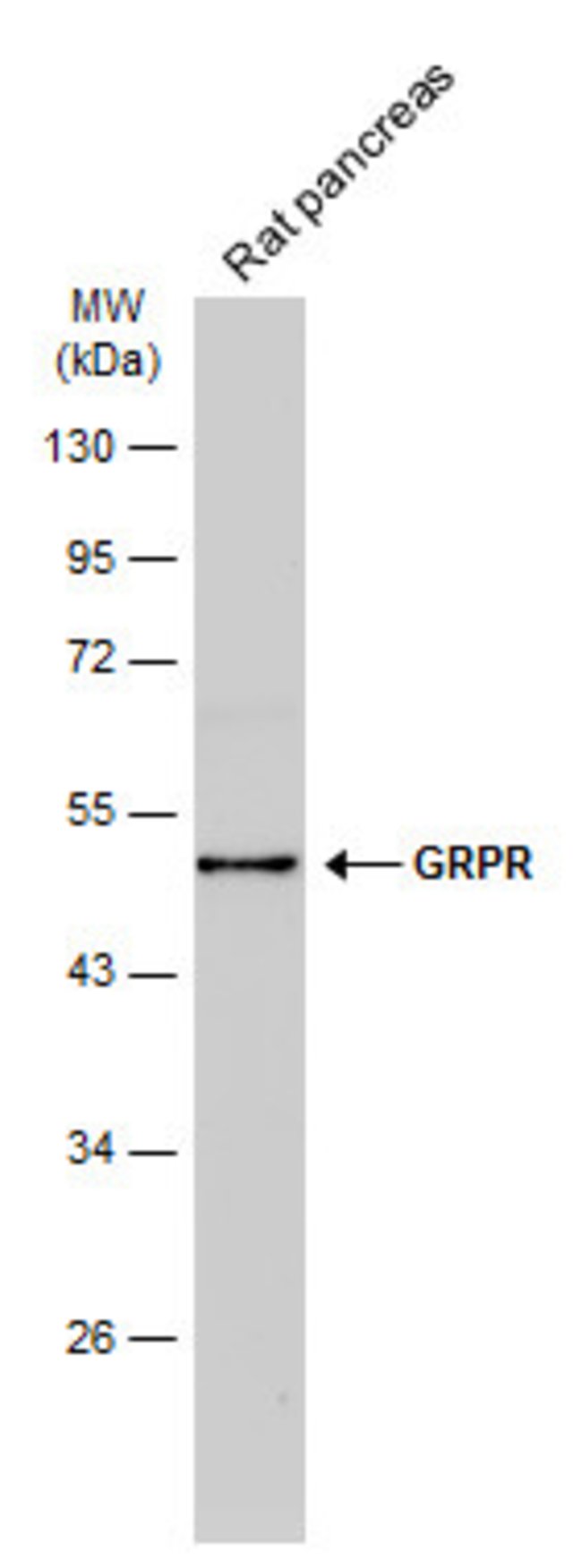
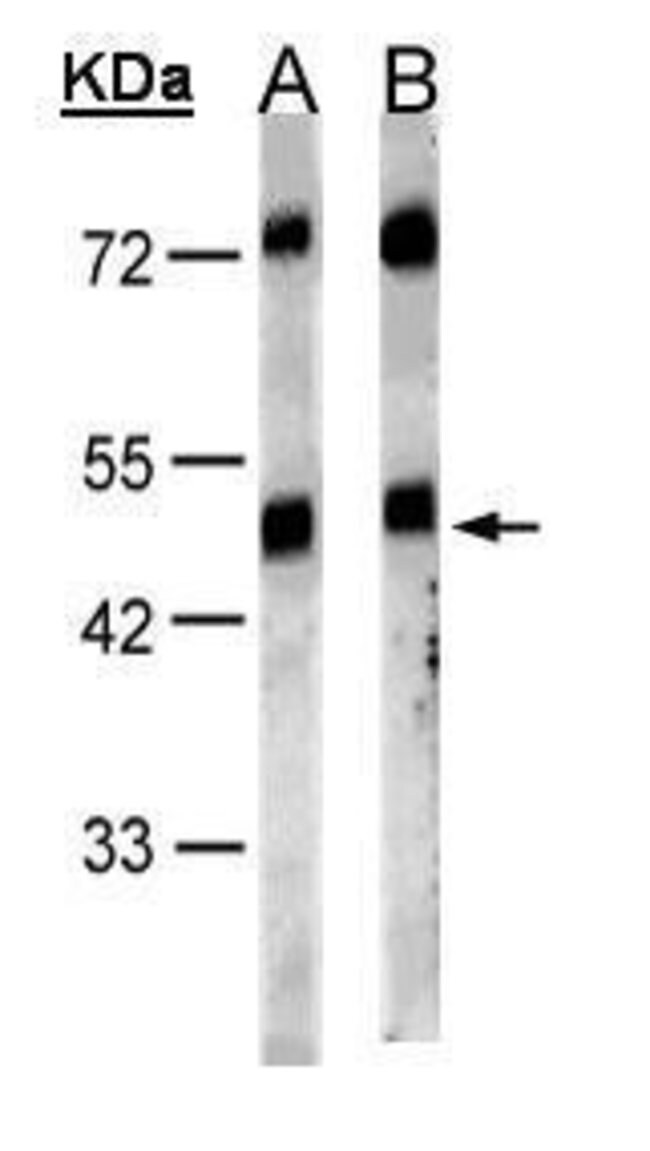
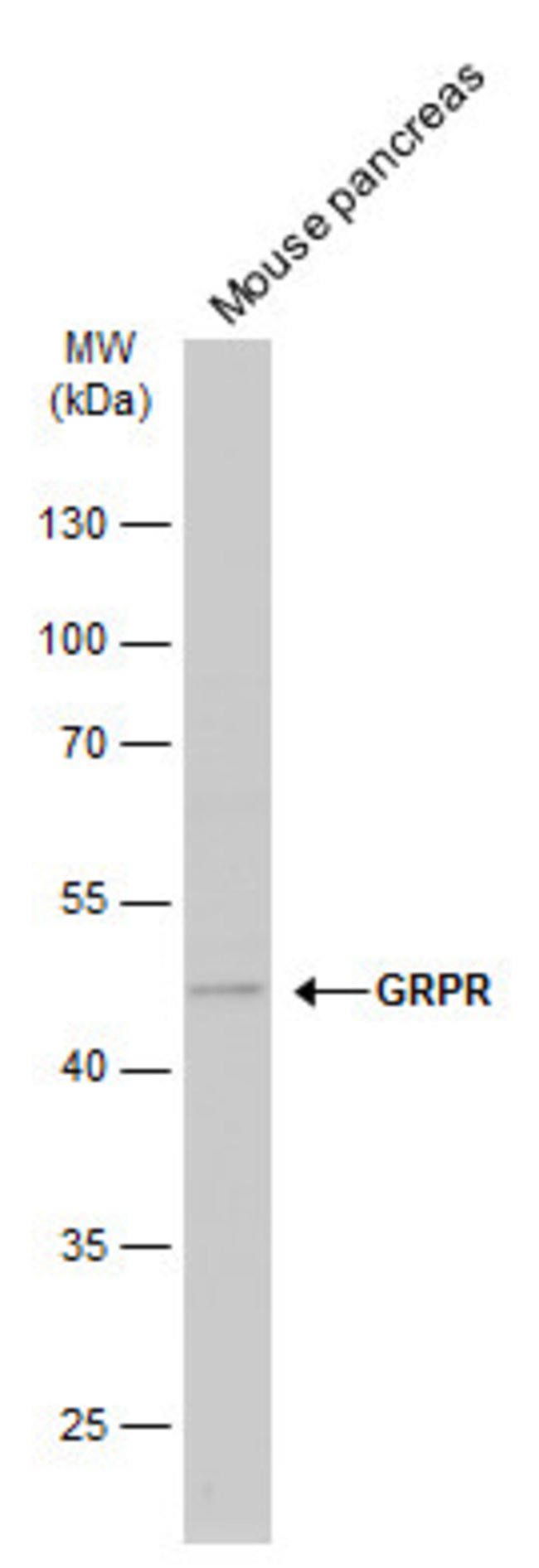
GRPR Polyclonal Antibody, Invitrogen™
Rabbit Polyclonal Antibody
Supplier: Invitrogen PA527073
Description
Recommended positive controls: HeLaS3, Molt-4, mouse pancreas, mouse brain, rat brain, rat pancreas. Predicted reactivity: Mouse (100%), Rat (100%), Pig (100%), Rhesus Monkey (100%), Bovine (100%). Store product as a concentrated solution. Centrifuge briefly prior to opening the vial.
Gastrin-releasing peptide (GRP) regulates numerous functions of the gastrointestinal and central nervous systems, including release of gastrointestinal hormones, smooth muscle cell contraction, and epithelial cell proliferation and is a potent mitogen for neoplastic tissues. The effects of GRP are mediated through the gastrin-releasing peptide receptor. This receptor is a glycosylated, 7-transmembrane G-protein coupled receptor that activates the phospholipase C signaling pathway. The receptor is aberrantly expressed in numerous cancers such as those of the lung, colon, and prostate. An individual with autism and multiple exostoses was found to have a balanced translocation between chromosome 8 and a chromosome X breakpoint located within the gastrin-releasing peptide receptor gene.Specifications
| GRPR | |
| Polyclonal | |
| Unconjugated | |
| GRPR | |
| BB2; BB2R; bombesin receptor 2; gastrin releasing peptide receptor; gastrin-releasing peptide receptor; GRP receptor; GRP-preferring bombesin receptor; GRPR; GRP-R | |
| Rabbit | |
| Antigen affinity chromatography | |
| RUO | |
| 14829, 24938, 2925 | |
| Store at 4°C short term. For long term storage, store at -20°C, avoiding freeze/thaw cycles. | |
| Liquid |
| Western Blot | |
| 1 mg/mL | |
| PBS with 20% glycerol and 0.01% thimerosal; pH 7 | |
| P21729, P30550, P52500 | |
| GRPR | |
| Synthetic peptide corresponding to a region within amino acids 200 and 294 of Human GRPR | |
| 100 μL | |
| Primary | |
| Human, Mouse, Rat | |
| Antibody | |
| IgG |