missing translation for 'onlineSavingsMsg'
Learn More
Learn More
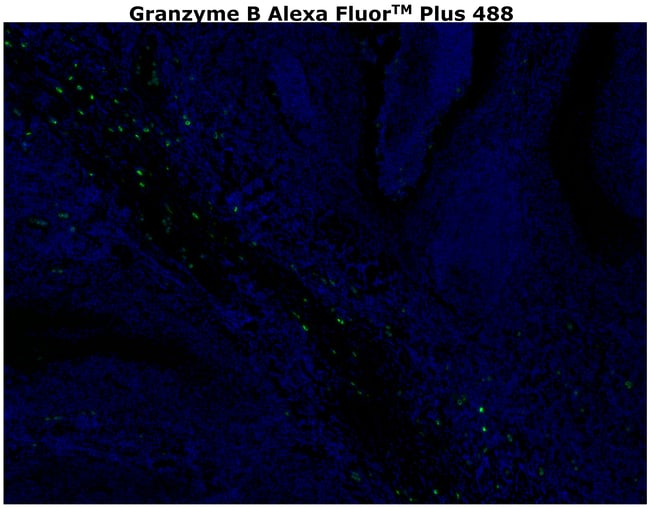
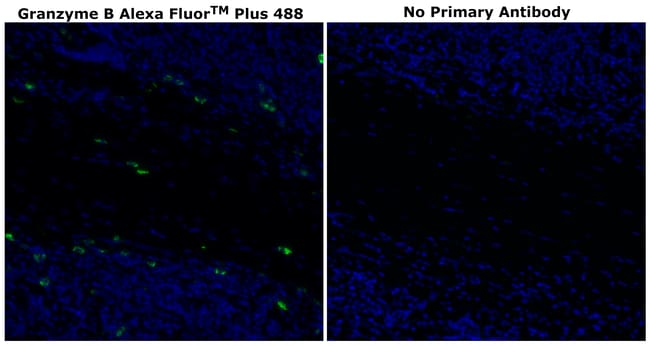
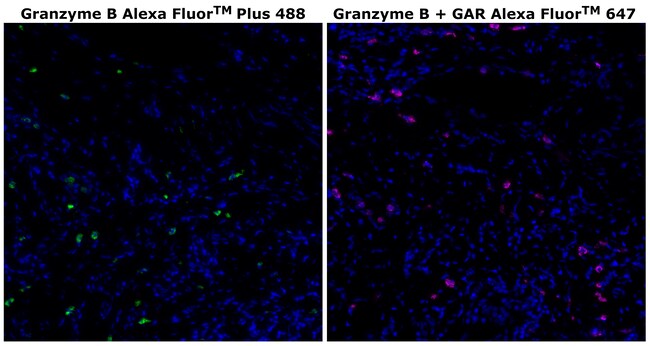
Invitrogen™ Granzyme B Monoclonal Antibody (496B), Alexa Fluor™ Plus 488
Rat Monoclonal Antibody
Supplier: Invitrogen™ 752888994
Description
Description: The 496B antibody reacts with human Granzyme B (GrB). GrB is one of the family of serine proteases, known as granzymes, that is located in the granules of cytotoxic T cells and NK cells. Granzyme B has been described also as CGL1 (cathepsin G-like-1), a serine protease expressed only in cytotoxic T-lymphocytes after cell activation. GrB has been called CTLA-1 (cytotoxic T lymphocyte-associated serine esterase 1) based on identification of mRNA in various cytotoxic T cells, but not observed in non-cytotoxic lymphoid cells. GrB is crucial for the rapid induction of target cell death by apoptosis, induced by interaction with cytotoxic T cells. The receptor involved has been identified as mannose 6-phosphate receptor. This receptor functions as a death receptor for granzyme B during cytotoxic T cell-induced apoptosis. Applications Reported: This 496B antibody has been reported for use in immunohistochemical staining of formalin-fixed paraffin embedded tissue sections, and immunocytochemistry. Applications Tested: This 496B antibody has been tested by immunohistochemistry on formalin-fixed paraffin embedded human tissue using low pH antigen retrieval and can be used at 5 μg/mL. It is recommended that the antibody be carefully titrated for optimal performance in the assay of interest. Using conjugate solutions: Centrifuge the protein conjugate solution briefly in a microcentrifuge before use; add only the supernatant to the experiment.
Granzyme B is a member of the granzyme serine protease family, and is found in the granules of cytotoxic T cells and NK cells. Granzyme B has been described as CGL1 (cathepsin G-like-1), a serine protease expressed only in cytotoxic T-lymphocytes after cell activation, and CTLA-1 (cytotoxic T lymphocyte-associated serine esterase 1) based on identification of mRNA in various cytotoxic T cells, but not observed in non-cytotoxic lymphoid cells. Granzyme B is crucial for the rapid induction of target cell death by apoptosis, induced by interaction with cytotoxic T cells. The receptor involved in this process has been identified as mannose 6-phosphate receptor which functions as a death receptor for Granzyme B during cytotoxic T cell-induced apoptosis. Granzyme B enters target cells to cleave caspase-3 and initiate the caspase cascade leading to DNA fragmentation and apoptosis. Granzyme B can also act through a mitochondrial apoptosis pathway by cleaving the Bid protein. Granzymes are neutral serine proteases, which are stored in specialized lytic granules of cytotoxic T lymphocytes (CTLs) and in natural killer (NK) cells. A number of granzymes (A to G) have been isolated and cloned from mouse CTLs and NK cells, however in man, fewer have been cloned and identified.Chemical Identifiers
| Granzyme B | |
| 0.2 mg/mL | |
| Immunohistochemistry (Paraffin), Multiplex Immunohistochemistry | |
| Alexa Fluor Plus 488 | |
| Rat | |
| RUO | |
| PBS with 0.5% BSA, 10% proprietary stabilizer and 0.05% sodium azide; pH 7.2 | |
| P10144 | |
| 3002 | |
| Primary | |
| Affinity chromatography |
| 496B | |
| 4°C, store in dark | |
| Monoclonal | |
| Liquid | |
| IgG2a κ | |
| Human | |
| GZMB | |
| AI553453; C11; Cathepsin G-like 1; CCP1; CCP-1/C11; CCPI; CGL1; CGL-1; CSPB; CSP-B; Ctla1; Ctla-1; CTSGL1; cytotoxic cell protease 1; cytotoxic serine protease B; Cytotoxic T lymphocyte associated serine esterase 1; cytotoxic T-lymphocyte proteinase 2; cytotoxic T-lymphocyte-associated serine esterase 1; fragmentin; fragmentin 2; fragmentin-2; GLP I; GLP III; GLP-1; granzyme 2; granzyme B; granzyme B (granzyme 2, cytotoxic T-lymphocyte-associated serine esterase 1); granzyme B(G,H); Granzyme-2; GranzymeB; granzyme-like protein 1; granzyme-like protein I; GRB; GZB; Gzmb; HLP; human lymphocyte protein; Human lymphocyte protein (Hlp); Lymphocyte protease; Natural killer cell protease 1; OTTHUMP00000028189; RNKP-1; SECT; T-cell serine protease 1-3E | |
| GZMB | |
| Antibody |
Specifications
| Granzyme B | |
| Monoclonal | |
| 0.2 mg/mL | |
| PBS with 0.5% BSA, 10% proprietary stabilizer and 0.05% sodium azide; pH 7.2 | |
| P10144 | |
| GZMB | |
| Affinity chromatography | |
| RUO | |
| 3002 | |
| 4°C, store in dark | |
| Liquid |
| Immunohistochemistry (Paraffin), Multiplex Immunohistochemistry | |
| 496B | |
| Alexa Fluor Plus 488 | |
| GZMB | |
| AI553453; C11; Cathepsin G-like 1; CCP1; CCP-1/C11; CCPI; CGL1; CGL-1; CSPB; CSP-B; Ctla1; Ctla-1; CTSGL1; cytotoxic cell protease 1; cytotoxic serine protease B; Cytotoxic T lymphocyte associated serine esterase 1; cytotoxic T-lymphocyte proteinase 2; cytotoxic T-lymphocyte-associated serine esterase 1; fragmentin; fragmentin 2; fragmentin-2; GLP I; GLP III; GLP-1; granzyme 2; granzyme B; granzyme B (granzyme 2, cytotoxic T-lymphocyte-associated serine esterase 1); granzyme B(G,H); Granzyme-2; GranzymeB; granzyme-like protein 1; granzyme-like protein I; GRB; GZB; Gzmb; HLP; human lymphocyte protein; Human lymphocyte protein (Hlp); Lymphocyte protease; Natural killer cell protease 1; OTTHUMP00000028189; RNKP-1; SECT; T-cell serine protease 1-3E | |
| Rat | |
| 500 μL | |
| Primary | |
| Human | |
| Antibody | |
| IgG2a κ |