Learn More
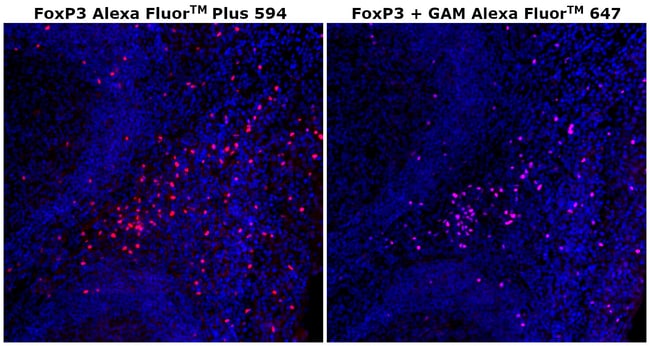
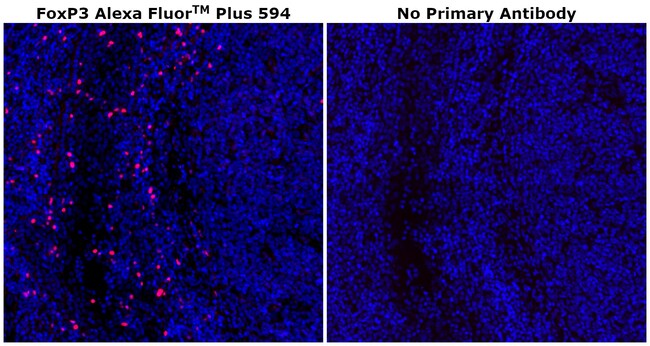
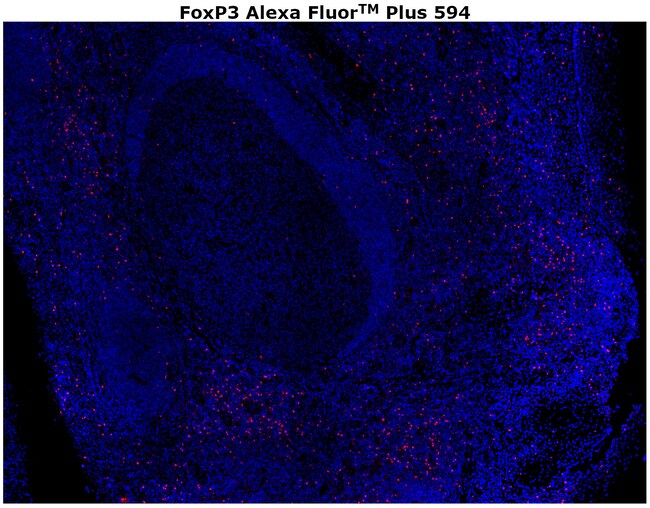
Invitrogen™ FOXP3 Monoclonal Antibody (PCH101), Alexa Fluor™ Plus 594
Description
Description: The PCH101 antibody reacts with the amino terminus of human foxp3 protein also known as FORKHEAD BOX P3, SCURFIN, and JM2; cross reactivity of this antibody to other proteins has not been determined. Foxp3, a 49-55 kDa protein, is a member of the forkhead/winged-helix family of transcriptional regulators, and was identified as the gene defective in 'scurfy' (sf) mice. Constitutive high expression of Foxp3 mRNA has been shown in CD4+CD25+ regulatory T cells (Treg cells), and ectopic expression of foxp3 in CD4+CD25- cells imparts a Treg phenotype in these cells. Intracellular staining of human peripheral blood mononuclear cells (PBMCs) with PCH101 antibody using the anti-human Foxp3 Staining Set and protocol reveals approximately 0.5-4% of lymphocytes staining, with the majority of staining occurring in the CD25^bright population. This is subject to donor variability. PCH101 crossreacts with rhesus, chimpanzee and cynomolgus. Applications Reported: This PCH101 antibody has been reported for use in immunoblotting (WB) and immunohistology on frozen and paraffin-embedded tissue sections. Applications Tested: This PCH101 antibody has been tested by immunohistochemistry of formalin-fixed paraffin embedded tissue using high pH antigen retrieval and can be used at 20 μg/mL. It is recommended that the antibody be carefully titrated for optimal performance in the assay of interest.
Specifications
Specifications
| Antigen | FOXP3 |
| Applications | Immunohistochemistry (Paraffin), Multiplex Immunohistochemistry |
| Classification | Monoclonal |
| Clone | PCH101 |
| Concentration | 0.2 mg/mL |
| Conjugate | Alexa Fluor Plus 594 |
| Formulation | PBS with 0.5% BSA, 10% proprietary stabilizer and 0.05% sodium azide; pH 7.2 |
| Gene | Foxp3 |
| Gene Accession No. | Q9BZS1 |
| Gene Alias | AIID; DIETER; forkhead box P3; forkhead box protein P3; Forkhead box protein P3 41 kDa form; Forkhead box protein P3, C-terminally processed; forkhead/winged helix transcription factor 3; Foxp3; FOXP3delta7; immune dysregulation, polyendocrinopathy, enteropathy, X-linked; immunodeficiency, polyendocrinopathy, enteropathy, X-linked; IPEX; JM2; MGC141961; MGC141963; PIDX; regulatory protein Foxp3; RGD1562112; RP23-54C14.1; scurfin; scurfy; sf; XPID |
| Show More |