Learn More
Invitrogen™ Fc Receptor Binding Inhibitor Polyclonal Antibody, eBioscience™

Description
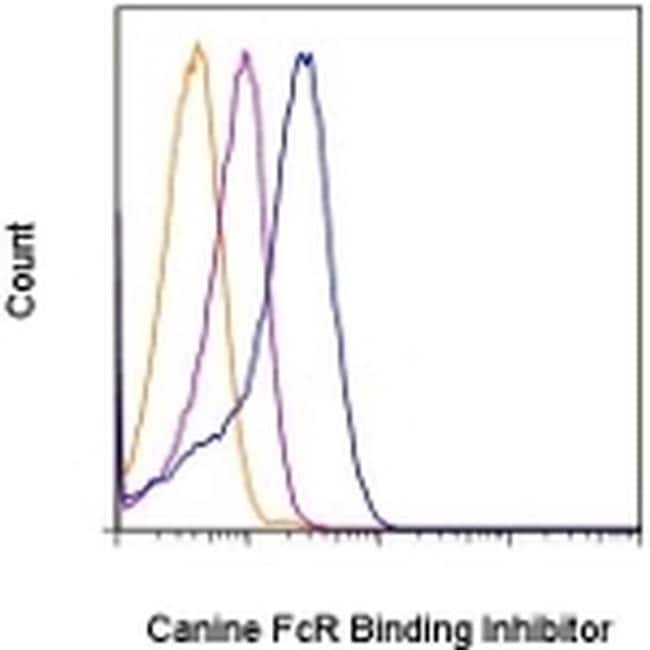
Description: The Canine Fc Receptor Binding Inhibitor can be used to inhibit the non-specific Fc receptor (FcR)-mediated binding of rat monoclonal antibodies used for flow cytometric analysis of canine tissue. FcR are expressed at varying levels in multiple cell lineages including high expression in myeloid cells, granulocytes, and B cells. The biological function of the FcR, including initiation of endocytosis, phagocytosis, and antigen presentation, is elicited upon binding of host-immunoglobulin. The extent to which rat monoclonal antibodies will bind to canine FcR varies depending on the isotype of the monoclonal antibody. eBioscience testing indicates that rat IgG2b isotype is blocked by Canine Fc Receptor Binding Inhibitor. Applications Reported: Canine Fc Receptor Binding Inhibitor Purified has been reported for use in flow cytometric analysis. To inhibit the non-specific binding of rat monoclonal antibodies add the canine Fc Receptor Binding Inhibitor to samples and incubate on ice for 20 minutes. Without washing, proceed to stain with primary antibody. Applications Tested: Canine Fc Receptor Binding Inhibitor Purified has been pre-titrated and tested by flow cytometric analysis on canine peripheral blood cells. This can be used at 5 μL (10 μg) per test. A test is defined as the amount (μg) of antibody that will stain a cell sample in a final volume of 100 μL. Cell number should be determined empirically but can range from 10^5 to 10^8 cells...
Specifications
Specifications
| Antigen | Fc Receptor Binding Inhibitor |
| Applications | Flow Cytometry |
| Classification | Polyclonal |
| Concentration | 5 μL/Test |
| Conjugate | Unconjugated |
| Formulation | PBS with BSA and 0.09% sodium azide; pH 7.2 |
| Gene Alias | Fc blocking; FcR BI; FcR Inhibitor |
| Host Species | Not Available |
| Purification Method | Affinity chromatography |
| Quantity | 100 Tests |
| Show More |