missing translation for 'onlineSavingsMsg'
Learn More

Invitrogen™ CD47 Monoclonal Antibody (2D3), eBioscience™, Invitrogen™

Catalog No. p-7218434
Encompass
Change view
Click to view available options
Quantity:
2 mg
10 mg
2 product options available for selection
Product selection table with 2 available options. Use arrow keys to navigate and Enter or Space to select.
Catalog No. Quantity
14047837 2 mg
14047895 10 mg
Use arrow keys to navigate between rows. Press Enter or Space to select a product option. 2 options available.
2 options
Catalog No. 14047837 Supplier Invitrogen™ Supplier No. 14047837
Only null left

Mouse Monoclonal Antibody

The MAb 2D3 reacts to CD47 also known as integrin-associated protein (IAP), and neurophilin. CD47 is a glycosylated five transmembrane protein with a small alternatively spliced cytoplasmic domain. CD47 is involved in adhesion through interactions with SIRP (signal regulator protein) and is non-covalently associated with beta3 integrins CD51/CD61 and CD41/CD61. Furthermore this interaction can mediate bi-directional signaling to modify neural synaptic activity and regulate the phagocytic activities of macrophages. CD47 is the receptor for thrombospondin. T cell expression of CD47 can mediate activation or apoptosis (in the presence of high levels of thrombospondin). Expression is found in the majority of hematopoietic cells including T and B cells, monocytes, platelets and erythrocytes (as part of the Rh complex). Expression is also found in non-hematopoietic cells.

CD47, known as integrin-associated protein (IAP), is a glycosylated transmembrane glycoprotein with five domains, expressed widely across hematopoietic cells like T and B cells, monocytes, platelets, and erythrocytes, as well as non-hematopoietic cells. It interacts with integrins such as CD51/CD61 and CD41/CD61, and serves as a receptor for thrombospondin, mediating bi-directional signaling that affects neural synaptic activity and macrophage phagocytosis. CD47 acts as a ligand for CD172a (SIRP alpha), an inhibitory receptor on macrophages, preventing phagocytosis of CD47-positive cells. This interaction influences cell migration, B cell adhesion, T cell activation, and neuronal development, particularly in synapse-rich brain and retina regions. It also modulates chondrocyte responses to mechanical signals. T cell expression of CD47 can lead to activation or apoptosis in the presence of thrombospondin. Monoclonal antibody stimulation of CD47 has been shown to induce CD4+CD25- suppressive activity and increase Foxp3 expression. CD47's role in membrane transport, signal transduction, and its broad tissue distribution highlight its significance in various physiological processes.

Specifications

Antigen CD47
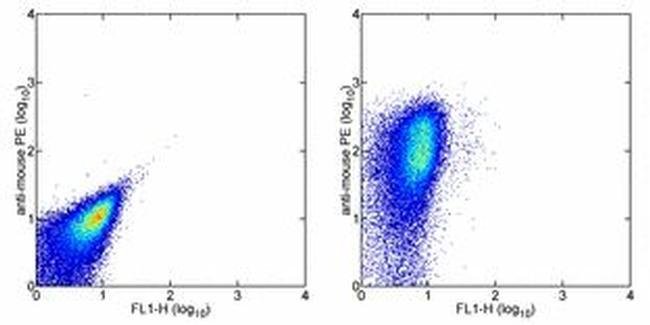
Applications Flow Cytometry, Western Blot
Classification Monoclonal
Clone 2D3
Concentration 0.5 mg/mL
Conjugate Unconjugated
Formulation PBS with 0.09% sodium azide; pH 7.2
Gene CD47
Gene Accession No. Q08722
Gene Alias 9130415E20Rik; AA407862; AI848868; antigen identified by monoclonal antibody 1D8; antigenic surface determinant protein OA3; AW108519; B430305P08Rik; Cd47; CD47 antigen; CD47 antigen (Rh-related antigen, integrin-associated signal transducer); CD47 antigen/integrin-associated protein; CD47 glycoprotein; CD47 molecule; CD47/IAP; IAP; integrin associated protein; integrin-associated protein; integrin-associated signal transducer; Itgp; Leukocyte surface antigen CD47; MER6; OA3; Protein MER6; Rh-related antigen; sCD47; soluble CD 47; soluble CD47
Gene Symbols CD47
Host Species Mouse
Purification Method Affinity chromatography
Quantity 2 mg
Regulatory Status RUO
Primary or Secondary Primary
Gene ID (Entrez) 961
Target Species Human
Content And Storage 4°C
Product Type Antibody
Form Liquid
Isotype IgG1 κ
Show More Show Less