missing translation for 'onlineSavingsMsg'
Learn More
Learn More
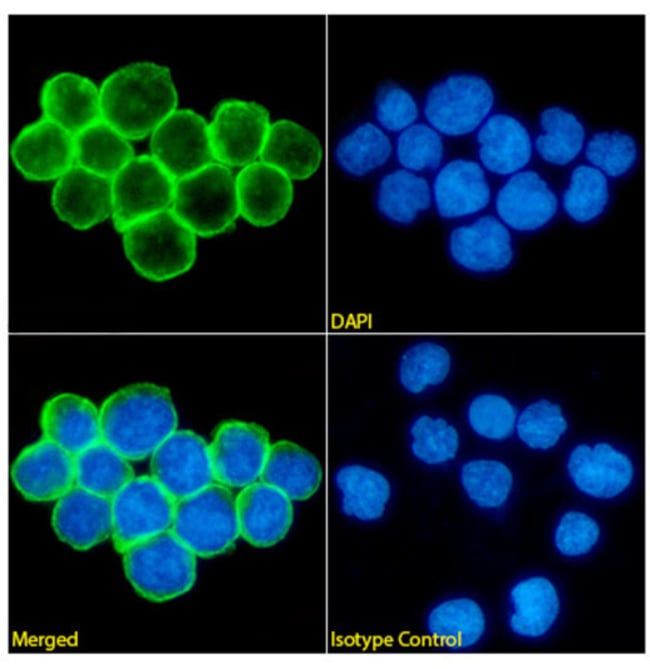
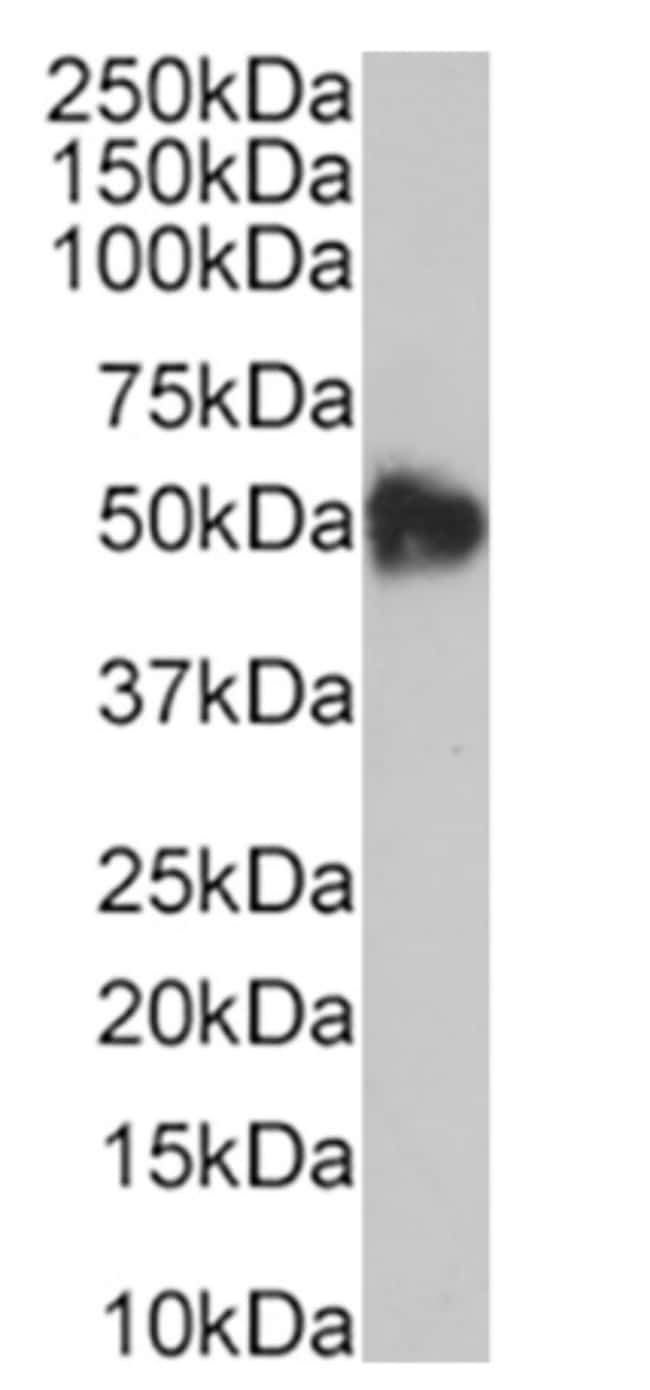
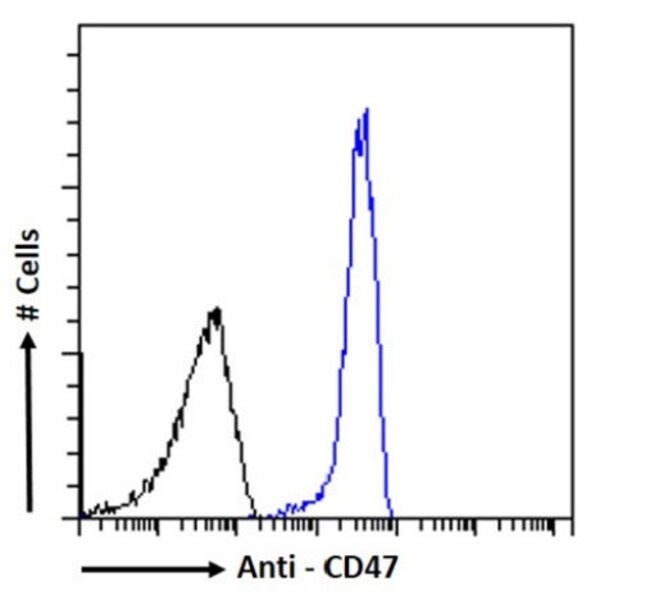
Invitrogen™ CD47 Chimeric Recombinant Rabbit Monoclonal Antibody (B6H12)

Description
This antibody binds the extracellular domain of the human CD47, which is broadly distributed on normal adult tissues, as well as ovarian tumors, and is especially abundant in some epithelia and the brain. IAP or integrin assocaited protein has a role in both cell adhesion by acting as an adhesion receptor for THBS1 on platelets, and in the modulation of integrins. It further plays an important role in memory formation and synaptic plasticity in the hippocampus. It also acts as a receptor for SIRPA. Binding to SIRPA prevents maturation of immature dendritic cells and inhibits cytokine production by mature dendritic cells.
CD47, known as integrin-associated protein (IAP), is a glycosylated transmembrane glycoprotein with five domains, expressed widely across hematopoietic cells like T and B cells, monocytes, platelets, and erythrocytes, as well as non-hematopoietic cells. It interacts with integrins such as CD51/CD61 and CD41/CD61, and serves as a receptor for thrombospondin, mediating bi-directional signaling that affects neural synaptic activity and macrophage phagocytosis. CD47 acts as a ligand for CD172a (SIRP alpha), an inhibitory receptor on macrophages, preventing phagocytosis of CD47-positive cells. This interaction influences cell migration, B cell adhesion, T cell activation, and neuronal development, particularly in synapse-rich brain and retina regions. It also modulates chondrocyte responses to mechanical signals. T cell expression of CD47 can lead to activation or apoptosis in the presence of thrombospondin. Monoclonal antibody stimulation of CD47 has been shown to induce CD4+CD25- suppressive activity and increase Foxp3 expression. CD47's role in membrane transport, signal transduction, and its broad tissue distribution highlight its significance in various physiological processes.
Specifications
Specifications
| Antigen | CD47 Chimeric |
| Applications | ELISA, Flow Cytometry, Inhibition Assays, Western Blot, Immunocytochemistry |
| Classification | Recombinant Monoclonal |
| Clone | B6H12 |
| Concentration | 1 mg/mL |
| Conjugate | Unconjugated |
| Formulation | PBS with 0.02% ProClin 300 |
| Gene | CD47 |
| Gene Accession No. | Q08722 |
| Gene Alias | 9130415E20Rik; AA407862; AI848868; antigen identified by monoclonal antibody 1D8; antigenic surface determinant protein OA3; AW108519; B430305P08Rik; Cd47; CD47 antigen; CD47 antigen (Rh-related antigen, integrin-associated signal transducer); CD47 antigen/integrin-associated protein; CD47 glycoprotein; CD47 molecule; CD47/IAP; IAP; integrin associated protein; integrin-associated protein; integrin-associated signal transducer; Itgp; Leukocyte surface antigen CD47; MER6; OA3; Protein MER6; Rh-related antigen; sCD47; soluble CD 47; soluble CD47 |
| Show More |